The United Kingdom has formally authorized the United States to conduct limited defensive strikes against Iranian missile depots and launch systems from select British military facilities, marking a consequential evolution in London’s operational posture amid rising Middle East tensions. Prime Minister Keir Starmer confirmed on March 1, 2026, that the decision permits American forces to operate from RAF Fairford in Gloucestershire and the joint UK-U.S. facility at Diego Garcia in the Indian Ocean. The authorization follows Iranian missile and drone attacks targeting U.S. bases and regional partners after earlier strikes against senior Iranian officials and strategic infrastructure.
London emphasized that it was not involved in the initial offensive operations carried out days earlier. However, the British government now frames its support as a calibrated defensive measure, intended to deter further missile launches and protect allied forces as well as approximately 200,000 British nationals residing across the Gulf region. The language deployed by Downing Street underscores restraint, but the operational implications are unmistakably significant.
In a recorded address, Starmer articulated the strategic rationale with direct clarity, stating that neutralizing missile threats requires striking them “at source.” That doctrine translates into targeting storage depots, transporter-erector-launchers, and associated launch infrastructure before additional salvos can be executed. The objective is pre-emptive disruption rather than symbolic retaliation.
My update on the situation in the Middle East. pic.twitter.com/DvsOVcTDMy
— Keir Starmer (@Keir_Starmer) March 1, 2026
Strategic Value of RAF Fairford and Diego Garcia
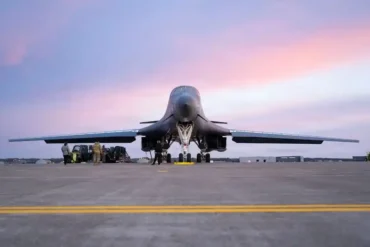
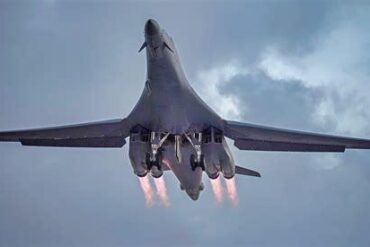
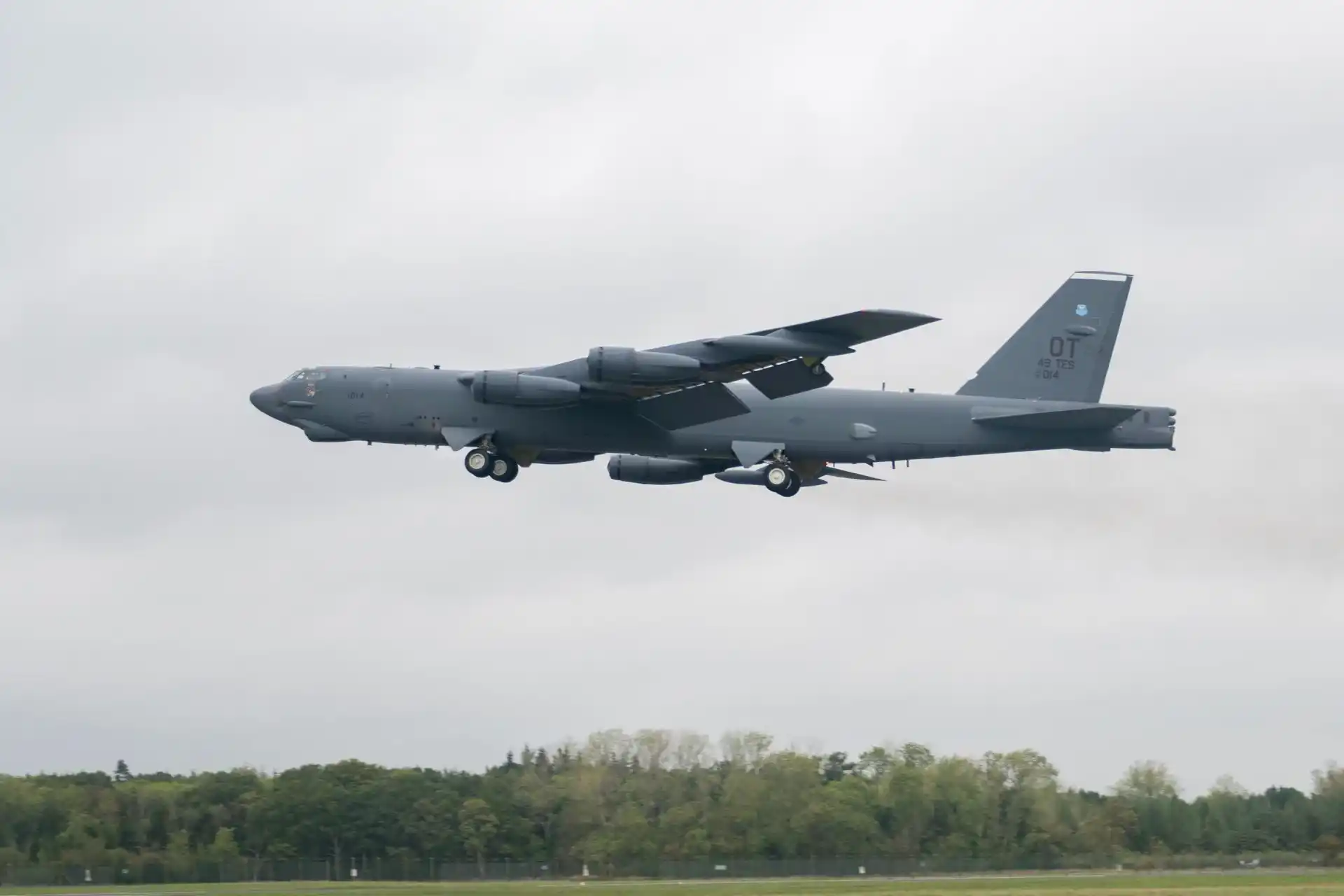
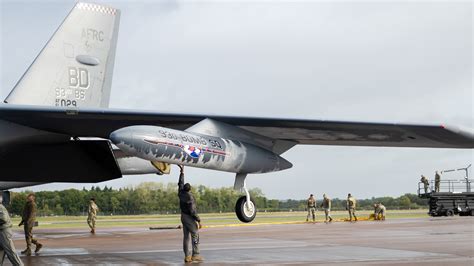
The facilities named in the authorization are not incidental choices. RAF Fairford has long served as a forward operating location for U.S. Air Force strategic bombers in Europe. Its infrastructure supports temporary deployments of aircraft such as the B-52H Stratofortress and B-1B Lancer, enabling rapid integration into European and Middle Eastern operational theaters.
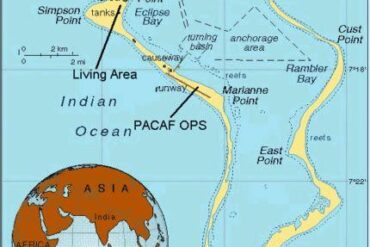
Further south, Diego Garcia represents one of Washington’s most strategically valuable overseas installations. Located in the Chagos Archipelago, the base features a runway capable of accommodating heavy bombers, extensive fuel storage, and deep-water port facilities. For decades, it has functioned as a launch platform for long-range air operations across the Middle East and South Asia. Its geographic distance from mainland Iran offers operational depth while remaining within range of standoff munitions.
The combined use of these bases extends U.S. strike flexibility while dispersing launch points, complicating adversary targeting calculations. From an operational planning perspective, dispersion enhances survivability and resilience.
Iranian Missile Capabilities and Escalation Dynamics
Iran’s missile arsenal presents a layered threat profile. Systems such as the Shahab-3 medium-range ballistic missile possess estimated ranges between 1,000 and 1,300 kilometers, enabling coverage of U.S. installations and urban centers throughout the Gulf. Solid-fuel variants like the Sejjil extend reach to approximately 2,000 kilometers and reduce launch preparation time, shrinking detection windows for opposing intelligence assets.
Mobile launch platforms further complicate interception efforts. Once dispersed from hardened storage sites, these transporter-erector-launchers can reposition rapidly, blending into civilian infrastructure or rugged terrain. Eliminating static depots degrades inventory capacity, but the persistent challenge lies in locating and neutralizing mobile units before launch.
Iran’s retaliatory doctrine also incorporates one-way attack drones derived from the Shahed-136 design, which have demonstrated ranges exceeding 1,000 kilometers. Their relatively simple guidance systems make them inexpensive yet effective tools for saturation attacks intended to overwhelm air defense networks. Volume, rather than sophistication, becomes the tactical multiplier.
Likely U.S. Strike Platforms and Munitions
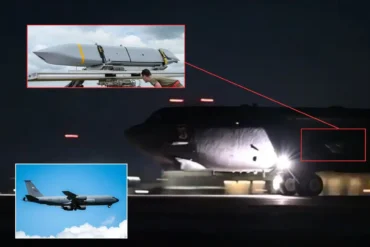
To engage hardened missile infrastructure while minimizing exposure, U.S. planners are likely to rely on long-range bombers armed with standoff precision weapons. The B-52H, for example, can carry up to 20 AGM-158 Joint Air-to-Surface Standoff Missiles (JASSM). The baseline JASSM exceeds 370 kilometers in range, while the extended-range JASSM-ER surpasses 900 kilometers. These missiles integrate GPS guidance with an infrared terminal seeker, enabling precision engagement against fixed targets while allowing launch aircraft to remain outside dense segments of Iran’s integrated air defense system.
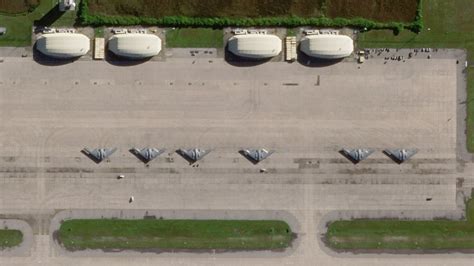
Iran’s defensive architecture includes systems such as the S-300PMU-2, reportedly capable of engaging certain aerial targets at ranges approaching 200 kilometers. Standoff munitions are therefore central to reducing aircraft vulnerability. Any sustained campaign would likely integrate electronic warfare, intelligence surveillance assets, and layered strike sequencing to suppress radar coverage and command nodes.
Layered Defense and Allied Protection Measures
The British authorization is not limited to strike facilitation. Defensive measures around key installations have intensified. Royal Air Force Typhoon FGR4 aircraft, equipped with the Captor-M radar and armed with long-range Meteor air-to-air missiles, contribute to protective air patrols. These aircraft operate within a broader defensive framework that includes surveillance radars, surface-to-air missile systems, and coordinated intelligence sharing among coalition partners.
The operational emphasis is twofold: degrade Iran’s launch capacity while simultaneously protecting bases and civilian populations from retaliatory salvos. Intelligence, surveillance, and reconnaissance platforms—both space-based and airborne—play a decisive role in identifying launch preparations. The margin between detection and launch can be measured in minutes.
Collective Self-Defense and Political Calculus
London’s justification rests on the principle of collective self-defense. By responding to requests from regional partners and the United States, the UK positions its role within established alliance frameworks rather than unilateral escalation. Yet authorizing strike operations from sovereign territory inevitably carries political weight. It signals strategic alignment at a moment when regional tensions are already acute.
The decision reflects a calculation that deterring missile launches through targeted disruption is preferable to absorbing repeated attacks. It also underscores the enduring strategic interdependence between Washington and London, particularly in high-intensity security crises.
Whether the authorization leads to a contained cycle of deterrence or a broader escalation will depend on operational restraint, intelligence precision, and the signaling that accompanies each strike. In modern conflict dynamics, perception can amplify or dampen force. For now, the United Kingdom has positioned its bases as instruments of defensive leverage—an action measured in geography, calibrated in language, and defined by the shifting balance of deterrence in the Middle East.