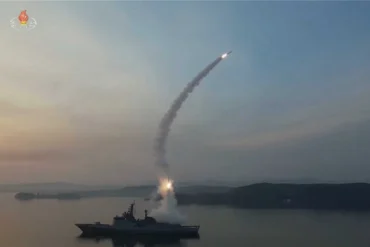
The United States has expanded its military operations in the Middle East by deploying B-52H Stratofortress strategic bombers armed with AGM-158 Joint Air-to-Surface Standoff Missiles (JASSM) to conduct precision strikes against Iranian missile infrastructure. The operation forms part of Operation Epic Fury, a coordinated campaign targeting ballistic missile facilities, command centers, and strategic military installations believed to support Iran’s regional missile capabilities.
The use of long-range standoff weapons marks a significant tactical approach in the campaign. Rather than entering heavily defended Iranian airspace, U.S. bombers launch cruise missiles from extended distances. This strategy allows American forces to attack high-value military targets while minimizing exposure to Iran’s integrated air defense network, which includes Russian-supplied S-300PMU-2 surface-to-air missile systems and a growing network of domestically produced radar and interceptor systems.
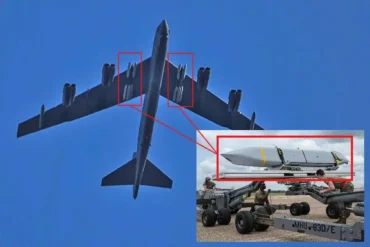
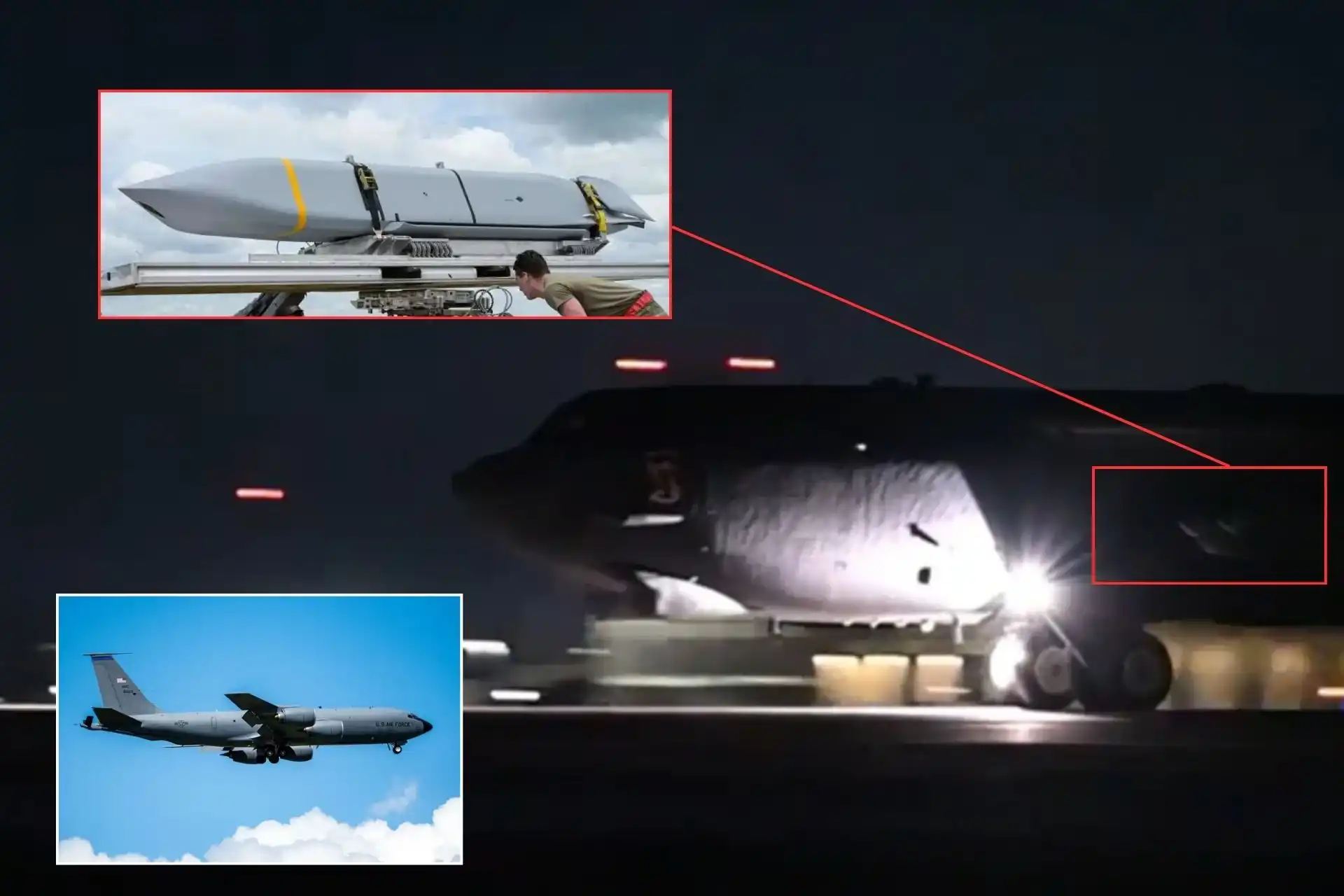
Strategic bombers such as the B-52H Stratofortress have played a central role since the opening phase of the operation. Images released by U.S. Central Command show bombers taxiing for takeoff with multiple JASSM cruise missiles mounted under their wings, highlighting the scale of the planned strikes and the emphasis on precision long-range firepower.
B-52 Stratofortress: A Strategic Bomber Built for Long-Range Power Projection
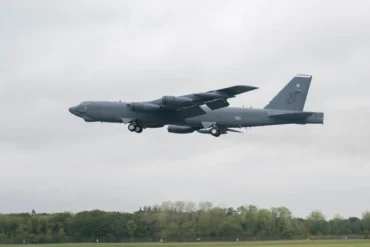
Few aircraft symbolize long-range strike capability like the B-52 Stratofortress, a bomber that has remained operational since the early Cold War while undergoing extensive modernization. Designed for intercontinental missions, the aircraft combines immense payload capacity with the ability to operate across vast distances when supported by aerial refueling.
The B-52H variant, currently used by the U.S. Air Force, features a wingspan of approximately 56.4 meters and a maximum takeoff weight nearing 220 tons. Eight Pratt & Whitney TF33-P-3/103 turbofan engines power the aircraft, each generating around 17,000 pounds of thrust, enabling a maximum speed approaching Mach 0.86 and an operational ceiling above 15,000 meters.
Despite its age, the aircraft remains a formidable launch platform due to extensive avionics upgrades. Modernized systems include the AN/APQ-166 radar, advanced navigation systems, and digital mission management computers capable of integrating modern precision-guided weapons. These upgrades allow the bomber to deploy sophisticated long-range munitions such as cruise missiles and precision strike weapons.
The Stratofortress can carry an impressive 31,500 kilograms of weapons, distributed between its internal bomb bay and external wing pylons. In cruise-missile strike missions, the aircraft can launch large salvos of precision weapons in a single sortie, turning one bomber into a powerful airborne missile platform capable of overwhelming defended targets.
AGM-158 JASSM: Precision Cruise Missile Designed for High-Risk Targets
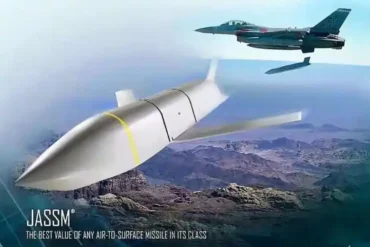
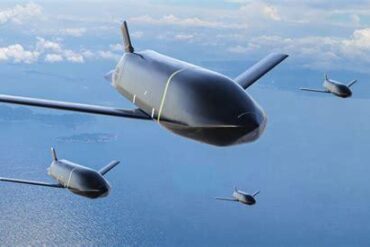
Central to the current strike operations is the AGM-158 Joint Air-to-Surface Standoff Missile, commonly known as JASSM, a stealthy cruise missile developed by Lockheed Martin. The weapon is specifically designed to destroy heavily defended strategic targets, including command bunkers, missile installations, radar facilities, and hardened military infrastructure.
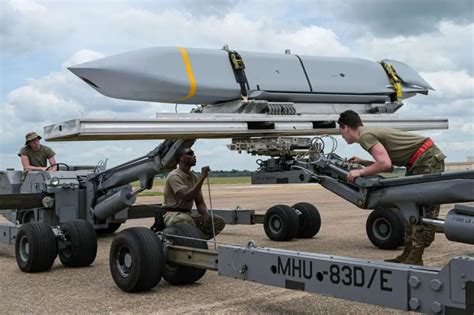
The missile measures approximately 4.27 meters in length and weighs about 1,020 kilograms. Its primary destructive capability comes from the WDU-42/B penetrating warhead, weighing roughly 450 kilograms, which is engineered to penetrate reinforced structures such as underground command facilities or fortified missile bunkers.
Propulsion is provided by a Williams International F107-WR-105 turbofan engine, enabling subsonic flight over long distances. The missile’s design incorporates low-observable shaping and radar-reducing materials, significantly lowering its detectability by enemy radar systems.
Navigation relies on a combination of inertial guidance and Global Positioning System (GPS) tracking. As the missile approaches its target, an imaging infrared seeker activates to confirm and refine target identification. This dual-layer targeting process improves strike accuracy while reducing vulnerability to electronic warfare or GPS interference.
Two primary variants of the missile are used in U.S. operations. The baseline AGM-158A JASSM offers a range of approximately 370 kilometers, while the enhanced AGM-158B JASSM-ER (Extended Range) can travel up to 925 kilometers, dramatically expanding the bomber’s strike reach.
Standoff Strike Strategy Against Iranian Air Defenses
The deployment of JASSM missiles allows U.S. bombers to execute standoff strike operations, meaning the launch aircraft can remain outside hostile airspace while still engaging targets deep within enemy territory. This approach significantly reduces the risk to aircrews and high-value aircraft.
Iran’s air defense network presents a formidable challenge. In addition to S-300PMU-2 systems, the country has invested heavily in layered defensive systems, including domestically produced radar networks and interceptor missiles designed to track and destroy incoming aircraft or missiles.
By launching JASSM weapons from extended distances, B-52 bombers avoid the need to penetrate these defenses directly. After launch, the cruise missiles descend to low-altitude flight paths, using terrain-following profiles to remain difficult to detect on radar. Their reduced radar signature and unpredictable flight trajectories further complicate interception efforts.
This operational model reflects a broader shift in modern warfare, where long-range precision weapons allow military forces to strike strategically important targets without risking aircraft in heavily defended zones.
Targeting Iranian Missile Facilities and Command Infrastructure
According to U.S. Central Command briefings, the targets include Iranian ballistic missile facilities, command centers coordinating missile forces, and related military infrastructure. These installations form part of Iran’s broader missile program, which includes systems capable of striking regional targets across the Middle East.
Many of these facilities are constructed within hardened structures or underground complexes, designed specifically to survive conventional air strikes. The penetrating warhead of the JASSM missile is intended to defeat such defenses, allowing strikes against bunkers, storage sites, and command nodes responsible for missile operations.
Footage released by the U.S. military illustrates B-52 bombers carrying multiple cruise missiles on external pylons, demonstrating their capacity to deliver a large number of precision weapons during a single mission. The ability to launch dozens of cruise missiles in coordinated salvos increases the probability that at least some will penetrate defensive systems and reach their intended targets.
Strategic Bomber Fleet and Integrated Airpower
The current campaign highlights how the United States employs its entire strategic bomber fleet to maintain continuous strike capability. While the B-52 provides exceptional payload capacity and long-range endurance, other aircraft contribute different strengths.
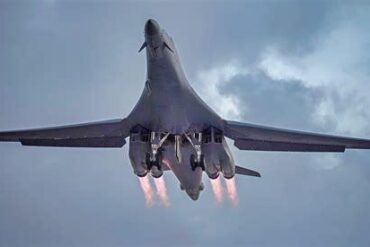
The B-2 Spirit stealth bomber can penetrate heavily defended airspace using its low-observable design, enabling attacks on high-value targets located deep inside protected regions. Meanwhile, the B-1B Lancer combines high speed with significant payload capacity, making it effective for rapid strike operations against multiple targets.
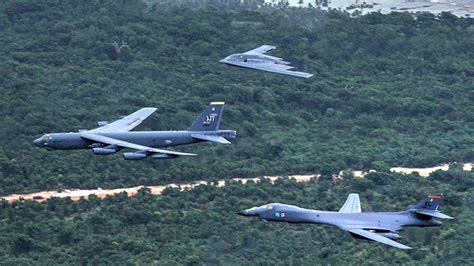
Together, these aircraft form a flexible strike force capable of sustaining pressure against strategic targets across long distances. By combining stealth, speed, and payload capacity, the U.S. Air Force maintains multiple options for engaging defended targets while adapting to evolving battlefield conditions.
The deployment of B-52 bombers armed with JASSM missiles demonstrates how legacy aircraft can remain central to modern warfare when paired with advanced precision weapons. In the evolving landscape of long-range strike operations, the ability to launch large numbers of stealthy cruise missiles from safe distances continues to reshape the dynamics of strategic airpower.