In a decisive move to strengthen its strategic missile strike capabilities, the United States Department of Defense (DoD) has committed nearly $1 billion toward the procurement and long-term sustainment of the AGM-158 series cruise missiles — namely, the Long-Range Anti-Ship Missile (LRASM) and the Joint Air-to-Surface Standoff Missile (JASSM). Announced on July 21, 2025, the investment marks a critical acceleration of America’s long-range precision firepower as tensions escalate across the Indo-Pacific and Eastern European theaters.
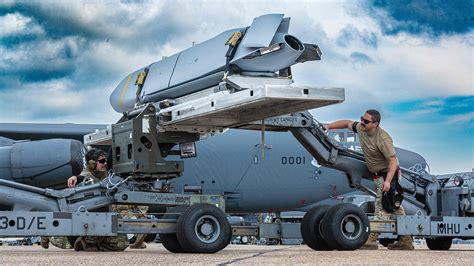
Lockheed Martin Secures Strategic Missile Production Surge
At the heart of this missile expansion is Lockheed Martin, the original equipment manufacturer and prime contractor for both LRASM and JASSM systems. The funding comes under a broader indefinite delivery and quantity (IDIQ) agreement and will be used to sustain and scale missile production at Lockheed’s Orlando, Florida facilities, with final deliveries expected by July 17, 2030.
This long-term funding strategy is designed to ensure production line continuity and industrial resilience, particularly through multi-year procurement. Such an approach provides the flexibility to scale output rapidly in the event of a strategic crisis — a capability that has gained increasing relevance amid global supply chain disruptions and the shifting balance of military power.
The Dual Power of JASSM and LRASM
Both the JASSM and LRASM are built on a shared technological architecture but have evolved into distinctly specialized weapons platforms, each addressing unique mission sets within the US military’s global strike doctrine.
AGM-158 JASSM: The Backbone of US Precision Airstrike Doctrine
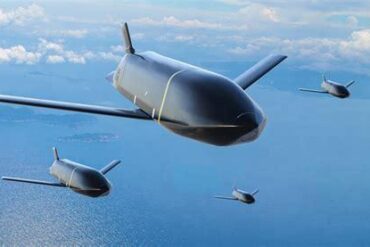
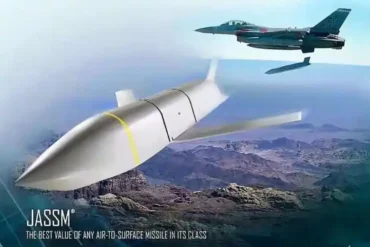
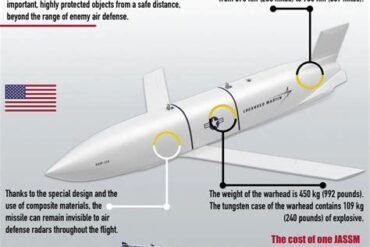
The Joint Air-to-Surface Standoff Missile (JASSM) is a long-range, low-observable cruise missile developed for precision strikes against high-value, well-defended ground targets. Equipped with a 432 kg penetrating warhead, the standard JASSM variant has a range of approximately 370 kilometers. The extended range variant, JASSM-ER, pushes that envelope to 1,000 kilometers thanks to its advanced turbofan engine and expanded fuel tank.
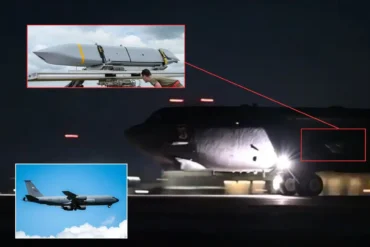
JASSM uses a combination of inertial navigation systems (INS), GPS, and a terminal infrared seeker paired with automatic target recognition (ATR) to ensure remarkable precision — achieving a circular error probable (CEP) of under three meters. Its stealthy design and deep-penetration capability make it a mainstay on platforms ranging from B-1B Lancers, F-15E Strike Eagles, to F-35 Lightning II variants.
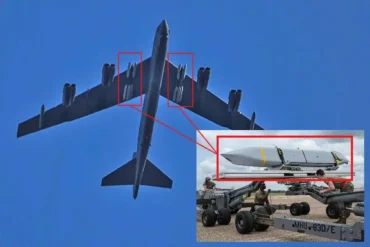
One notable innovation is its compatibility with the Rapid Dragon palletized munition system, enabling deployment from cargo aircraft like the C-130 and C-17, turning transport planes into ad-hoc long-range missile platforms.
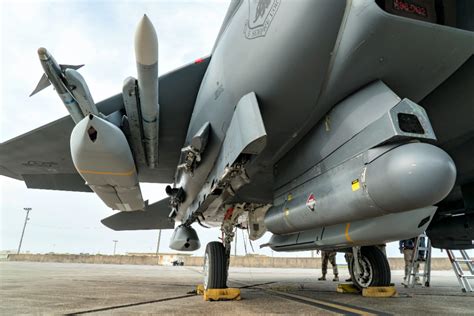
AGM-158C LRASM: Sea Denial in a Contested Maritime Domain
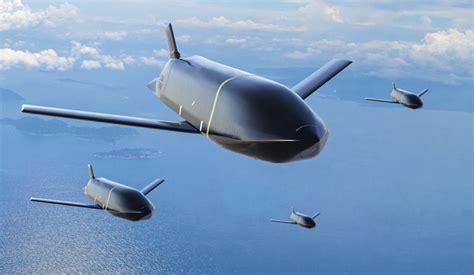
Derived from the JASSM-ER, the Long-Range Anti-Ship Missile (LRASM) was developed specifically to address modern naval warfare requirements. With a range exceeding 200 nautical miles, the LRASM introduces passive targeting systems, anti-jam navigation, and autonomous target recognition, allowing it to operate effectively in GPS-degraded or denied environments.
This makes it particularly well-suited for contested maritime regions where sensor denial, electronic warfare, and limited cueing information are common. LRASM’s sea-skimming flight profile, stealth shaping, and 1,000-pound blast-fragmentation warhead combine to deliver high lethality against enemy warships without revealing the launch platform’s position.
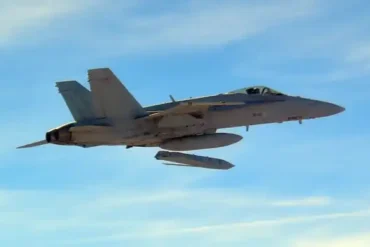
Currently integrated on USAF B-1Bs and US Navy F/A-18E/F Super Hornets, development is underway for a vertical-launch variant compatible with Mk 41 Vertical Launch Systems (VLS), enhancing its deployability across the Navy’s surface fleet.
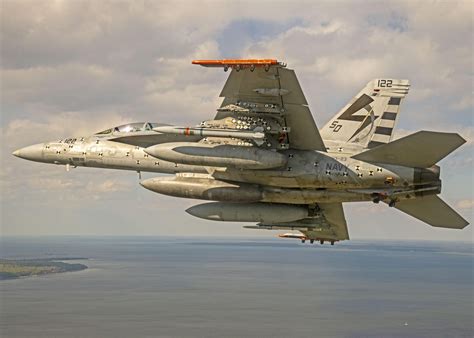
Shared Logistics, Separate Domains
Although the JASSM and LRASM cater to different mission environments — land and maritime, respectively — both benefit from a shared logistics and production backbone, streamlining supply chains and reducing sustainment costs. This shared ecosystem is a force multiplier, enabling seamless scalability in both peacetime production and wartime surge operations.
Ongoing development programs are expanding their capabilities further. For instance, the JASSM-XR (Extreme Range) is reportedly capable of exceeding 1,900 kilometers, pushing strategic strike capability deeper into denied airspace. Both missile types are also undergoing data link upgrades to enable real-time retargeting, a crucial feature in fluid, multi-domain conflict scenarios.
Strategic Imperatives Behind the Billion-Dollar Surge
The latest investment underscores the Pentagon’s urgency in fortifying strategic deterrence against adversaries such as China and Russia, who have rapidly modernized their anti-access/area denial (A2/AD) capabilities.
China’s militarization of islands in the South China Sea and its growing surface fleet, coupled with Russia’s hardened military infrastructure and extensive Integrated Air Defense Systems (IADS) in Kaliningrad and the Arctic, require a response that combines range, precision, and survivability — attributes that the JASSM and LRASM are uniquely equipped to deliver.
Beyond their kinetic role, these systems contribute to an offensive deterrence posture, signaling the ability to conduct first-strike operations deep into adversary territory without requiring forward-deployed forces.
Integration with Fifth-Generation Fighters
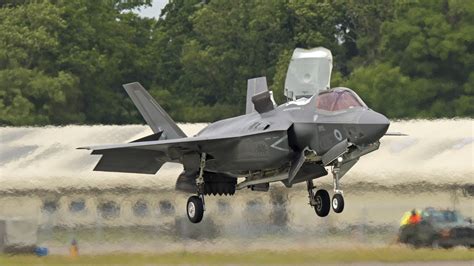
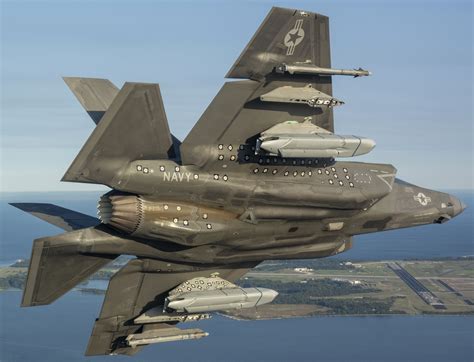
Lockheed Martin is aggressively pushing to integrate both missiles onto the external pylons of the F-35 Lightning II, particularly the F-35B used by the US Marine Corps. While internal carriage is limited due to stealth configuration constraints, external hardpoint integration under the Block 4 modernization program is a top priority.
At the 2025 Paris Air Show, Lockheed executives Greg Ulmer and J.R. McDonald described the Block 4 effort as the “most comprehensive” modernization program for the F-35 platform. This will significantly increase the fighter’s ordnance payload and improve sensor fusion, enabling pilots to engage multiple targets with standoff munitions like JASSM and LRASM without compromising survivability.
From Concept to Combat: Proven Operational History
The JASSM has been a mainstay of the US Air Force since the early 2000s, with extensive combat testing and integration across multiple aircraft platforms. The LRASM reached Initial Operational Capability (IOC) on the B-1B in December 2018, followed by the F/A-18E/F in 2019.
These operational milestones are not just technical checkmarks; they signify the weapons’ readiness in live-fire scenarios and high-tempo environments. With both weapons now certified and actively deployed, they provide strategic commanders with flexible strike options without exposing aircraft to high-risk air defense zones.
Lockheed’s High-Tech Missile Production Facility
In support of expanding production needs, Lockheed Martin opened a new 225,000-square-foot missile manufacturing facility in June 2022, featuring robotic paint lines, automated quality assurance testing, and digital factory modeling systems. This advanced site is pivotal in enabling Lockheed to meet the DoD’s surge capacity expectations while maintaining cost efficiency.
The facility reflects the increasing industrial trend toward automation, modular design, and digital twinning, ensuring that production can scale predictably even under supply chain stress. Such enhancements also open pathways for faster incorporation of upgrades like advanced seekers, propulsion tweaks, and improved guidance modules.
Future-Proofing Deterrence: A Geostrategic Imperative
As military analysts continue to warn of potential flashpoints in Taiwan, the Baltic States, and even the Middle East, the US is banking on standoff weapons like the LRASM and JASSM to project power across global distances without the burden of forward basing.
This $1 billion investment is not simply a procurement line item — it represents a recalibration of American strike doctrine, shifting toward more flexible, survivable, and autonomous weaponry. In an era where GPS jamming, cyber attacks, and satellite denial are not hypothetical but operational realities, the importance of autonomous, stealthy, long-range munitions cannot be overstated.
By investing in next-generation production capability, digital factory integration, and robust platform integration across multiple aircraft types, the United States is positioning itself to maintain qualitative missile superiority for the foreseeable future.
Conclusion
This new $1 billion push to secure and expand production of LRASM and JASSM cruise missiles demonstrates how the United States is responding proactively to emerging strategic threats. With their low observability, long-range reach, and increasingly autonomous targeting capabilities, these systems embody the future of air-launched precision strike warfare. As geopolitical tensions rise and adversaries field increasingly sophisticated defenses, America’s investment in survivable, scalable, and versatile standoff weapons ensures that its deterrence and warfighting edge remains intact.