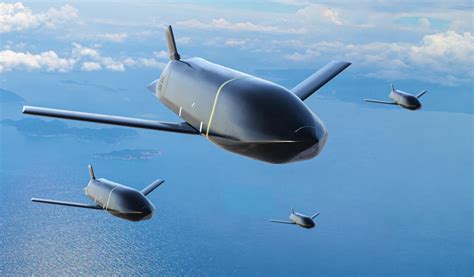
Lockheed Martin, one of the world’s leading defense contractors, has secured a significant contract modification to upgrade the formidable Long-Range Anti-Ship Missile (LRASM) to the C-3 configuration, marking a pivotal advancement in U.S. maritime strike capabilities.
The U.S. Department of Defense confirmed the contract adjustment valued at $45.9 million, aimed at transforming 10 AGM-158C LRASM units from the current C-1 standard to the enhanced C-3 variant. This modification is part of an existing agreement identified as FA8682-23-C-B001, raising the total program investment to over $1.21 billion.
The upgrade work will be carried out at Lockheed Martin’s Missiles and Fire Control facility in Orlando, Florida, with an expected completion date of September 30, 2026. The project will be supervised by the Air Force Life Cycle Management Center based at Eglin Air Force Base, Florida.
The LRASM: Precision Maritime Strike for the Modern Battlefield
The AGM-158C LRASM represents a cornerstone of the U.S. Navy and Air Force’s anti-ship strike capabilities. Derived from the combat-proven Joint Air-to-Surface Standoff Missile (JASSM) family, LRASM is designed to address complex maritime threats with precision, autonomy, and survivability.
Unlike traditional cruise missiles, LRASM employs an advanced suite of sensors, autonomous targeting algorithms, and low-observable design features that enable it to operate effectively in contested, heavily jammed, or denied environments. The missile leverages a semi-autonomous guidance system, reducing its reliance on Intelligence, Surveillance, and Reconnaissance (ISR) platforms, GPS, or vulnerable data links.
Lockheed Martin emphasizes LRASM’s ability to strike high-value maritime targets at standoff ranges while minimizing risk to aircrews and launch platforms. The missile’s endurance and autonomous navigation capabilities make it a game-changer for operations where traditional command-and-control infrastructures are compromised.
Bridging the OASuW Capability Gap
The development and fielding of LRASM stem from the U.S. Navy’s Offensive Anti-Surface Warfare (OASuW) initiative, which seeks to close critical gaps in maritime strike options. With evolving threats from near-peer adversaries, including advanced surface combatants and integrated air defense systems, LRASM provides a crucial near-term solution.
The missile’s stealth profile, sophisticated targeting suite, and high lethality offer significant advantages in environments where adversaries employ robust electronic warfare and denial strategies. Its capability to navigate autonomously over vast distances and identify targets without constant external guidance underscores its strategic value.
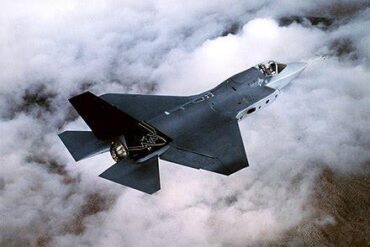
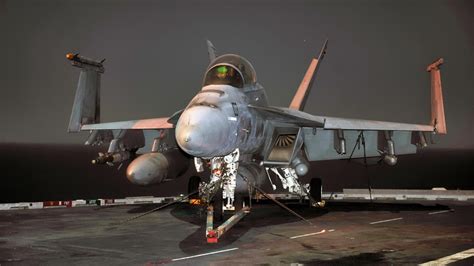
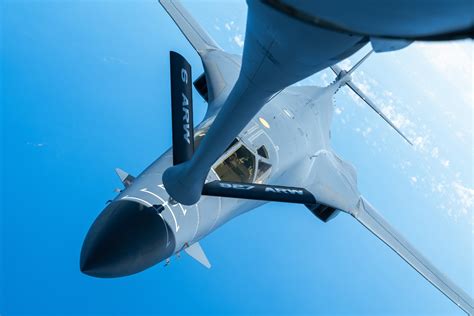
The LRASM is currently integrated with several key U.S. strike platforms, including the B-1B Lancer strategic bomber, the F/A-18E/F Super Hornet carrier-based fighter, and the cutting-edge F-35 Lightning II stealth fighter.
What the C-3 Upgrade Brings to the Table
The latest C-3 configuration for the LRASM represents more than a routine software or hardware refresh—it delivers substantive performance enhancements critical for the evolving demands of maritime warfare. According to defense industry sources and Lockheed Martin officials, the C-3 upgrade package introduces:
- Enhanced Targeting Flexibility: The upgraded missile features improved autonomous targeting algorithms, allowing better discrimination of high-priority targets in cluttered or deceptive environments.
- Sensor Performance Improvements: The C-3 variant integrates next-generation sensors, offering superior detection, tracking, and identification of maritime targets across a broader range of conditions.
- Optimized Platform Integration: The missile’s compatibility with current and emerging U.S. strike aircraft is refined, ensuring seamless operational deployment across joint force assets.
- Greater Survivability and Mission Assurance: Updates to electronic counter-countermeasures (ECCM) capabilities and stealth features further increase LRASM’s resilience against detection and interception.
Strategic Significance Amid Global Tensions
The decision to accelerate LRASM’s upgrade to the C-3 standard comes at a time of intensifying maritime competition and rising geopolitical tensions, particularly in critical regions such as the Indo-Pacific, the South China Sea, and the Baltic Sea.
Naval experts widely regard the LRASM as a key element of sea control and denial operations, offering the U.S. military the ability to hold adversary surface fleets at risk without exposing friendly forces to disproportionate danger. The missile’s long-range precision strike capabilities extend deterrence while providing credible offensive options in potential conflict scenarios.
With the C-3 upgrade, LRASM is expected to bolster the U.S. Navy’s ability to counter advanced surface combatants, including heavily armed destroyers, frigates, and potentially aircraft carrier groups operated by peer competitors.
Financial and Industrial Implications
The newly announced contract modification involves the immediate obligation of $5.4 million from the Fiscal Year 2024 Navy Weapons Procurement funds, supplemented by $3.15 million allocated from Fiscal Year 2025 resources. This investment reflects both the urgency and strategic priority placed on enhancing maritime strike assets.
Lockheed Martin’s Orlando-based facility remains at the center of LRASM production and modernization efforts, supporting hundreds of high-tech defense jobs and contributing to the broader U.S. industrial base focused on advanced weapons development.
Beyond its direct military implications, the LRASM program fosters innovation in autonomous targeting, low-observable technologies, and multi-domain integration, technologies with potential applications across a spectrum of future defense platforms.
Future Outlook: Sustaining Maritime Superiority
Looking ahead, defense analysts anticipate that LRASM will continue evolving beyond the C-3 configuration as adversaries refine their own countermeasures and naval capabilities. Efforts to extend the missile’s range, improve warhead effectiveness, and further enhance autonomous decision-making are likely areas of focus.
Moreover, there is growing interest in expanding LRASM’s deployment beyond traditional fixed-wing platforms. Potential concepts include adapting the missile for use from vertical launch systems (VLS) aboard surface combatants or employing variants compatible with emerging unmanned aerial vehicles (UAVs) to maximize operational flexibility.
The current upgrade reflects a broader Pentagon strategy to maintain technological overmatch in the maritime domain, ensuring U.S. forces can project power, deter aggression, and, if necessary, prevail in high-intensity naval conflicts.
In summary, the LRASM C-3 upgrade solidifies the missile’s role as a cornerstone of the U.S. Navy and Air Force’s long-range strike arsenal. With enhanced targeting, survivability, and platform integration, the C-3 variant ensures American maritime strike capabilities remain at the forefront of modern warfare.