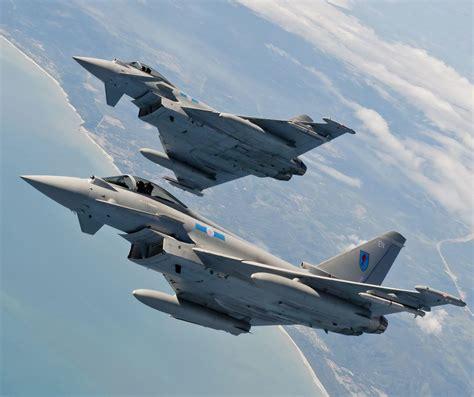
Modern air combat is entering an era where technology, strategy, and industrial politics collide. For nearly a decade, the Lockheed Martin F-35 Lightning II has dominated global discussions about next-generation fighter aircraft. Its stealth profile, integrated sensors, and multinational procurement program have positioned it as the centerpiece of Western airpower. Yet behind that dominance lies an aircraft that refuses to fade into the background: the Eurofighter Typhoon.
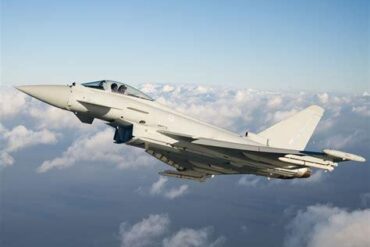
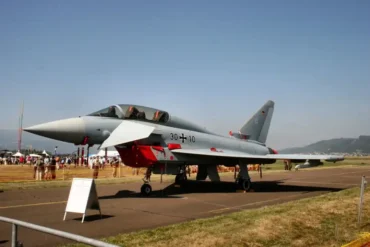
Developed by a consortium of the United Kingdom, Germany, Italy, and Spain, the Typhoon represents one of the most advanced swing-role combat aircraft ever built. A swing-role fighter can seamlessly transition between air superiority missions and precision ground attack, allowing air forces to deploy a single platform across multiple combat scenarios. While the F-35 focuses on stealth and network-centric warfare, the Typhoon has evolved into a highly agile, heavily armed fighter designed to dominate contested skies.
What makes this dynamic interesting is not that the Typhoon directly replaces the F-35. Instead, it challenges the assumption that stealth aircraft are the only viable solution for modern air forces. Through continuous upgrades, combat experience, and strategic export deals, the Typhoon remains a formidable competitor in markets where the F-35 once seemed inevitable.
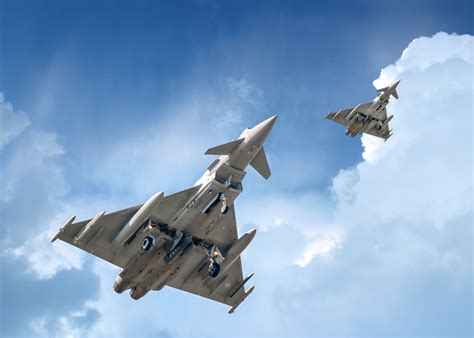
The Strategic Rivalry Between Eurofighter Typhoon and the F-35 Lightning II
At first glance, comparing the Eurofighter Typhoon with the F-35 Lightning II appears uneven. The F-35 is a fifth-generation stealth aircraft designed around low observability, sensor fusion, and network warfare. The Typhoon, by contrast, originated in the late Cold War as a fourth-generation air superiority fighter.
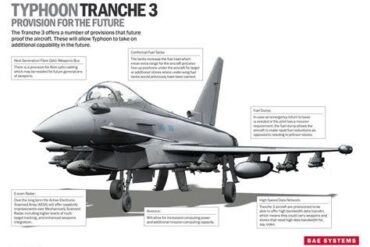
However, decades of upgrades have transformed the Typhoon into something far more sophisticated. Modern variants incorporate advanced AESA radar systems, digital cockpit technology, long-range missile integration, and enhanced electronic warfare suites. These upgrades allow the aircraft to remain competitive against newer fighters.
Instead of trying to match the F-35’s stealth characteristics, the Typhoon plays to different strengths. Its design prioritizes speed, agility, payload capacity, and operational flexibility. In many mission scenarios—particularly air defense and high-speed interception—these characteristics remain extremely valuable.
The rivalry between the two aircraft therefore reflects a deeper philosophical divide in modern air combat. One approach prioritizes invisibility and data dominance, while the other emphasizes maneuverability, firepower, and sustained performance. For many nations evaluating their fighter fleets, both approaches have merit.
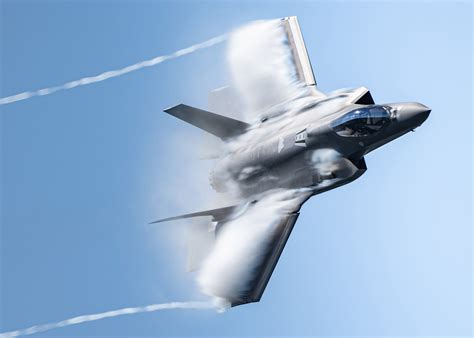
A Swing-Role Fighter Built for Flexibility
The defining characteristic of the Eurofighter Typhoon is its swing-role capability. Unlike aircraft designed primarily for either air-to-air combat or ground attack, the Typhoon can perform both missions during the same sortie.
Its canard-delta wing configuration provides remarkable aerodynamic efficiency. The combination of forward canards and a delta wing allows the aircraft to generate enormous lift during aggressive maneuvers, giving pilots exceptional control at both high and low speeds.
This configuration produces several operational advantages:
- Exceptional dogfighting agility
- High sustained turn rates
- Strong energy retention during combat maneuvers
- Rapid climb performance
Equally important is the Typhoon’s ability to supercruise, meaning it can maintain supersonic speed without engaging afterburners. Supercruise reduces fuel consumption while enabling fighters to reach combat zones faster and intercept hostile aircraft more efficiently.
In an age where stealth often dominates headlines, raw performance still matters. During close-range engagements or defensive intercept missions, the Typhoon’s maneuverability and speed remain decisive.
Advanced Radar and Weapons Transform the Typhoon
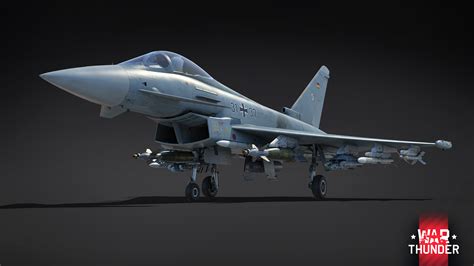
Technology upgrades have played a central role in keeping the Typhoon competitive. One of the most significant improvements is the introduction of the Captor-E AESA radar.
An Active Electronically Scanned Array (AESA) radar uses thousands of tiny transmitters to steer radar beams electronically rather than mechanically. This allows the system to track multiple targets simultaneously while remaining resistant to jamming.
For Typhoon pilots, this means dramatically improved situational awareness in complex combat environments.
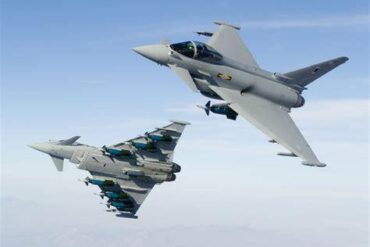
Complementing the radar system is the integration of some of the most advanced air-to-air weapons in the world, particularly the Meteor beyond-visual-range missile. Meteor is powered by a ramjet propulsion system, allowing it to maintain high energy throughout its flight path. The result is a missile capable of engaging targets at extremely long distances while retaining maneuverability in the final interception phase.
Combined with the Typhoon’s powerful radar and sensor suite, this missile provides formidable long-range combat capability.
Modern upgrades also include:
- Digital cockpit displays and helmet-mounted targeting systems
- Advanced electronic warfare pods
- Enhanced ground-attack precision weapon integration
- Improved networking with NATO command systems
Each upgrade extends the aircraft’s relevance well into the future.
Operational Experience Across Multiple Combat Theaters
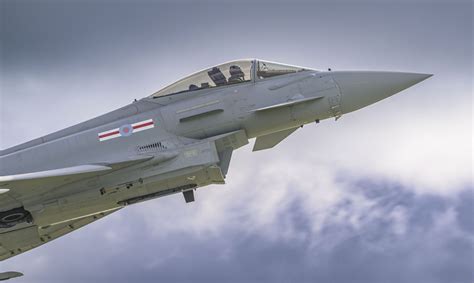
Combat credibility often separates theoretical performance from real-world capability. Since entering service in the early 2000s, the Eurofighter Typhoon has accumulated significant operational experience.
European operators have deployed the aircraft for NATO quick reaction alert missions, intercepting unidentified aircraft approaching allied airspace. These intercept missions frequently occur over the Baltic Sea and Eastern Europe, regions where tensions with Russia require constant vigilance.
Beyond air policing, the Typhoon has participated in several major military operations. During the 2011 NATO intervention in Libya, Typhoon aircraft conducted both air superiority patrols and precision ground strikes. Later deployments saw the aircraft operating over Iraq and Syria, supporting coalition operations against extremist groups.
These missions tested the aircraft under demanding operational conditions. Pilots reported strong performance in both air-to-air and air-to-ground roles, confirming the effectiveness of the Typhoon’s swing-role design.
Export operators have also flown the aircraft extensively in challenging environments. Air forces in Saudi Arabia, Qatar, and Kuwait operate the Typhoon in intense desert climates characterized by high temperatures and airborne sand. Despite these harsh conditions, the aircraft has demonstrated consistent reliability.
Export Success and Strategic Independence
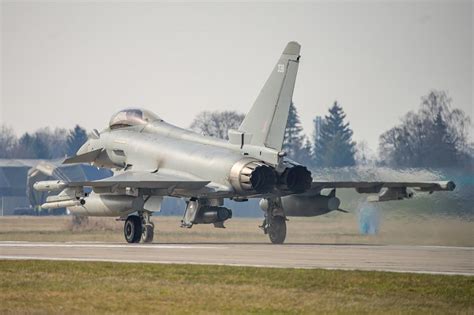
A critical factor behind the Typhoon’s continuing relevance is its appeal to nations seeking strategic independence.
Purchasing advanced fighter aircraft is never purely a military decision. It involves political alliances, industrial partnerships, and long-term logistical dependencies. Some governments prefer not to rely entirely on American defense systems.
The Eurofighter program offers a compelling alternative. Because the aircraft is produced by a multinational European consortium, procurement contracts often include industrial participation agreements that support domestic aerospace industries.
This structure creates several political advantages:
- Local manufacturing and maintenance jobs
- Technology transfer opportunities
- Shared research and development investment
- Reduced dependence on a single foreign supplier
For European governments especially, purchasing Typhoons helps sustain the continent’s aerospace expertise while strengthening regional defense cooperation.
This industrial dimension makes the aircraft far more than a military tool. It becomes a strategic investment in national technological capability.
Operating Costs and Long-Term Fleet Economics
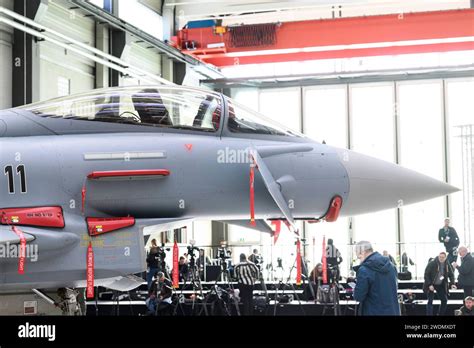
One of the most persistent debates surrounding modern fighter aircraft involves lifecycle cost. While the F-35’s acquisition price has decreased over time, the aircraft still carries significant operational and sustainment expenses.
The Typhoon, although not inexpensive, often presents a different financial profile. Operating cost estimates suggest roughly $18,000 to $20,000 per flight hour, compared with more than $35,000 per hour for some F-35 variants.
These numbers matter enormously for air forces that must maintain high readiness levels. Every additional flight hour consumed during training or patrol missions affects long-term budgets.
The Typhoon also benefits from a more conventional maintenance architecture. Because it lacks complex stealth coatings requiring specialized repair processes, routine maintenance procedures can be simpler.
For nations balancing capability with fiscal constraints, this difference can influence procurement decisions.
The Limitations That Protect the F-35’s Market
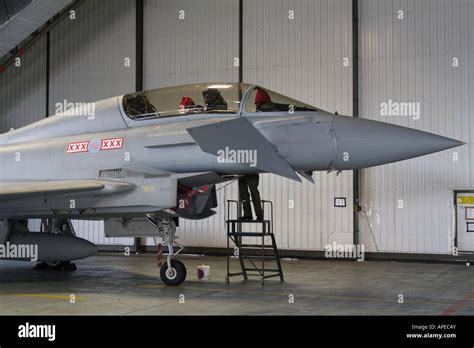
Despite its strengths, the Eurofighter Typhoon faces clear limitations. The most significant is its lack of true stealth capability.
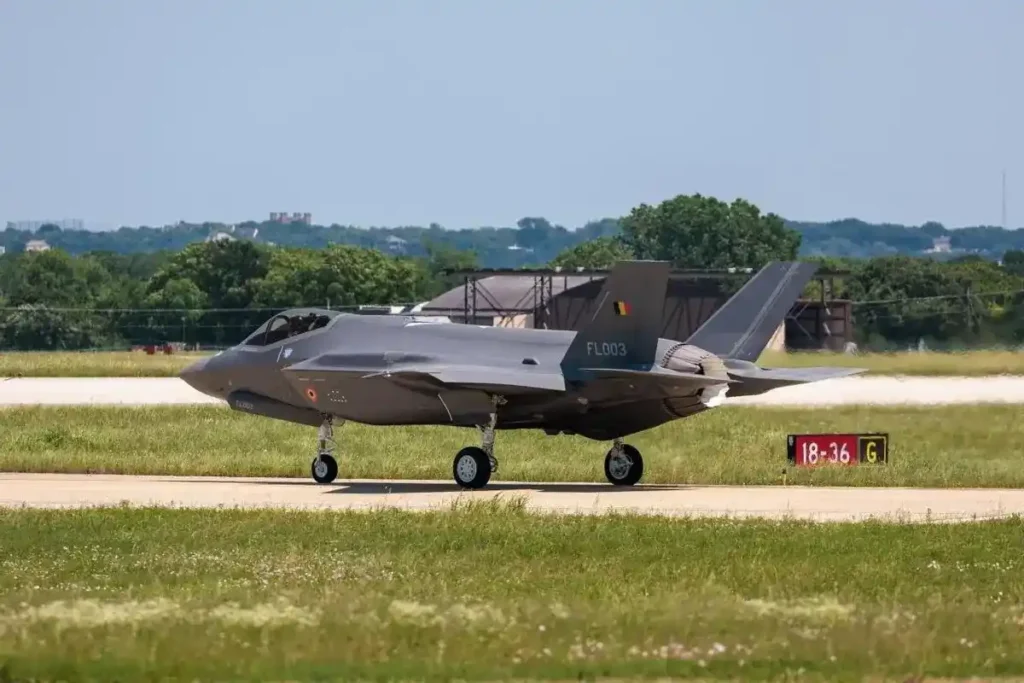
Stealth aircraft are designed to minimize radar reflections through carefully shaped surfaces and radar-absorbing materials. This dramatically reduces the distance at which enemy radar systems can detect the aircraft.
The F-35 was built from the ground up around this principle. Its internal weapon bays, faceted airframe geometry, and radar-absorbing coatings allow it to operate deep within heavily defended airspace.
By contrast, the Typhoon relies on speed, electronic warfare systems, and tactical maneuvering to survive in contested environments. These methods remain effective but cannot fully replicate the advantages of stealth.
Another challenge stems from the Typhoon’s multinational governance structure. Because multiple governments participate in the program, major upgrades sometimes require lengthy negotiations regarding funding and industrial workshare.
These bureaucratic complexities can slow development timelines compared with programs managed by a single manufacturer.
A Future Shaped by Next-Generation Air Combat Programs
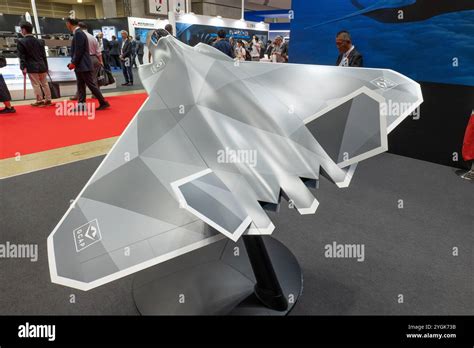
The future of the Typhoon is closely tied to Europe’s ambitious next-generation fighter initiatives, particularly the Global Combat Air Programme (GCAP) led by the United Kingdom, Italy, and Japan.
GCAP aims to develop a sixth-generation combat aircraft expected to enter service around 2035. Until that platform becomes operational, the Typhoon will remain a central pillar of European airpower.
Continuous upgrades are planned under the Long Term Evolution (LTE) roadmap. These upgrades include:
- ECRS Mk2 electronic scanning radar
- Advanced electronic warfare capabilities
- Expanded network-centric warfare integration
- Improved sensor fusion systems
These enhancements will ensure the aircraft remains effective alongside emerging technologies such as loyal wingman drones and distributed sensor networks.
The Typhoon is therefore not a relic awaiting retirement. It is an evolving platform bridging the gap between today’s fourth-generation fighters and tomorrow’s sixth-generation systems.
Why Lockheed Martin Still Pays Attention
The reason Lockheed Martin watches the Eurofighter Typhoon carefully has little to do with fear of direct replacement. The F-35’s stealth capability ensures it will remain a cornerstone of Western air forces.
The real concern lies in market competition and strategic alternatives.
Every Typhoon contract won represents a nation choosing a different path for its air force modernization. Sometimes those nations still buy F-35s as well, but the Typhoon reduces the scale of potential purchases.
Germany provides a clear example. The country has ordered F-35 aircraft for NATO nuclear-sharing missions, yet continues purchasing new Typhoons for air superiority and electronic warfare roles.
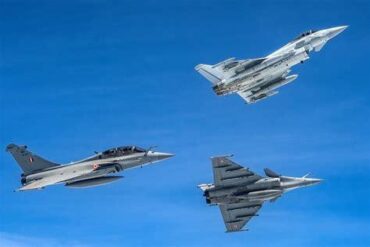
The United Kingdom follows a similar model, operating both fighters simultaneously.
This dual-fleet strategy demonstrates that modern air forces increasingly view stealth aircraft as part of a larger ecosystem, rather than the sole solution to every mission.
The Broader Lesson in Global Airpower Competition
The continuing success of the Eurofighter Typhoon illustrates a deeper truth about military technology. Dominance rarely eliminates competition; it simply raises the stakes.
The F-35 remains one of the most advanced combat aircraft ever produced, yet the Typhoon shows that performance, flexibility, and industrial independence still carry enormous weight in procurement decisions.
For Lockheed Martin, the Typhoon represents a persistent reminder that global defense markets are shaped by politics, economics, and strategic culture as much as raw technology.
As long as the aircraft continues to evolve through new sensors, weapons, and electronic warfare systems, it will remain a credible alternative for nations seeking a powerful, adaptable fighter without full reliance on American defense infrastructure.
In the complex chessboard of modern airpower, the Eurofighter Typhoon may not wear the crown of stealth supremacy. But its enduring presence ensures that the skies remain a competitive arena—one where innovation never stands still.