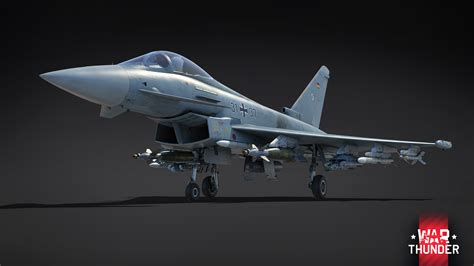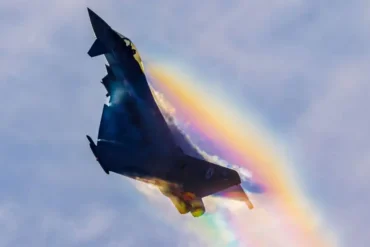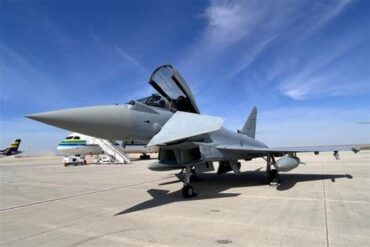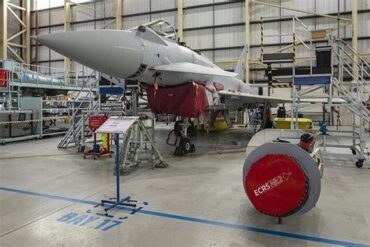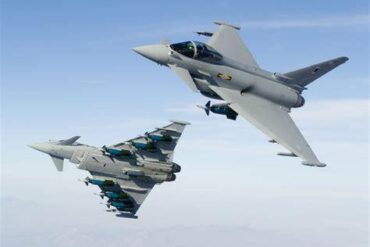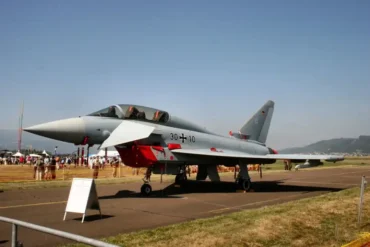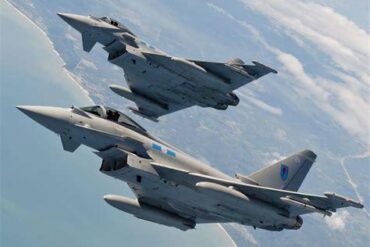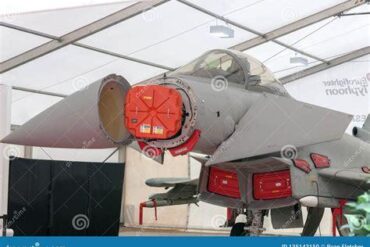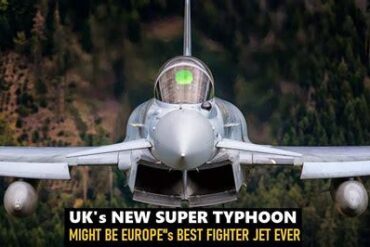
The Eurofighter Typhoon, Europe’s premier multirole combat aircraft, is now undergoing a significant strategic shift as its consortium eyes a comprehensive midlife upgrade. This transition comes amid evolving defense priorities and the emerging realities of next-generation air combat frameworks, such as the Future Combat Air System (FCAS) and the Global Combat Air Program (GCAP).
Rethinking Long-Term Evolution in the Context of Next-Gen Warfare
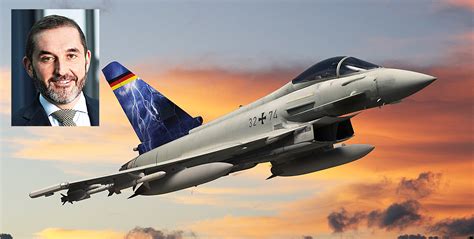
Speaking at the Paris Air Show at Le Bourget, Eurofighter CEO Jorge Tamarit Degenhardt confirmed that the previous long-term evolution strategy for the Typhoon has been effectively paused. Instead, focus has shifted to defining a midlife update (MLU) that is tailored to better integrate the aircraft into future aerial combat environments. These environments are expected to be shaped profoundly by FCAS, involving France, Germany, and Spain, and GCAP, involving the UK, Italy, and Japan.
“We need to rethink what’s the operational need of the Eurofighter within the FCAS and GCAP theater,” Degenhardt emphasized. This means that instead of extending current capabilities incrementally, Eurofighter aims to reimagine its role as a system that can seamlessly operate alongside sixth-generation platforms and uncrewed combat assets.
Toward a New Electronic Architecture
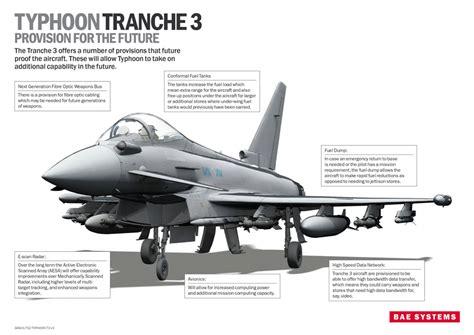
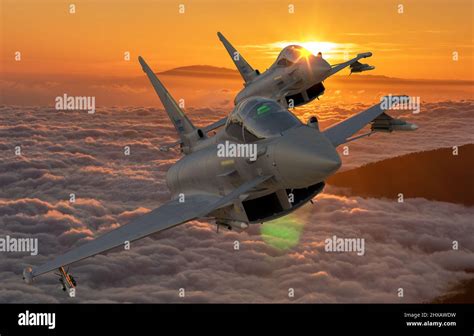
At the core of this upgrade is a revised electronic architecture. The MLU aims to equip Typhoon with the systems and protocols needed to function within highly networked, multi-domain battle environments. These include shared threat databases, real-time data fusion, and interoperability with autonomous drones and command-and-control hubs.
This architecture will not only be installed on new Typhoon builds but is also envisioned as a retrofit package, thereby extending the lifecycle and operational relevance of the existing fleet. The retrofit would include comprehensive life-extension measures, ensuring that Eurofighter remains combat-capable well into the 2060s.
The new approach includes launching technology maturation efforts, which will evaluate what future missions and battle scenarios will demand from Typhoon. These assessments are expected to influence sensor fusion, communications, and cyber-resilience technologies that will be critical in tomorrow’s air combat operations.
Immediate Enhancements and Weapon Integrations
While preparing for the long term, Eurofighter is also focusing on near-term capability expansions. A key upcoming enhancement is the integration of the MBDA Taurus cruise missile, a long-range precision strike weapon. This integration is particularly prioritized by Germany and Spain, both of whom have already expressed concrete interest.
Work on this weapons integration is expected to commence once Germany finalizes its upcoming Typhoon procurement contract. The Taurus system would significantly boost Typhoon’s deep strike capabilities, allowing it to engage high-value targets deep within contested territories.
Accelerating Production to Meet Demand
In parallel with capability upgrades, Eurofighter is aggressively ramping up production. The current annual output stands at around 14 aircraft, but according to Degenhardt, the plan is to increase this to 20 within three years. The ambition doesn’t stop there — contingent on export successes, the consortium could raise output to 30 aircraft per year or more.
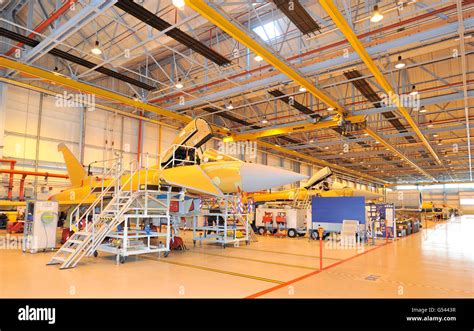
This push comes amid heightened demand from both existing partner nations and new export markets. Germany is projected to purchase 20 more aircraft this year, and Spain — having topped up its fleet in late 2024 — is also expected to add more.
To support this surge, Eurofighter is initiating investments in modern tooling, enhancing supply chain resilience, and shortening delivery lead times, which currently sit at 50 months. Degenhardt made it clear that a leaner, faster delivery model is essential if Eurofighter wants to stay competitive, especially against U.S.-made rivals.
Export Ambitions Amid Geopolitical Shifts
The Eurofighter consortium — made up of Airbus, BAE Systems, and Leonardo — sees a window of opportunity to capture more than 100 new export orders in the near term. In addition to ongoing discussions with traditional partners, Eurofighter is targeting Austria, Poland, Portugal, and Turkey as potential new customers.
One high-stakes campaign is the Saudi Arabian top-up order. The Kingdom already operates the Typhoon but has shown interest in expanding its fleet. However, this deal is now under intense pressure due to U.S. diplomatic activity, including President Trump’s renewed focus on expanding American defense sales in the region.
“We survived the first visit,” said Degenhardt wryly, but he noted that the window for closing the deal is narrow. Eurofighter must move quickly and decisively to convert interest into contracts before U.S. competitors solidify their positions.
Industrial Momentum: A Strategic “Zeitenwende”
The production surge and export push are emblematic of what Degenhardt calls Eurofighter’s ‘Zeitenwende’, borrowing the term Germany used to describe its own military transformation. This moment marks a turning point not only for Typhoon’s industrial footprint but also for its strategic identity within Europe’s broader defense posture.
Eurofighter’s renewed energy includes a cultural shift toward faster decision-making, streamlined engineering processes, and more aggressive engagement with global stakeholders. Degenhardt wants the consortium to act less like a legacy program and more like a flexible, adaptive enterprise that can meet modern military and industrial demands.
Integration with FCAS and GCAP: Beyond Interoperability
The midlife upgrade is not merely about compatibility — it’s about true integration with sixth-generation platforms. As FCAS and GCAP evolve, both are expected to feature swarming drones, AI-driven situational awareness, and cloud-based mission command. Typhoon must become more than a manned aircraft in this environment; it must act as a command node, a sensor platform, and a weapons delivery vehicle within a larger digital ecosystem.
This evolution is especially critical for ensuring that European nations have interoperable, sovereign combat capabilities that do not depend entirely on U.S. systems. As competition intensifies in regions like the Indo-Pacific, Middle East, and Eastern Europe, Europe’s ability to project power independently becomes a strategic imperative.
Conclusion: A Fighter Reborn for the Future
The Eurofighter Typhoon is at a crossroads — not of obsolescence, but of reinvention. With a meticulously crafted midlife upgrade strategy, ambitious production targets, and a rapidly evolving role within Europe’s defense landscape, the Typhoon is proving that legacy platforms can become next-generation enablers.
By adapting its technology roadmap to meet the demands of multi-domain warfare, investing in its industrial base, and aligning itself with visionary programs like FCAS and GCAP, the Eurofighter is set to remain not just relevant, but central to Europe’s airpower strategy for decades to come.