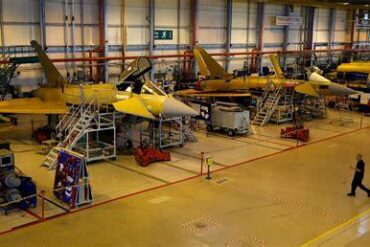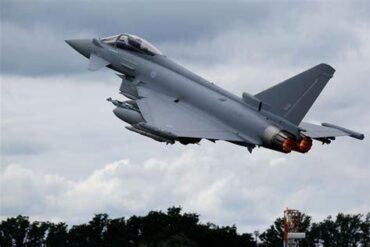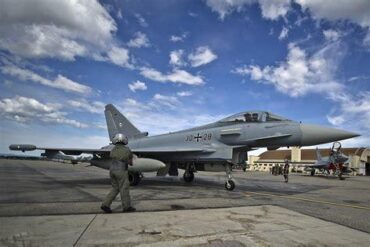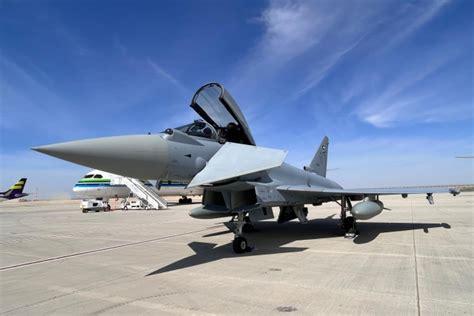
The Eurofighter consortium has unveiled an ambitious production strategy that could more than double the output of Typhoon fighter jets by 2028, should key export deals come through. Speaking at the Paris Air Show, Eurofighter CEO Jorge Tamarit Degenhardt emphasized that the path to achieving a target of 30 aircraft per year—up from the current 14—depends heavily on success in four strategic export campaigns: Austria, Poland, Turkey, and Saudi Arabia.
Degenhardt underscored the urgency of scaling up manufacturing: “We need to do it fast,” he said. The consortium is currently preparing to increase output to 20 aircraft annually within three years, laying the foundation for an even more aggressive ramp-up to 30 units by the end of the decade.
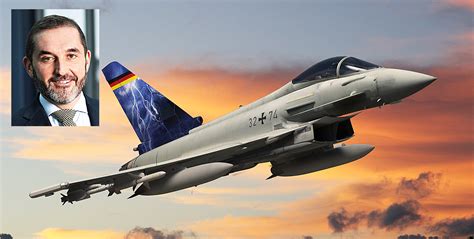
Eurofighter’s Expanding Global Ambitions
At the core of the production expansion strategy lies an export initiative that stretches from Central Europe to the Middle East. While the Eurofighter Typhoon has long been a backbone of European air defense, its future viability increasingly depends on international sales. The current order book of 729 aircraft offers a solid base, but future survivability of the program hinges on new commitments.
Austria’s Modernization Path
Austria, already a Eurofighter operator, is evaluating a replacement plan for its Tranche 1 jets, a move detailed in a national defense report published earlier this year. If Vienna proceeds with its procurement strategy in 2025, the country could become a repeat customer, helping to sustain Typhoon production well into the 2030s. This potential deal also carries significant political weight, given Austria’s historic hesitations over defense procurement transparency.
Poland’s Fighter Jet Contest
In Poland, Eurofighter is competing head-to-head against Boeing’s F-15EX for a lucrative contract involving 32 new fighter jets. Warsaw’s choice could be a watershed moment for the Typhoon’s standing in Eastern Europe. While the timeline for selection remains unclear, any victory here would inject immediate momentum into the production pipeline.
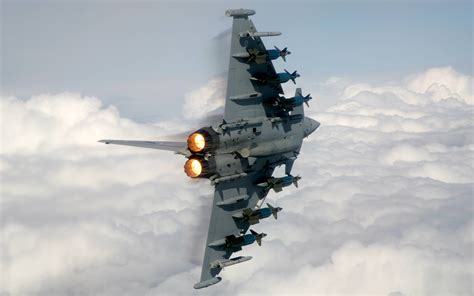
Turkey’s Reengagement with the West
Meanwhile, Turkey—a NATO member seeking to diversify its air fleet—has received a formal UK bid for 40 Typhoons. This follows years of tense relations between Ankara and its traditional Western defense suppliers. A Turkish deal could not only solidify the Eurofighter’s role in regional air defense but also revive diplomatic and defense ties between Turkey and key European states.
Saudi Arabia: Strengthening a Strategic Partnership
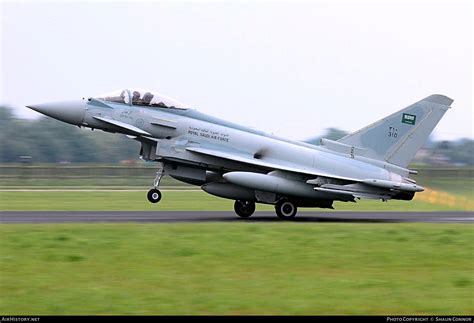
Saudi Arabia remains perhaps the most promising prospect. Already operating 72 Eurofighters since a 2007 deal with BAE Systems, Riyadh is now exploring a new purchase with British support. According to Degenhardt, discussions are ongoing with the UK government to draft a formal Statement of Requirements, a key procedural step toward a second tranche.
Industrial Transformation and Supply Chain Scaling
To accommodate the anticipated surge in demand, Eurofighter is undergoing a massive transformation of its industrial base. Degenhardt highlighted the role of 400 critical suppliers, whose capacity must be rapidly increased in tandem with final assembly lines across Germany, the UK, Italy, and Spain.
“Deliveries are happening within the next decade or decades,” he explained, “so we need to sustain this increase in industrial throughput by developing the best new manufacturing technologies.” The Eurofighter consortium is thus investing in digital twins, AI-driven predictive maintenance systems, and next-generation materials processing to shorten production cycles and reduce unit costs.
Midlife Upgrade: A Critical Inflection Point
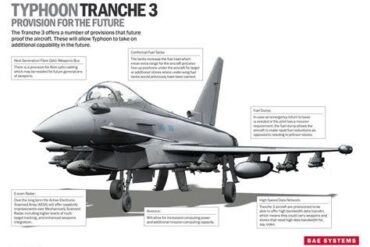
However, production is only one side of the equation. For the Eurofighter Typhoon to remain viable through the 2060s, a comprehensive midlife upgrade (MLU) is essential. Degenhardt noted that the aircraft is now approaching the ceiling of its hardware architecture, particularly in terms of computing capacity, which affects sensor fusion, weapons integration, and survivability.
While all four partner nations—Germany, Italy, Spain, and the UK—have articulated their support for such an upgrade, none have committed funding. Without financial backing, the technical roadmap to keep the Typhoon competitive against emerging threats from platforms like the F-35 and Su-57 remains tenuous.
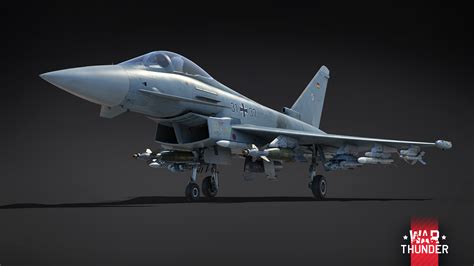
The UK’s Pivot to the F-35 and GCAP
Complicating the future of the Eurofighter is the United Kingdom’s strategic shift toward fifth-generation platforms, particularly the F-35A/B variants and the Global Combat Air Programme (GCAP). The UK’s 2024 Strategic Defence Review (SDR) made it clear that no additional Typhoon purchases are anticipated, with priority now given to stealth platforms and sixth-generation development.
“Our leverage to influence the UK’s SDR is limited,” Degenhardt acknowledged. “They are really moving toward F-35 operations and GCAP.”
While the UK’s withdrawal from future procurement weakens one pillar of the consortium, it could paradoxically strengthen Eurofighter’s position in non-aligned markets seeking alternatives to the US defense-industrial complex.
Strategic Timing and the 2028 Production Milestone
The 2028 timeline is not arbitrary. It aligns with both the replacement cycles of several air forces and the geopolitical urgency of bolstering NATO’s eastern flank. The Ukraine war has reawakened European defense spending, and countries are actively looking to modernize their air combat fleets.
By setting a clear goal to reach 30 aircraft per year, Eurofighter is signaling its readiness to become a central pillar of European airpower for decades to come. Achieving this milestone will, however, depend on a synchronized execution of export diplomacy, supply chain modernization, and technological evolution.
A Dual Track: Growth and Survival
Eurofighter’s current trajectory represents both a growth opportunity and a survival imperative. While its fourth-generation platform remains among the most potent in service, the landscape is rapidly shifting toward fifth- and sixth-generation dominance. Without an aggressive push into global markets and an infusion of next-generation technologies, the Typhoon risks obsolescence.
Degenhardt’s strategy recognizes this duality. It is a calculated race against time: build enough aircraft now to finance future innovation later. Whether the plan materializes depends not just on buyer interest, but also on political resolve among consortium members and a timely commitment to long-overdue upgrades.
For now, the Eurofighter Typhoon stands on the precipice of renewal—with its fate tied to global diplomacy, defense procurement timelines, and the evolving face of 21st-century air combat.