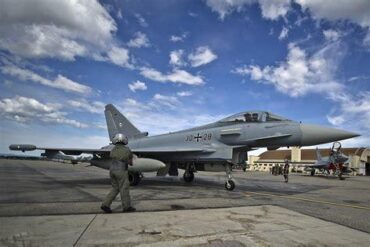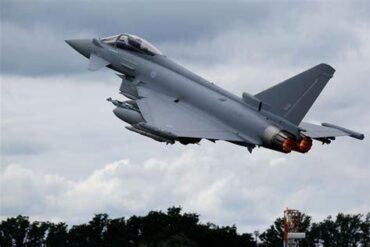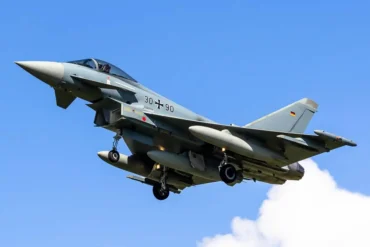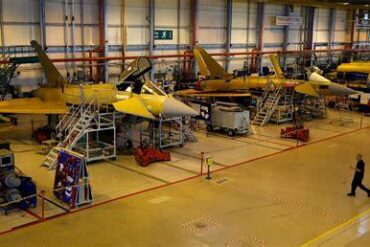
Türkiye’s long-standing ambition to modernize its fighter jet fleet has taken a significant step forward as the United Kingdom officially endorses Türkiye’s bid to acquire the Eurofighter Typhoon, one of the most advanced multi-role combat aircraft in NATO’s arsenal. The announcement, made by British Foreign Secretary David Lammy ahead of his diplomatic visit to Ankara, signals not only a breakthrough for Türkiye’s defense aspirations but also underscores broader shifts in European security cooperation.
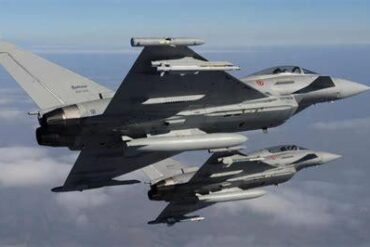
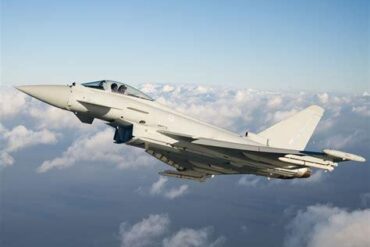
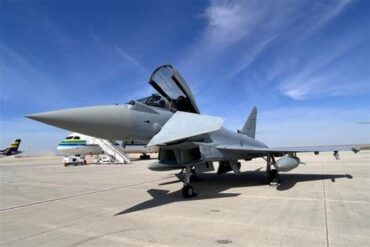
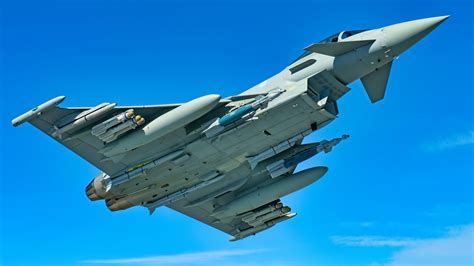
The Eurofighter Typhoon, jointly developed by the United Kingdom, Germany, Italy, and Spain, represents a cornerstone of NATO’s collective air power. Equipped with cutting-edge avionics, AESA radar systems, and a formidable weapons suite, the Typhoon has proven its capability across both air superiority and precision strike missions. Though it lacks the low observable stealth profile of fifth-generation platforms like the F-35, the Eurofighter has evolved through continuous upgrades, ensuring its relevance in contested and electronically complex operational environments.
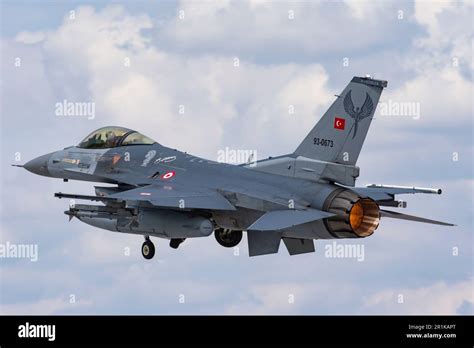
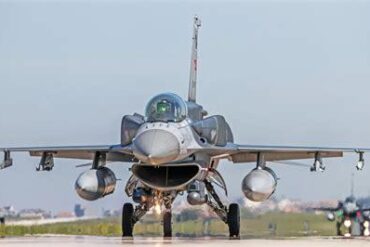
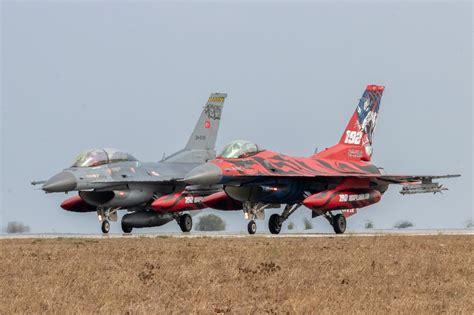
For Türkiye, the pursuit of the Eurofighter Typhoon reflects a pragmatic and strategic approach to addressing critical gaps in its air capabilities. Following its removal from the F-35 Joint Strike Fighter program in 2019, due to the procurement of Russian S-400 air defense systems, Ankara has faced increasing urgency to replenish its aging F-16 fleet and preserve its technological edge. While negotiations with the United States for F-16 Block 70 fighters have seen progress, the limitations of operating outside the fifth-generation ecosystem persist, prompting Türkiye to diversify its options.
UK Support and the Eurofighter Consortium Dynamics
British Foreign Secretary David Lammy’s statement marks a decisive diplomatic alignment with Türkiye’s Eurofighter aspirations. Speaking to Hürriyet Daily News, Lammy emphasized the “strategic necessity” of Türkiye acquiring the Eurofighter Typhoon, highlighting its potential to bolster NATO interoperability and reinforce regional security frameworks. However, Lammy acknowledged internal political challenges within the Eurofighter consortium, notably from Germany, which has so far shown hesitation towards advancing Türkiye’s participation.
Despite Berlin’s reservations, London’s proactive efforts to facilitate Türkiye’s entry into the Eurofighter program reflect both defense pragmatism and geopolitical foresight. The United Kingdom views Türkiye not only as a critical NATO ally but also as a pivotal player in maintaining stability across Europe’s southeastern flank, particularly given its proximity to volatile regions in the Middle East and the Black Sea.
Türkiye’s Multifaceted Air Power Strategy
Türkiye’s interest in the Eurofighter Typhoon is not merely about fleet replacement—it is part of a layered defense strategy designed to ensure both short-term capability enhancement and long-term technological independence. While Ankara continues to develop its indigenous fifth-generation fighter, the KAAN, under the leadership of Turkish Aerospace Industries, the platform remains in prototype stages. The KAAN, intended to feature stealth characteristics, supercruise capability, and next-generation sensor fusion, is expected to enter operational service later in the decade.
In the interim, the Eurofighter Typhoon offers Türkiye a viable bridge solution, allowing the Turkish Air Force to maintain competitive parity in a region marked by complex security threats, including evolving air defenses and adversarial fighter capabilities. Crucially, the Eurofighter is NATO-interoperable, ensuring seamless integration with existing alliance systems and enabling Türkiye to continue contributing to collective defense initiatives effectively.
Industrial Cooperation and Strategic Benefits
A Eurofighter acquisition would not be limited to aircraft procurement; it also opens avenues for expanded defense industrial collaboration between Türkiye and key European partners. Through the Türkiye/U.K. Defense Industry Council, Ankara and London have laid the groundwork for deeper cooperation in defense manufacturing, maintenance, and technological innovation. Turkish defense firms stand to gain from potential roles in the Eurofighter’s maintenance, modernization, and even component production.
Such arrangements align with Türkiye’s broader ambition to elevate its defense industry to global prominence. Already a significant producer of indigenous drones, naval vessels, and armored platforms, Türkiye seeks to integrate itself further into high-end aerospace projects, thereby enhancing both its domestic capabilities and export potential.
The Eurofighter partnership could act as a catalyst for these aspirations, fostering technology transfers, joint ventures, and supply chain integration that benefit Türkiye’s defense sector while strengthening NATO’s collective industrial base.
NATO Implications and Geopolitical Considerations
Türkiye’s geostrategic location has long made it an indispensable NATO member. Straddling Europe and Asia, Türkiye provides critical basing for NATO operations, with air installations such as Incirlik Air Base and Konya Air Base playing essential roles in intelligence gathering, rapid response deployments, and power projection missions across the Middle East, Eastern Europe, and the Mediterranean.
An upgraded Turkish Air Force equipped with Eurofighter Typhoons would markedly enhance NATO’s southern defensive posture. In particular, it would provide greater flexibility in countering emergent threats from Russia, Iran, and various non-state actors operating in the region. With its ability to conduct air dominance, precision strikes, and electronic warfare operations, the Typhoon strengthens alliance deterrence and improves operational readiness across contested environments.
Moreover, Türkiye’s commitment to bolstering its fighter fleet addresses broader alliance cohesion challenges. Recent years have witnessed tensions within NATO regarding defense procurement decisions, geopolitical alignments, and internal disagreements over strategic priorities. Facilitating Türkiye’s integration into the Eurofighter community represents a constructive step towards reinforcing unity, capability parity, and operational synergy among alliance members.

Overcoming Political Hurdles
Despite the positive momentum, Türkiye’s Eurofighter ambitions face political headwinds, particularly from within the consortium. Germany’s apprehensions stem from various factors, including concerns over human rights, regional policy divergences, and export control sensitivities. However, British officials, including Lammy, have expressed confidence that these obstacles can be navigated through diplomatic engagement and recognition of shared security interests.
For the United Kingdom, facilitating Türkiye’s Eurofighter acquisition aligns with its post-Brexit strategy of enhancing bilateral defense ties, projecting global influence, and ensuring stability along NATO’s periphery. For Türkiye, the move serves both practical defense needs and broader geopolitical signaling, demonstrating Ankara’s continued commitment to alliance frameworks despite past tensions over the F-35 exclusion.
Conclusion: A Strategic Inflection Point
The United Kingdom’s backing for Türkiye’s Eurofighter Typhoon acquisition represents more than a transactional defense deal—it is a strategic inflection point for NATO, European defense cooperation, and Türkiye’s evolving role in regional security architectures. As Türkiye navigates its path toward modernizing its air power, bridging capability gaps, and enhancing indigenous aerospace development, the Eurofighter Typhoon emerges as both a practical and symbolic asset.
The coming months will reveal the extent to which diplomatic efforts can align political interests within the Eurofighter consortium to finalize Türkiye’s participation. If successful, the acquisition will not only elevate the Turkish Air Force’s combat capabilities but also reinforce alliance cohesion at a time when collective defense and interoperability have never been more critical.
The convergence of defense industrial collaboration, strategic necessity, and geopolitical alignment underscores why Türkiye’s Eurofighter Typhoon deal—backed by the UK—could reshape the balance of air power across NATO’s southern flank for years to come.