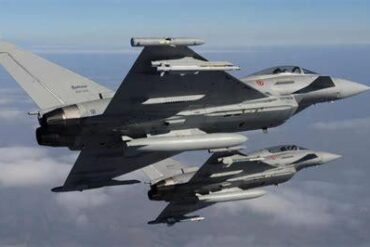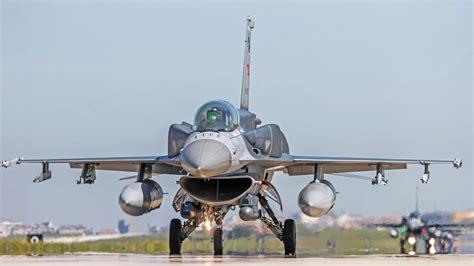
Türkiye is on the brink of a transformational defense upgrade, with a landmark $5.6 billion acquisition deal for up to forty Eurofighter Typhoon jets nearing completion. This impending agreement represents not only a major stride in Ankara’s military modernization efforts, but also signals a potential geopolitical pivot within the global fighter aircraft marketplace, long dominated by the American-made F-35.
The deal, reported by the Wall Street Journal on July 21, 2025, is expected to be announced imminently—possibly during the International Defense Industry Fair in Istanbul this week. The agreement would mark Türkiye’s most significant fighter procurement in decades, with strategic implications that extend far beyond defense.
Eurofighter Typhoon: A European Powerhouse Takes Center Stage
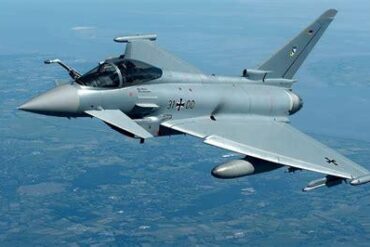
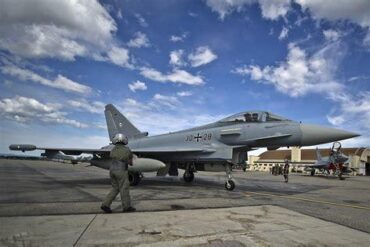
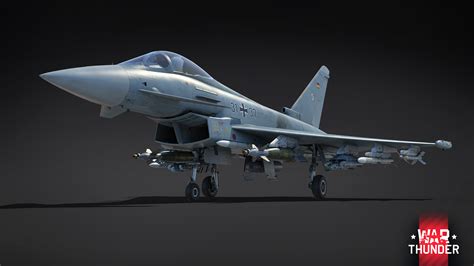
The Eurofighter Typhoon is a cutting-edge multirole combat aircraft developed by a consortium of BAE Systems, Airbus, and Leonardo. It has served as a critical asset to several European air forces and remains one of the most agile and capable fourth-generation platforms in active production.
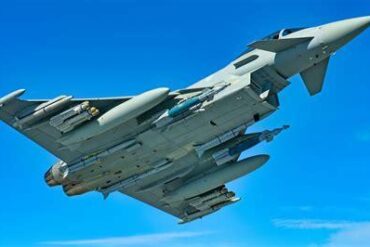
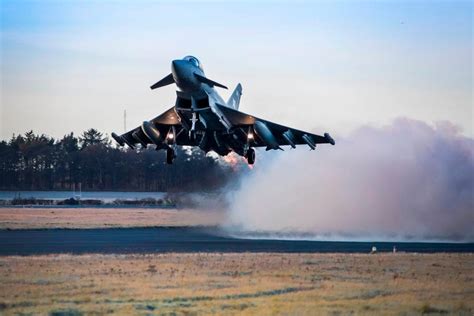
Its capabilities span both air superiority and ground attack missions, and it is optimized for adaptability. The Typhoon boasts an advanced aerodynamic design and is powered by twin EUROJET EJ200 engines, offering exceptional maneuverability and a high thrust-to-weight ratio. These features provide the aircraft with superlative performance in both dogfighting and long-range strike missions.
Equipped with 13 hardpoints, the Typhoon can carry a versatile array of munitions, including:
- Air-to-air missiles (e.g., AIM-120 AMRAAM, Meteor)
- Air-to-ground precision munitions (e.g., Paveway IV, Storm Shadow)
- Anti-ship and anti-radiation missiles
In terms of avionics, it features the Captor-M radar system, with future variants set to incorporate the Captor-E Active Electronically Scanned Array (AESA) radar. This provides extended range, superior multi-target tracking, and robust electronic counter-countermeasures.
Sensor fusion capabilities are further augmented by the PIRATE infrared search and track system, coupled with high-performance electronic warfare systems. These features provide pilots with unmatched situational awareness, even in heavily contested environments.
Ankara’s Persistent Pursuit of the Eurofighter
Türkiye’s interest in acquiring the Eurofighter Typhoon dates back to 2023, when it first began expressing official interest in procuring the aircraft. At that time, negotiations were stymied by Germany’s reluctance to grant export licenses, citing human rights and regional policy concerns. As a key stakeholder in the Eurofighter consortium, Berlin wields veto power over any third-party sales.
However, diplomatic dynamics have shifted in 2025. According to President Recep Tayyip Erdoğan, both Germany and the United Kingdom have shown a “positive stance” on the deal. This change in posture has reignited negotiations, with the Turkish government moving swiftly to finalize the agreement.
The timing is critical: Ankara is seeking to reinforce its defensive posture amid escalating tensions in its region, including complex challenges in the Eastern Mediterranean, Syria, and Northern Iraq. With a long-delayed F-35 acquisition off the table—following Türkiye’s removal from the program in 2019—Ankara has had to explore alternative options to ensure aerial dominance.
Modernizing Türkiye’s Combat Fleet: From Legacy to Lethal
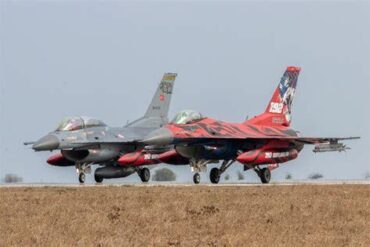
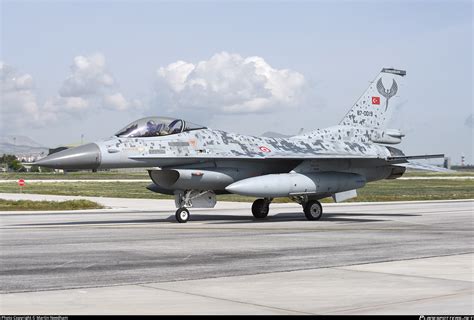
According to the Military Balance 2025, Türkiye operates a substantial but aging fleet of primarily F-16 Fighting Falcons, supported by a dwindling number of modernized F-4E Phantom 2020 aircraft. The current fighter inventory includes:
- 27 F-16C Block 30
- 162 F-16C Block 50
- 14 F-16C Block 50+
- 8 F-16D Block 30
- 33 F-16D Block 50
- 16 F-16D Block 50+
- 19 F-4E Phantom 2020 (ground attack role)
While Turkish Aerospace Industries (TAI) is developing the TF-X Kaan, a domestic fifth-generation fighter project, its operational deployment remains years away. In the interim, the Eurofighter Typhoon offers an immediate and proven capability boost, perfectly bridging the gap.
Strategic Value Beyond the Cockpit: Industry and Diplomacy
The Eurofighter deal is not merely about hardware. It carries major industrial, strategic, and diplomatic dimensions. For Türkiye, it presents a chance to diversify its defense procurement portfolio, reduce dependence on the United States, and assert greater autonomy in military decision-making.
From a European perspective, especially for BAE Systems, Airbus, and Leonardo, closing this deal offers a lifeline to sustain Eurofighter production lines, which are increasingly under threat from modern competitors like the F-35 Lightning II and emerging sixth-generation platforms such as the GCAP (Global Combat Air Programme).
Moreover, partnering with a NATO ally like Türkiye brings both commercial value and strategic leverage. The agreement could open the door to joint training, regional interoperability, and technical collaboration, further enhancing the Eurofighter’s visibility and desirability in global markets.
Challenges and Outlook: A Deal Not Yet Done
Despite progress, several challenges remain before the ink dries on this mega-contract. Final details regarding aircraft configurations, delivery timelines, and local industrial participation are still under negotiation. Türkiye is expected to push for technology transfer, maintenance rights, and potentially even local assembly options, similar to its existing partnership structures with other defense suppliers.
A critical factor will also be the pace of delivery. With heightened regional tensions, Ankara is likely to demand accelerated integration of the Typhoons into its air force, which could strain production schedules in Europe unless significant industrial adjustments are made.
Additionally, geopolitical volatility—including fluctuating European attitudes toward Türkiye’s foreign policy—could reintroduce roadblocks. A shift in Berlin’s stance, parliamentary intervention, or deterioration in Türkiye-EU relations could delay or even derail the agreement.
Still, the overwhelming momentum suggests the deal is closer than ever. If sealed, it will solidify Türkiye’s position as a key strategic actor in the emerging defense landscape of multipolar alliances and multivendor procurement strategies.
Implications for the Region and NATO
Türkiye’s likely acquisition of the Eurofighter Typhoon would reshuffle air power balances in the broader region. In contrast to rival nations acquiring either Russian or Chinese platforms, Türkiye’s investment in a European system bolsters NATO standardization and facilitates alliance interoperability.
Moreover, the Typhoon would allow Türkiye to project more credible deterrence in contested theaters. Whether in air policing missions over the Aegean, border security in Syria, or expeditionary strikes abroad, the aircraft’s flexibility will dramatically expand Ankara’s operational envelope.
From NATO’s perspective, integrating the Typhoon into the Turkish Air Force could enhance alliance cohesion, particularly as strategic tensions rise on its southeastern flank. The Typhoon’s compatibility with NATO systems and tactics means faster coalition response readiness and more effective participation in joint exercises and operations.
Conclusion: A Defining Chapter in Türkiye’s Aerospace Trajectory
The nearing Eurofighter deal represents a pivotal moment in Türkiye’s defense evolution. With its blend of operational power, diplomatic nuance, and strategic recalibration, the Typhoon acquisition promises not just a fighter jet, but a future-ready force multiplier.
As Türkiye navigates an increasingly complex security environment, the Eurofighter will serve as both a shield and symbol—an emblem of Ankara’s determination to command its skies, redefine its alliances, and shape the aerospace frontier on its own terms.
Once finalized, this agreement will not only elevate Türkiye’s air superiority but will also reaffirm the Eurofighter Typhoon’s enduring relevance in an era of accelerating aerial warfare innovation.