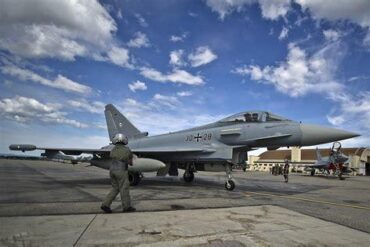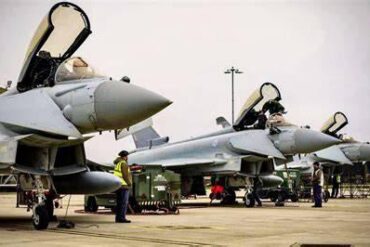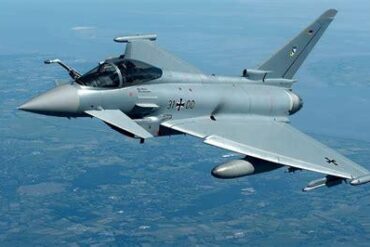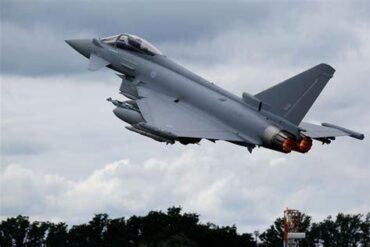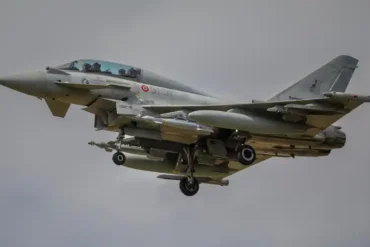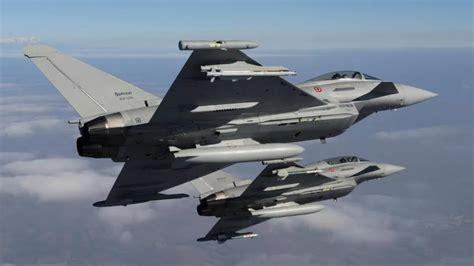
Türkiye has taken a decisive step in reshaping the NATO defense landscape by securing German approval for the sale of 40 Eurofighter Typhoon fighter jets and formalizing a memorandum of understanding with the United Kingdom at IDEF 2025 in Istanbul. This landmark agreement not only fills a critical capability gap created by Türkiye’s departure from the F‑35 Joint Strike Fighter program in 2019, but also cements Ankara’s role as a key operator of one of the world’s most advanced multi-role combat aircraft. The joint ceremony between Turkish National Defense Minister Yasar Guler and U.K. Defense Secretary John Healey underlines the strategic partnership between two NATO allies, heralding a new phase of interoperability and collective deterrence across Europe and the Eastern Mediterranean.
The approval by the German Federal Security Council represents the final legal hurdle in what has been a protracted diplomatic effort. German government spokesman Stefan Kornelius confirmed that the Council endorsed Türkiye’s preliminary export request, submitted in March 2023, and that the Defense Ministry has dispatched a written approval notice to Ankara. With this green light, the Turkish government now faces a decision point: to place a formal order or explore further negotiations. According to Der Spiegel, the 40 Typhoons will be assembled in the U.K. using components sourced from Germany, marking Britain’s first export of the Typhoon since 2017 and a boost for its domestic aerospace industry.
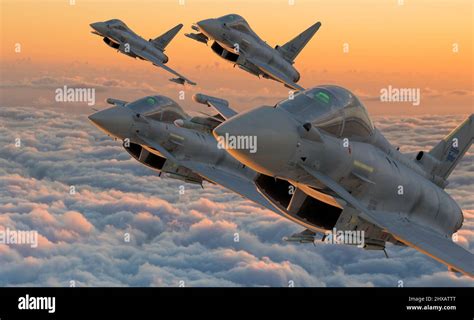
Multi‑Billion Pound Deal Strengthens NATO Deterrence
U.K. Prime Minister Keir Starmer hailed the agreement as a cornerstone of his Plan for Change, emphasizing that bolstering the defense sector would create thousands of skilled jobs, drive economic growth, and reinforce the security of NATO members amid a volatile geopolitical environment. Defense Secretary John Healey highlighted how equipping Türkiye with Typhoons “would strengthen NATO’s collective defense,” ensuring that alliance air forces maintain technological edge and rapid response capability. Charles Woodburn, CEO of BAE Systems—the lead British contractor on the Typhoon program—underscored the importance of the deal for European and Middle Eastern security, pledging close collaboration between Ankara, London, and industry partners to finalize procurement and support arrangements.
The Eurofighter Typhoon deal is more than a bilateral contract; it is a signal to both adversaries and allies that NATO remains unified in its resolve and prepared to deter aggression. By integrating Turkish squadrons into the Typhoon user community, the alliance gains a complementary air combat capability that enhances collective air policing, rapid reinforcement, and joint mission planning across multiple theaters.
Strategic Context and Regional Implications
In the aftermath of its 2019 removal from the F‑35 program, Türkiye faced a pressing need for interim solutions to sustain air superiority. The Eurofighter acquisition provides exactly that: a stopgap measure that bridges the gap until Türkiye’s indigenous KAAN fighter reaches operational status in the early 2030s. Defense expert Arda Mevlutoglu—an evaluator for the NATO DIANA 2026 Challenge Program—stressed that “in a region defined by intense military and technological challenges, preserving Türkiye’s deterrent power is essential.” He warned that a lagging air force “is scarcely different from having no air power at all,” pointing to the growing capabilities of neighboring air arms.
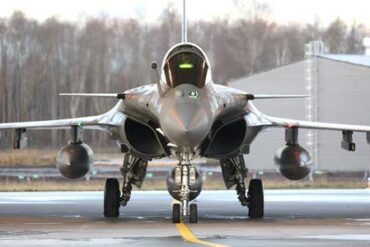
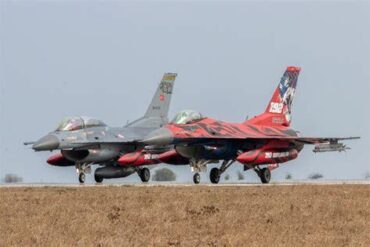
Today, the Turkish Air Force fields approximately 240 F‑16C/Ds and 25 modernized F‑4E/2020s, many nearing the end of their service lives. Meanwhile, Greece has enhanced its fleet with Dassault Rafale jets and F‑16V upgrades, and Israel progresses toward 75 F‑35I deliveries by 2028 (45 delivered as of June 2025). These developments underscore the urgency for Türkiye to secure advanced platforms that can match or exceed regional standards of air combat performance.
Eurofighter Program History and Türkiye’s Intermittent Involvement
The Eurofighter Typhoon program traces its origins to early Cold War cooperation among the U.K., Germany, Italy, and Spain. After defining joint requirements in 1983, the consortium formally launched in 1988, though France withdrew in 1985 to develop its own Rafale fighter. Türkiye’s engagement with the project spans four decades: in the mid-1980s Ankara negotiated Tornado procurement and was offered project participation; in the early 2000s and again around 2010, Typhoon deals with industrial collaboration were discussed but never finalized.
The program achieved its first prototype flight in 1994, production approval in 1998, and entry into service with the German Luftwaffe in 2003. By 2024, over 600 Typhoons were operational worldwide, demonstrating a proven track record in both air-to-air and air-to-ground roles. Türkiye’s pending user status will further enrich this multinational fleet, enabling deeper collaboration on upgrades, training, and lifecycle support.
Greek Prime Minister Acknowledges Inevitability of Deal
Greek Prime Minister Kyriakos Mitsotakis publicly conceded that blocking arms sales to Türkiye would be futile, stating on SKAI TV, “Türkiye is a large country with a strong defense industry. If someone believes they can prevent defense weapon sales to Türkiye, they are mistaken… Such a thing never happened and will not happen.” Mitsotakis, however, made clear that Athens would seek conditions on operational deployment and opposes Türkiye’s participation in the European Security Action Plan (SAFE) over ongoing Aegean disputes. His comments reflect a pragmatic recognition of strategic realities, even as bilateral tensions linger.
This tacit acceptance by Greece illustrates a broader shift in European defense politics: shared concerns over Russia’s aggression in Ukraine and uncertainty about U.S. commitment have driven former skeptics to support deeper integration and capability sharing within NATO.
Enabling Factors and Consortium Boost
Analysts identify three interlocking factors behind the Eurofighter breakthrough: the strategic shock of Russia’s 2022 invasion of Ukraine, questions over Washington’s long-term European defense posture, and a change in German leadership. Chancellor Friedrich Merz, who replaced the previous government’s opposition to Typhoon exports, cited improved Turkish-Greek dialogue and Ankara’s assurances to use the jets strictly within NATO frameworks.
The Türkiye order will inject fresh momentum into the Airbus–BAE Systems–Leonardo consortium, preserving industrial capacity, safeguarding thousands of jobs across Germany, the U.K., Italy, and Spain, and reinforcing supply chains for avionics, engines, and airframe components. This deal could spur further export opportunities, automate production lines, and justify next-generation upgrade programs across the Eurofighter user base.
Advanced Multi‑Role Combat Capabilities of the Typhoon
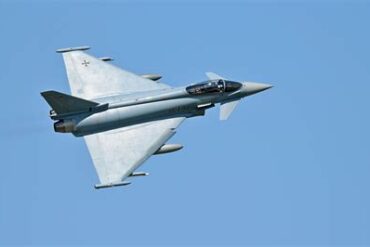
The Eurofighter Typhoon is renowned for its exceptional performance and versatility. Powered by twin Eurojet EJ200 turbofan engines, it can exceed Mach 2 and sustain supercruise without afterburners—a critical advantage for rapid intercepts and extended patrols. The aircraft’s canard delta wing design, coupled with a sophisticated digital flight control system, delivers unmatched agility in dogfights and ground-attack profiles.
Key specifications and systems include:
- Maximum altitude: 16,765 meters
- Combat radius: 1,390 kilometers (with standard loadout)
- Ferry range: 2,900 kilometers
- Maximum takeoff weight: 23.5 tonnes
- Captor‑E AESA radar for multi-mode detection and tracking
- Defensive Aids Sub-System (DASS) for electronic warfare and self-protection
- Link 16 data link for secure, real‑time coalition communications
- Electro‑optical targeting pods, flare and chaff dispensers, and radar warning receivers
- 27 mm Mauser BK‑27 cannon, plus compatibility with Meteor, AIM‑120 AMRAAM, IRIS‑T, ASRAAM missiles and Brimstone, Storm Shadow, Paveway and Taurus precision munitions
Defense expert Arda Mevlutoglu highlights the Meteor missile as “one of the most sophisticated air‑to‑air weapons in service today, featuring extended range, two‑way datalink, and a dual‑pulse rocket motor for superior performance.” These capabilities position the Typhoon as a true multi‑role platform capable of air superiority, close air support, and deep strike missions.
Bridge to Indigenous Fighter Capabilities
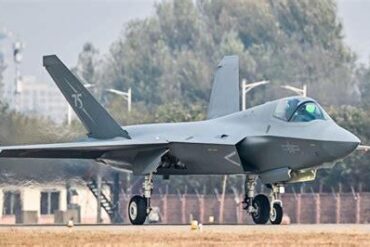
While the Eurofighter Typhoon acquisition addresses immediate needs, Türkiye’s long‑term vision lies in its domestic aerospace programs. The KAAN national fighter, currently in flight testing, promises a next‑generation air superiority capability; the Anka 3 unmanned strike platform and Kizilelma multirole UAV will introduce manned-unmanned teaming. Existing UAVs such as Anka, Aksungur, Bayraktar Akinci and TB2 have already demonstrated Türkiye’s prowess in unmanned operations.
Mevlutoglu observes, “With the Kizilelma now in serial production and expected to enter service soon, Türkiye will become one of the first nations to operate manned and unmanned fighter aircraft in tandem.” He underscores that KAAN stands out as “the only next-generation fighter program in the Western world currently undergoing flight testing,” reinforcing why a phased approach—Typhoon today, KAAN tomorrow—is vital to maintaining credible deterrence across the region.
Conclusion: A New Chapter in NATO Defense Cooperation
Türkiye’s acquisition of 40 Eurofighter Typhoons represents a strategic pivot with far‑reaching implications. It showcases the resolve of NATO members to adapt to shifting threats, underscores the alliance’s commitment to burden‑sharing, and leverages Europe’s collective industrial base to sustain high‑end capabilities. For Türkiye, the deal not only ensures continuity of air power until domestic programs mature, but also deepens military ties with two of its closest allies, Germany and the U.K.
As these aircraft join Turkish squadrons, joint exercises, logistics support, and interoperability initiatives will forge stronger bonds across NATO. In an era of contested skies and emerging aerial threats, the Eurofighter Typhoon deal stands as a testament to the alliance’s enduring unity and its capacity to innovate in response to evolving security challenges.