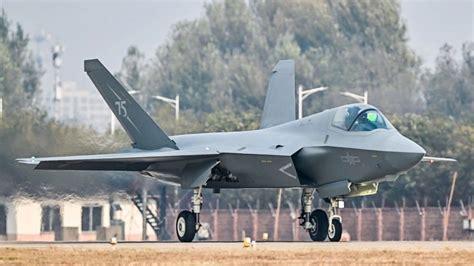
Pakistan is set to bolster its airpower significantly this summer with the acquisition of additional J-35A fifth-generation stealth fighters from China. This strategic move is not only an indicator of the deepening military ties between Beijing and Islamabad but also a potential game-changer for the balance of power in South Asia. With India still indecisive over its own fifth-generation fighter procurement, Pakistan’s swift pivot to Chinese stealth technology could mark a transformative shift in regional deterrence.
The deliveries are part of a deal involving up to 40 J-35A fighters, set to begin as early as August. This fleet upgrade positions Pakistan as the first foreign operator of China’s advanced stealth aircraft, affirming Islamabad’s long-term defense strategy of aligning with Beijing amid mounting regional tensions.
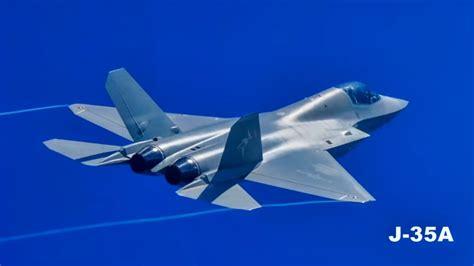
J-35A: China’s Second Stealth Marvel Steps into Global Arena
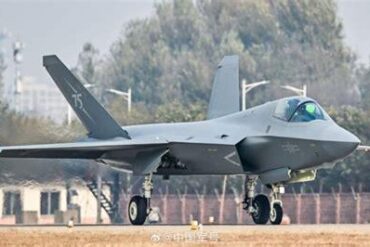
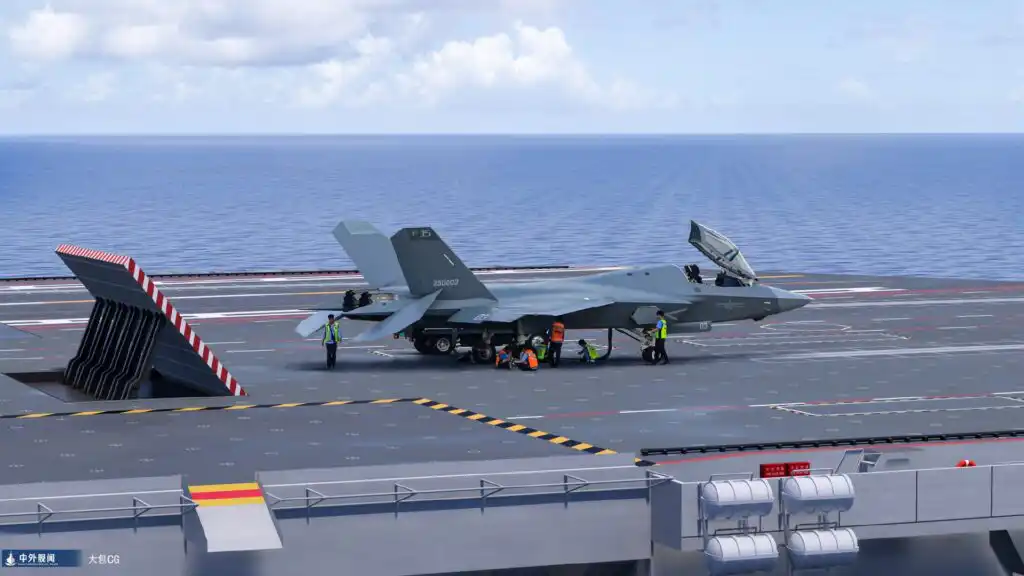
Developed by Shenyang Aircraft Corporation, the J-35A is China’s second fifth-generation fighter, following the Chengdu J-20 “Mighty Dragon.” While the J-20 was modeled to compete with the American F-22 Raptor, the J-35A was purpose-built as a direct counterpart to the F-35 Lightning II, blending agility, low observability, and multirole combat capabilities.
Western defense analysts often point out striking similarities between the J-35A and the American F-35, alleging industrial espionage and reverse engineering. But regardless of its origin, the J-35A delivers an impressive suite of features:
- Stealth airframe with radar-absorbing materials to significantly reduce radar cross-section
- Active Electronically Scanned Array (AESA) radar for enhanced tracking and targeting
- Electro-optical targeting system (EOTS) and infrared search and track (IRST) for advanced situational awareness
- PL-15 and PL-17 long-range air-to-air missiles for beyond-visual-range combat
- Advanced glass cockpit and fly-by-wire systems
The J-35A is powered by either the Russian-made RD-93 or the domestically produced WS-19 turbofan engine, allowing the jet to achieve speeds of up to 1,367 mph, with a combat radius well exceeding 1,200 kilometers. These features make it capable of deep strike missions, high-intensity dogfights, and stealthy penetration into contested airspace.
Pakistan’s Strategic Leap Toward Fifth-Generation Warfare
The Pakistan Air Force (PAF) has long depended on legacy platforms like the F-16 Fighting Falcon and Mirage III/V aircraft. While capable, these platforms are increasingly outmatched by emerging technologies in regional arsenals. By integrating the J-35A, Pakistan is effectively leapfrogging into a new era of air dominance.
Sources indicate that China is offering these fighters to Pakistan at a significant discount—reportedly up to 50 percent—with generous payment terms. In return, China cements its influence over Pakistan’s strategic doctrine while showcasing its defense export capabilities. Pakistani pilots are already undergoing training in China, underscoring the urgency and intent behind the deal.
A Two-Front Challenge to India: The Geopolitical Undercurrent
The implications for India are profound. The induction of J-35As into the PAF inventory means India must now contend with a near-peer adversary fielding a fifth-generation stealth platform. This threatens to erode the qualitative edge India previously enjoyed in the skies and could compel New Delhi to expedite its own fifth-generation acquisition or indigenous development programs.
Currently, India is at a crossroads. On one hand, the Lockheed Martin F-35 offers unmatched capabilities but at an exorbitant cost and complex political entanglements. On the other hand, the Sukhoi Su-57, while more affordable and familiar to Indian forces, remains a work in progress with unresolved reliability issues.
India’s indecision may come at a steep price. The J-35A’s advanced radar and electronic warfare systems are expected to outperform India’s existing Su-30MKIs and potentially even neutralize radar coverage in strategic sectors along the Line of Control (LoC) and the western frontier.
China’s Growing Defense Footprint and Pakistan’s Dependence
China’s willingness to transfer cutting-edge military technology to Pakistan is as much about geopolitical positioning as it is about economics. Following the recent Indo-Pakistan conflict, where Chinese systems reportedly performed effectively under combat conditions, Beijing is looking to amplify its role as a reliable military supplier.
China understands that arming Pakistan strengthens its “two-front” strategy—a cornerstone of Beijing’s regional military calculus. With India distracted or pressured on both flanks, China’s strategic maneuverability increases substantially in the Indo-Pacific theater.
Technology Transfer, Tactical Edge, and Regional Balance Shift
What makes the J-35A particularly valuable to Pakistan is its versatility and survivability. In a potential conflict scenario, the aircraft’s low-observability and long-range sensors will allow Pakistani squadrons to launch precision strikes deep within Indian airspace, including on command-and-control infrastructure and radar installations.
Moreover, the integration of the PL-15 missile, which reportedly has a range exceeding 200 kilometers, means Pakistan could gain first-shot advantage in air-to-air engagements—a critical factor in modern aerial warfare. Combined with data-linked wingmen and real-time sensor fusion, the J-35A becomes not just a weapons platform but a combat force multiplier.
This is in stark contrast to Pakistan’s previous air strategies, which focused more on numerical parity and tactical flexibility than on technological superiority. The J-35A heralds a new phase—one driven by stealth, range, and precision.
Economic and Operational Realities: Can Pakistan Sustain It?
While the deal has been struck under favorable terms, there remain serious questions about Pakistan’s ability to sustain and operate a fifth-generation fleet over the long term. High maintenance costs, infrastructure overhauls, and the need for secure datalink networks and electronic warfare suites require substantial investment.
Pakistan will likely need to develop a new doctrine and support ecosystem for the J-35A, including hardened shelters, advanced training simulators, and multi-domain command structures. The country’s defense budget, already under strain, may find it challenging to absorb the long-term implications of such high-end platforms.
That said, Beijing’s strategic motivations may lead to continued subsidies, training support, and logistics packages, ensuring that the aircraft remain combat-ready without overburdening Islamabad’s financial system.
The Road Ahead: An Escalating Arms Race or Strategic Realignment?
The summer handover of J-35A fighters may prove to be a defining moment in South Asian geopolitics. It solidifies China’s role as Pakistan’s primary military patron while putting India in a position where its military indecision could yield strategic vulnerability.
What comes next is uncertain, but a few scenarios are plausible:
- India may fast-track acquisition of the F-35 or accelerate its Advanced Medium Combat Aircraft (AMCA) program.
- China might leverage Pakistan’s new capability to exert pressure along the LoC and beyond.
- The U.S. could reassess its defense partnerships in the region, recalibrating aid and strategic alignment.
What is certain is that the acquisition of J-35A fighters by Pakistan is not a mere hardware transfer—it is a recalibration of strategic intent and deterrence in South Asia. As these aircraft begin to populate the skies over Pakistan, regional adversaries and global observers alike will be forced to reckon with a new, stealth-enabled reality.