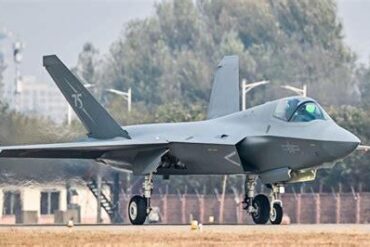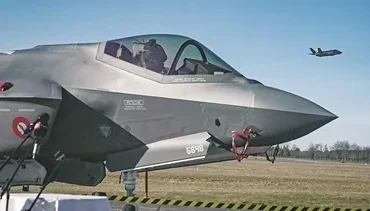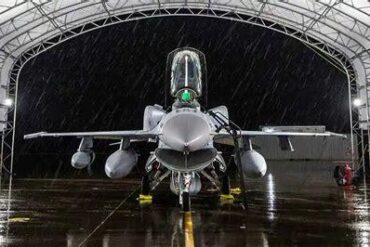
Denmark has announced a sweeping defense procurement initiative that will see it purchase 16 more F-35 stealth fighters, expand its Arctic military presence, and invest heavily in naval and surveillance capabilities. The move — valued at USD 8.7 billion — reflects Copenhagen’s strategic response to pressures emanating from an increasingly volatile Russia, and emerging tensions with the United States. It also underscores Denmark’s intent to maintain interoperability with U.S. forces and reinforce its deterrence posture in the high north.
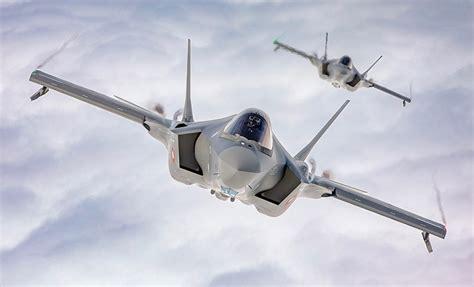
The centerpiece of the announcement is the acquisition of 16 additional Lockheed Martin F-35A jets, at an estimated cost of USD 4.5 billion. The purchase would bring Denmark’s total F-35 fleet to 43 aircraft, reinforcing its air force’s modernization trajectory while positioning Denmark as one of the more heavily equipped operators of the aircraft in Europe. Meanwhile, another USD 4.2 billion has been earmarked for bolstering Arctic security: the funds will support the establishment of military units on Greenland, a new joint Arctic command in Nuuk, procurement of two warships and maritime patrol aircraft, and deployment of unmanned aerial systems and radar installations in eastern Greenland.
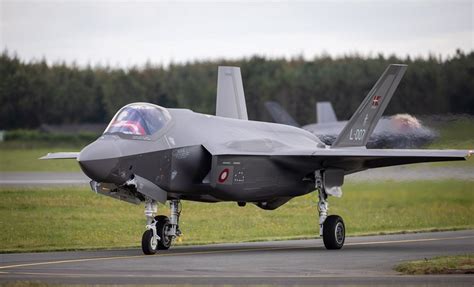
The decision to deepen reliance on U.S.-made F-35 fighters comes in the wake of several allied nations voicing concerns or reevaluating U.S. defense dependencies. Spain and Canada, for example, have cited restrictions placed by Washington on weapons destined for Ukraine as cause to reconsider or even eliminate U.S. combat platforms. Denmark’s move signals Copenhagen’s willingness to preserve close defense ties with Washington, despite frictions over Greenland and strategic autonomy debates.
Strategic Imperatives: Russia, Greenland, and U.S. Pressure
Geopolitically, Denmark finds itself navigating a complex triangle of threats and partnerships. Moscow’s assertiveness in the Arctic, including expanded military patrols and undersea infrastructure development, has heightened Copenhagen’s sense of vulnerability across its northern flank. The presence of Russian long-range strike and intelligence assets near the Greenland–Canadian–Norwegian triangle has underlined the urgency of enhancing situational awareness, quick-reaction capacity, and deterrence in Greenland’s airspace and maritime zones.
At the same time, Denmark has contended with pressure from the U.S. over its role in Greenland. Earlier this year, U.S. President Joe Biden restated Washington’s long-standing, controversial interest in Greenland — even raising the specter of coercive options — and critics have interpreted Denmark’s procurement plan, especially its dependence on U.S. hardware, as a reaffirmation of a transatlantic security orientation. Washington’s refusal to rule out forceful acquisition tactics in Greenland has created a political strain, particularly as Denmark seeks to fortify its hold over its Arctic territories.
These dynamics have been compounded by Washington’s own military plays in Greenland. In March, U.S. Vice President Mike Pence visited the Pituffik (Thule) Air Base in northwest Greenland, reaffirming American interest in Arctic basing and signaling alignment in defense. Denmark appears intent to resist any perception of relinquishing influence or control over its northern territories.
Procurement Details: F-35, Naval Forces, Drones, Radar, and Arctic Bases
F-35 Jet Expansion and Capabilities
The 16 new F-35A jets represent a significant increase to Denmark’s air combat fleet. Already committed to deploying fifth-generation assets, Copenhagen is doubling down. These jets offer stealth, sensor fusion, global strike capacity, and integration into NATO air defense architectures. Denmark’s existing acquisition contracts and infrastructure would facilitate smoother incorporation of the additional jets—with pilot training, maintenance pipelines, and munitions supply chains already in place.
Copenhagen anticipates that the fleet of 43 F-35s would serve both national defense and NATO commitments, providing air superiority, suppression of enemy air defenses (SEAD), intelligence, surveillance and reconnaissance (ISR) support, and long-range precision strike options. The economies of scale and consistency in platform choice support lower lifecycle costs and streamlined logistics.
Arctic and Naval Investments
The USD 4.2 billion allocated to Arctic capability development is ambitious. Denmark plans to establish two Arctic military units tasked with regional defense, sovereignty enforcement, search-and-rescue, and protection of maritime interests. A joint Arctic headquarters will be built in Nuuk, Greenland, serving as command and control for operations across the High North.
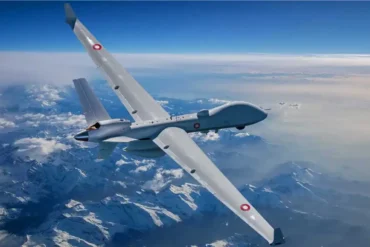
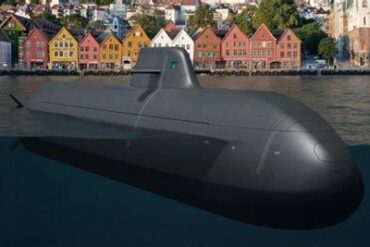
Naval enhancements include acquisition of two warships (likely high-endurance offshore vessels) and maritime patrol aircraft designed to surveil Greenland’s surrounding seas. Drone systems, long-range radar installations, and aerial surveillance platforms will be deployed in eastern Greenland, enabling continuous monitoring of sea and air approaches near the Greenland–Iceland–United States corridor.
The eastern deployments are particularly strategic: proximity to potential Russian aerial or subsurface ingress routes from the Arctic Ocean demands radar and ISR assets. Copenhagen’s goal is to close intelligence and early-warning gaps, ensuring that Danish defense forces and NATO allies can act swiftly.
Comparative Context: Europe, Allies, and Defense Autonomy
Denmark’s renewed procurement decision marks a contrast with several European allies rethinking U.S.-made systems. Spain has voiced reservations about F-35 procurement, citing concerns about U.S. export controls, timeliness, and restrictions on supplying weapons to Ukraine. Canada at times has intimated reconsideration of reliance on U.S. aerospace systems given the political unpredictability of U.S. foreign policy. In choosing to stay the course with U.S. defense industrial integration, Denmark is favoring alliance consistency over hedging toward European alternative systems.
In doing so, Denmark is effectively voting with its budget: despite criticism of American posturing over Greenland, Copenhagen appears to believe that the wireless integration, joint exercises, interoperability, and logistical advantages of buying U.S. systems outweigh political risk. This is consistent with an approach that prioritizes collective security and burden-sharing within NATO frameworks.
Financial Breakdown and Implementation Timeline
The USD 8.7 billion package is split nearly evenly: USD 4.5 billion for the F-35 jets, and USD 4.2 billion for Arctic defense and supporting capabilities. The procurement timeline likely stretches over multiple years, with phased delivery of the jets, incremental build-out of bases and radar systems, and staged commissioning of naval assets and drone deployments.
Aircraft deliveries may begin within 2-4 years, aligning with industry production schedules and existing Danish training facilities. Arctic base infrastructure, radar installations, and command centers will require civil engineering, logistics support, and local environmental considerations, especially in Greenland’s extreme conditions.
Budgetary discipline will be critical: Greenland’s harsh terrain and climate, logistical complexity, and extended supply chains to remote northern latitudes magnify cost risk and schedule delays. Nonetheless, Denmark’s defense planners appear confident in aligning procurement, construction, and operating funding over this multi-year horizon.
Operational Challenges and Risks
Executing such a large-scale Arctic and aerospace expansion entails formidable challenges. Maintenance and sustainment of a 43-aircraft F-35 fleet will demand continued investment in ground infrastructure, specialized spare parts, and highly skilled personnel. Training capacity must scale accordingly to prepare a pipeline of pilots, maintainers, and systems engineers.
In the Arctic, building durable installations that operate in permafrost, extreme cold, snow, and cyclonic storms is a nontrivial engineering feat. Supply lines to eastern Greenland are especially difficult, given limited ports, aviation lift constraints, and seasonal access. Unmanned systems and radar arrays must be resilient, energy-efficient, and redundant.
Political risk is also significant. Tensions with the United States over Greenland and regional sovereignty might complicate bilateral relations even as military debt is deepened. Russian countermeasures — such as increased Arctic patrols, jamming or electronic warfare threats, and probing maneuvers — will test Denmark’s readiness. Lastly, budget overruns, procurement delays, and local pushback (particularly in Greenland) pose political risks to full execution.
Strategic Implications for NATO and Arctic Security
Denmark’s bold move has broader resonance across NATO and Arctic defense planning. A more capable Danish air force and stronger northern forward presence benefits alliance deterrence: the F-35 fleet complements NATO’s northern air defense and rapid response capabilities, and the Greenland infrastructure supports allied surveillance and forward basing interests.
By committing to U.S.-aligned platforms, Denmark supports transatlantic burden-sharing at a time when NATO seeks to modernize and expand its presence in the High North. The decision could incentivize other smaller allies to consider similar hedging away from uncertain strategic autonomy and toward integrated deterrence frameworks.
In the Arctic theater, Denmark’s buildup bolsters collective monitoring of the Greenland–Iceland–UK (GIUK) gap and contributes to early-warning coverage along potential air and submarine corridors from the Arctic. The Greenland headquarters may evolve into a regional hub for allied Arctic operations, extending Denmark’s strategic influence in the far north.
Conclusion: Copenhagen’s Calculated Gamble
Denmark’s decision to purchase 16 additional F-35 jets and deploy significant Arctic defense assets reflects a calculated gamble: it trades political discomfort with Washington over Greenland for deeper security integration and military capability gains. The enhanced fleet gives Copenhagen formidable airpower, while the Arctic investments expand Danish sovereignty, intelligence reach, and deterrent posture in a region where climate change and geopolitics are rapidly altering the balance.
That said, the operation is not risk-free: infrastructure, logistics, budgeting, and political backlash pose serious constraints. Success hinges on disciplined execution, technological resilience, and deft diplomacy. If Denmark pulls it off, it will emerge as one of the more capable and strategically forward-leaning states in Europe — a small country projecting major influence in NATO’s northern flank.