Norway has taken a decisive step to strengthen its undersea warfare capabilities by formally ordering two additional Type 212CD submarines from ThyssenKrupp Marine Systems (TKMS), a move that significantly deepens the Royal Norwegian Navy’s ability to operate in the Arctic and North Atlantic. Signed in Oslo on January 30, 2026, the contract raises Norway’s planned fleet from four to six advanced submarines, aligning naval force structure with long-term strategic realities in the High North.
The decision is more than a simple fleet expansion. It reflects a sober reassessment of the evolving security environment across the Barents Sea, Norwegian Sea, and Arctic approaches, where underwater surveillance, deterrence, and intelligence collection have become central to national and allied defense planning. Submarines remain uniquely suited to these missions, offering persistence, stealth, and flexibility in waters where surface operations are increasingly exposed.
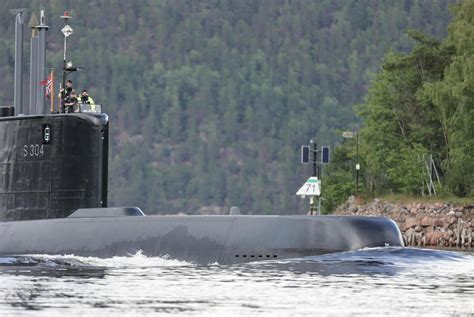
This procurement activates an option embedded in Norway’s original submarine framework agreement and is fully integrated into the country’s updated 2025–2036 defense plan. Parliamentary approval in January 2026 cleared the final hurdle, transforming political intent into contractual reality. With this step, Norway commits to an undersea capability designed to remain relevant well into the 2060s, ensuring continuity as its aging Ula-class boats retire.
Strategic Rationale Behind the Expanded Submarine Order
Norway’s choice to grow its submarine fleet is rooted in geography as much as geopolitics. The country’s vast coastline, proximity to key Arctic sea lines, and responsibility for monitoring activity near allied and national infrastructure demand a persistent underwater presence. A fleet of six submarines provides the critical mass needed to balance operational deployments, training cycles, and maintenance periods without creating gaps in coverage.
The additional boats also reflect lessons learned from decades of operating a smaller submarine force. With only four hulls, availability can quickly erode when vessels undergo deep maintenance or crew training. Expanding to six platforms allows Norway to sustain simultaneous patrols in multiple areas of interest while preserving crew readiness and platform longevity.
From a NATO perspective, the move reinforces Norway’s role as a cornerstone of the alliance’s northern flank defense. Submarines operating quietly beneath Arctic waters contribute to shared situational awareness, deterrence, and intelligence gathering, all while remaining largely invisible to potential adversaries.
Program Evolution and Industrial Foundations
The Type 212CD (Common Design) program traces its origins to a 2017 bilateral decision by Norway and Germany to replace their respective submarine fleets with a shared design. For Norway, the objective was to succeed the Ula-class submarines, commissioned between 1989 and 1992, while Germany sought a successor to its Type 212A boats. The emphasis from the outset was on commonality, not just in hull design but across training, logistics, maintenance, and lifecycle support.
An agreement in principle was reached in March 2021, followed by a landmark contract in July of the same year covering development and initial procurement. That deal, valued at approximately €5.5 billion, covered six submarines across both navies and laid the foundation for a deeply integrated program structure. Construction of the first boat began in September 2023, and the program successfully passed its Critical Design Review in August 2024, clearing the path to full-rate production.
Norway’s January 2026 contract builds directly on this framework, expanding its original four-boat order and bringing the bilateral program to its initially envisioned maximum scale.
Delivery Timeline and Fleet Transition Planning
Under the current schedule, the first Norwegian Type 212CD submarine is expected to be delivered in 2029. Subsequent boats will follow in a phased sequence between 2030 and 2035, allowing for a carefully managed transition from the Ula-class fleet. This staggered introduction is designed to avoid capability gaps while ensuring crews, shore infrastructure, and support systems adapt smoothly to the new class.
Two of Norway’s submarines are already under construction at German shipyards, and the expanded order includes Norwegian participation in financing a second production line. This investment is intended to accelerate construction and maintain delivery momentum, particularly as Germany has also increased its own order.
The financial framework for the expanded Norwegian fleet reflects broader trends affecting defense procurement. The revised cost envelope includes an increase of approximately NOK 46 billion (around $4.74 billion), accounting for value-added tax, contingency reserves, program execution costs, and currency fluctuations since the original 2021 agreement. Rising prices for raw materials, specialized components, and weapon systems have all contributed to higher unit costs, a challenge shared across the global defense industry.
Germany’s Parallel Expansion and a Twelve-Boat Program
Norway’s decision is closely linked to Germany’s own procurement strategy. In December 2024, Berlin signed contracts for four optional Type 212CD submarines, expanding the German Navy’s order from two to six boats. With Norway’s additional two submarines now confirmed, the combined program totals twelve submarines, exactly matching the maximum number envisioned when the partnership was established.
All twelve boats will be built to an identical configuration, a choice that underpins the program’s efficiency. Common designs enable shared training pipelines, pooled spare parts inventories, harmonized maintenance procedures, and coordinated lifecycle management. Joint program offices in both countries oversee construction, acceptance testing, and long-term sustainment, ensuring alignment across national requirements.
This level of integration also makes the Type 212CD attractive to potential future customers. The design has already been shortlisted by Canada for its Canadian Patrol Submarine Project, which envisions up to twelve conventionally powered submarines. While only German and Norwegian orders are currently confirmed, the program structure leaves room for future expansion.
Design Philosophy and Arctic Optimization
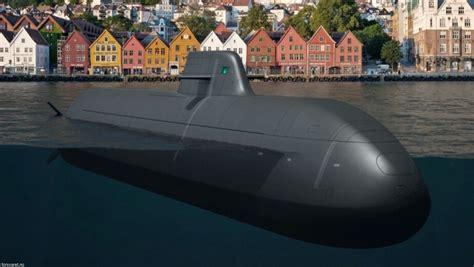
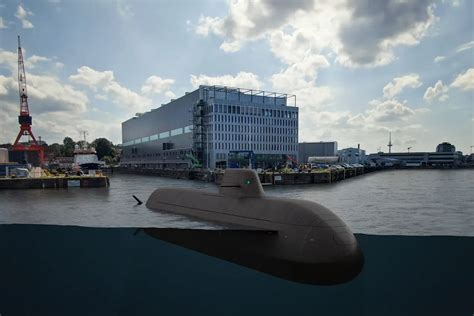
The Type 212CD represents a significant evolution over earlier German submarine designs. With a surfaced displacement of around 2,500 tonnes and a submerged displacement of roughly 2,800 tonnes, it is substantially larger than the Type 212A. The submarine measures approximately 73 meters in length, with a 10-meter beam and a draught of about 7 meters, dimensions chosen to balance endurance, payload capacity, and acoustic discretion.
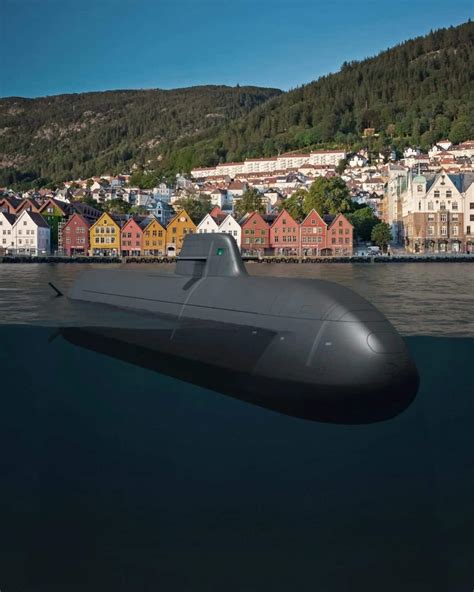
A defining feature of the design is its faceted external hull geometry, engineered to reduce detectability by modern active sonar systems. This emphasis on stealth is critical in Arctic and North Atlantic environments, where adversaries increasingly rely on advanced sensor networks. The larger internal volume supports expanded energy storage, improved habitability, and greater flexibility for mission-specific payloads.
Endurance is specified at up to 41 days, enabling long-duration patrols without reliance on frequent resupply or port visits. This capability is particularly valuable in remote northern waters, where access to friendly bases can be limited by distance and weather.
Advanced Propulsion and Energy Systems
At the heart of the Type 212CD’s performance is its sophisticated propulsion architecture. The submarine employs a diesel-electric system combined with a fourth-generation air-independent propulsion (AIP) system based on hydrogen fuel cells. Unlike earlier Type 212 variants, which used a single diesel engine, the 212CD is equipped with two MTU 4000-series diesel engines, enhancing electrical generation capacity and redundancy.
Energy storage is provided by lithium-ion batteries, a major upgrade over traditional lead-acid systems. These batteries deliver higher power density, faster recharge rates, and improved endurance, supporting prolonged submerged operations at low acoustic signatures. Submerged speeds exceed 20 knots, while the AIP system allows the submarine to remain underwater for extended periods without snorkeling, a critical advantage in contested environments.
The propulsion configuration is optimized for silent running, enabling the submarine to loiter undetected while conducting surveillance, intelligence collection, or deterrent patrols.
Combat Systems, Sensors, and Armament
The Type 212CD’s combat capability is centered on the ORCCA combat management system, developed by KTA Naval Systems. ORCCA integrates sensor data, tactical displays, and weapon control into a unified operational environment, enhancing situational awareness and decision-making under pressure.
Optical sensing is provided by non-hull-penetrating optronic masts, including the Hensoldt OMS-150 for search and surveillance and the OMS-300 for attack functions. These systems are complemented by panoramic surveillance sensors, advanced sonar suites, and dedicated navigation and mine-avoidance systems, all tightly integrated with the combat system.
Armament is delivered through six 533 mm torpedo tubes, capable of deploying heavyweight torpedoes such as the DM2A5. The design also allows for future integration of missile systems, anti-torpedo defenses, and unmanned underwater vehicles, ensuring adaptability as mission requirements and technologies evolve.
A Long-Term Investment in Northern Security
By expanding its Type 212CD order to six submarines, Norway is making a clear statement about its strategic priorities. The investment secures a credible, sustainable undersea capability tailored to the demands of Arctic and North Atlantic operations, while reinforcing deep industrial and military cooperation with Germany.
These submarines are not merely replacements for aging hulls. They represent a generational leap in stealth, endurance, and systems integration, designed to operate effectively in an era of heightened maritime competition. As they enter service from the late 2020s onward, the Type 212CD fleet will form the backbone of Norway’s undersea warfare capability, anchoring national defense and allied deterrence in some of the world’s most strategically sensitive waters.