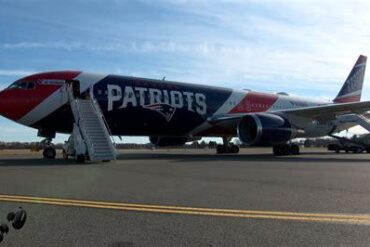
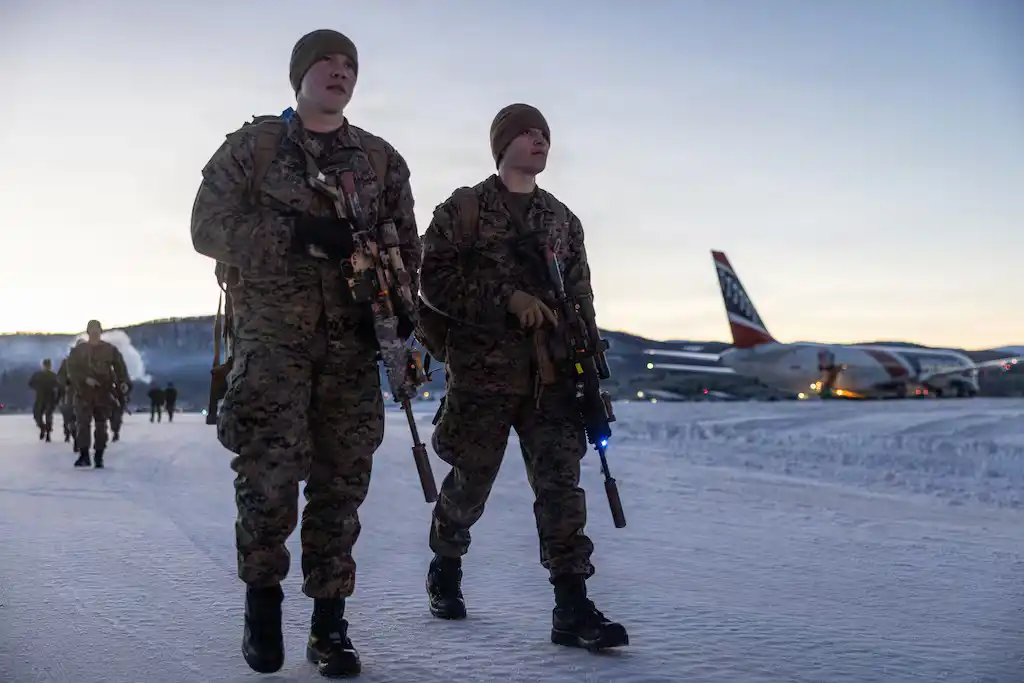
The sight was unusual even by military aviation standards: a New England Patriots–branded Boeing 767-300ER lifting off with U.S. Marines aboard, bound not for a football game but for the frozen reaches of northern Norway. On January 19, 2026, the widebody jet carried American forces to Bardufoss, where they began preparations for Exercise Cold Response 26, one of NATO’s most demanding winter warfare drills. The mission highlighted how civilian-owned aircraft increasingly support strategic military mobility when speed, capacity, and availability matter most.
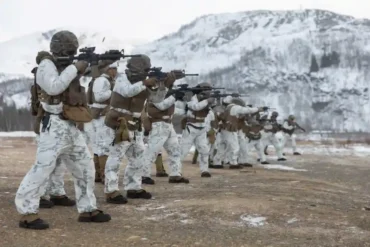
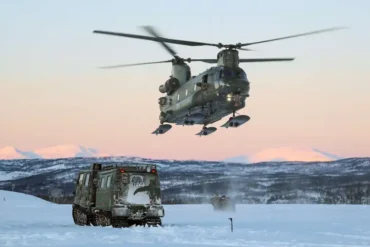
Cold Response 26 is no routine exercise. Led by Norway, the drill brings together roughly 25,000 service members from twelve NATO nations, alongside about 3,000 U.S. Marines and additional American forces, to train in Arctic conditions defined by extreme cold, limited daylight, and rugged terrain. The goal is blunt and strategic: demonstrate that allied forces can deploy quickly, integrate seamlessly, and operate effectively in the High North, a region gaining geopolitical weight as great-power competition intensifies.
The Marines’ journey aboard the Patriots’ aircraft also unfolded against a politically charged backdrop. Recent U.S. rhetoric concerning Greenland and Arctic security has sharpened attention on NATO’s northern flank, where Norway sits at the crossroads of alliance defense, Russian proximity, and emerging sea routes. In that context, a football team’s jet carrying Marines to a NATO exercise becomes more than a curiosity; it becomes a small but telling symbol of how civilian assets underpin modern military readiness.
Civilian Aircraft in Military Logistics
For long-distance troop movements, especially when dedicated military airlift is constrained, the U.S. Department of Defense regularly charters civilian aircraft. This approach preserves scarce military resources while leveraging the efficiency of commercial aviation. The Patriots’ Boeing 767s fit neatly into that model, offering long range, widebody capacity, and rapid availability. When not transporting players and staff, these jets are leased for charter missions that include humanitarian relief and defense-related flights.
The aircraft used for the Norway deployment is one of two Boeing 767-300ERs nicknamed “AirKraft.” Both are operated by Omni Air International, a carrier specializing in military and government charters. Their involvement underscores how experienced civilian operators integrate with military planning, security requirements, and scheduling demands without the visibility of traditional air force transports.
From NFL Innovation to Strategic Asset
The New England Patriots broke new ground in 2017 by becoming the first NFL franchise to own its own long-haul aircraft. Purchased after years of chartering, the two former American Airlines 767s were selected for their reliability, range, and cabin size, particularly suited to transporting large athletes comfortably. The move set a precedent later followed by other professional sports organizations, but few could have anticipated the jets’ secondary role in global security logistics.
Originally delivered to American Airlines in 1991, the aircraft now registered as N225NE and N36NE are more than three decades old. Age, however, has not diminished their utility. Widebody aircraft of this generation are prized for robust design, proven systems, and adaptable interiors, making them ideal candidates for conversion into VIP and charter configurations.
Inside the Patriots’ 767 Cabin
After acquisition, the Patriots commissioned a comprehensive cabin overhaul through Kraft Sports and Entertainment. Nearly every interior element was refreshed, excluding structural dividers and lavatories. New carpets, modernized overhead bins, and upgraded seating transformed the aircraft into a premium environment capable of supporting long-haul missions.
The layout balances comfort and capacity. Originally designed with first, business, and economy class flexibility, the 767’s cabin width of 186 inches allows generous seating and aisle space. For military charters, this translates into efficient troop movement without sacrificing basic comfort, a nontrivial factor on transatlantic flights preceding demanding field exercises.
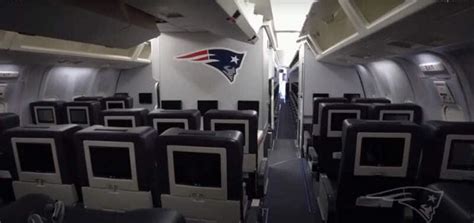
In-flight entertainment systems, seatback screens, and a consistent VIP-ready configuration ensure the aircraft can pivot quickly between team travel, humanitarian missions, and defense charters. With a maximum range of approximately 6,000 nautical miles, the 767-300ER can connect North America and Northern Europe nonstop, reducing transit time and logistical complexity.
Omni Air and the Charter Ecosystem
Since February 2024, Omni Air International, a subsidiary of Air Transport Services Group, has operated both Patriots jets under a long-term agreement. The contract covers team transport, commercial charters, and military or goodwill flights, creating a versatile operational framework. This arrangement followed a high-profile split with Eastern Airlines, illustrating how critical reliable operators are when aircraft serve dual civilian and government roles.
For NATO planners, such partnerships expand the available pool of airlift without new aircraft procurement. For civilian owners, they provide revenue streams that offset operating costs while contributing to national and alliance objectives.
Arctic Exercises and Alliance Messaging
Exercise Cold Response 26 sends a clear signal. Training tens of thousands of troops in Norway’s winter environment demonstrates that NATO’s collective defense commitments extend into the harshest climates. The Marines arriving aboard a Patriots jet may seem unconventional, but the message is consistent: alliance readiness depends on adaptability, including the creative use of civilian aviation assets.
As Arctic geopolitics grow more complex, the logistics behind these exercises matter as much as the maneuvers themselves. A football team’s Boeing 767 carrying Marines to the High North is a reminder that in modern defense, the boundary between civilian and military capabilities is increasingly fluid, and sometimes painted in team colors.