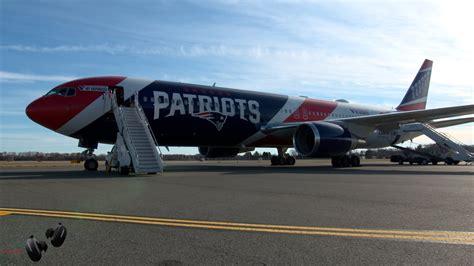
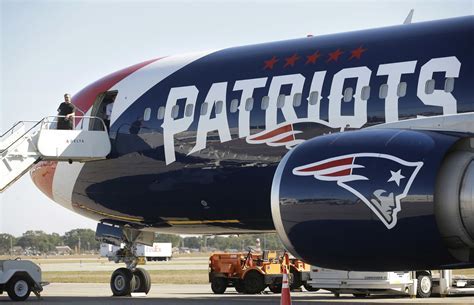
In August 2024, Omni Air International entered into a headline-making agreement with the New England Patriots, gaining operational control over the NFL team’s two specially branded Boeing 767-300 aircraft. One of these jets, tail number N36NE, would soon become a central figure in a swirling debate over military contracts, government opacity, and the disturbing legacy of ICE rendition flights. The partnership was described as a long-term deal for “team travel and other charter flights,” including humanitarian efforts and other missions approved by the Kraft family. However, flight data from August 2024 revealed something unexpected: a round-trip journey to Guantánamo Bay, Cuba.
A Curious Flight to Gitmo: What the Logs Reveal
On a Monday in August, public flight tracking data showed that N36NE took off from Fort Worth, Texas, and landed at Guantánamo Bay Naval Base, returning that same day to Fort Bliss, another U.S. military installation. Given the infrequent nature of civilian-linked flights to Gitmo, this sparked immediate scrutiny.
The Patriots have previously utilized their team-branded aircrafts for non-athletic humanitarian missions, including the 2020 emergency trip to China to procure 1.5 million N95 masks during the early days of the COVID-19 pandemic. In 2021, one of the jets flew vaccinated healthcare workers to the Super Bowl. These acts were highly publicized, promoted as gestures of solidarity and social responsibility.
Yet this Guantánamo flight occurred with no fanfare, press release, or clear purpose.
Guantánamo Bay: A Destination Shrouded in Secrecy
Today, Guantánamo Bay remains one of the most controversial military locations in the world. Beyond its infamous detention facility, Gitmo has increasingly become linked to immigration enforcement under U.S. Department of Homeland Security (DHS) directives. Recent reports confirm that approximately 400 migrants had been processed through the base in just two months during mid-2024, contributing to an operation costing taxpayers over $40 million.
While DHS and ICE officials remain largely silent about the logistics of these operations, the use of private contractors such as Omni Air International is widely acknowledged as part of the so-called “ICE Air” program—a network of deportation flights conducted globally. This context gave new meaning to the presence of a Patriots-branded aircraft in such an arena.
Official Denials and the Limits of Accountability
When questioned by Vanity Fair, Patriots spokesperson Anisha Chakrabarti issued a firm denial of any involvement in deportation activities. “The New England Patriots plane was not used for any kind of deportation flight and there were no detainees on the plane,” she stated. Furthermore, Chakrabarti emphasized that Omni Air manages and charters the planes for other clients when the team isn’t using them, asserting, “The New England Patriots organization is not involved in, nor does it approve, sanction, or coordinate the uses of the aircrafts when they are chartered for non-team purposes.”

This statement aligns with the team’s historical effort to distance itself from controversial charter uses. However, this situation was complicated by the team’s prior partnership with Eastern Airlines, during which time the aircrafts were reportedly used for at least three ICE rendition flights to Honduras, according to a 2022 University of Washington Center for Human Rights report.
These revelations open a troubling pattern: Patriots planes have now been linked multiple times—albeit indirectly—to the deportation apparatus.
The Gray Area of Private Charter Partnerships
The aircraft in question is not just a sports team asset; it’s also a charter commodity. With 80 business-class seats and custom luxury configurations, the N36NE is a prestige aircraft. That makes it appealing not just to athletes and VIPs, but also to federal agencies such as the Department of Defense and ICE, seeking reliable private aviation providers.
Omni Air International holds numerous government contracts and operates within a murky zone of logistics, ferrying everything from soldiers to detainees. Its parent company, Air Transport Services Group (ATSG), was recently acquired by Stonepeak for $3.1 billion, and until April 2025, Amazon held a 20% stake in ATSG—underscoring how deeply embedded these operations are within major U.S. corporate structures.
When approached by journalists, Omni’s spokesperson Kym Dixon declined to offer details on the Guantánamo flight. “Due to the potential nature of the missions, we do not confirm flight or contract information,” she wrote. Meanwhile, the DHS and ICE chose not to respond at all.
Deportation, Profit, and Moral Compromise
The optics of a New England Patriots jet—a flying billboard for a storied NFL franchise—making an unexplained journey to Guantánamo Bay raises sharp questions about corporate responsibility and brand control. While the Patriots may claim ignorance or lack of oversight, critics argue that public-facing organizations cannot fully absolve themselves when their assets serve morally ambiguous or controversial missions.
Kathleen Bergin, a Cornell Law professor and human rights advocate, harshly criticized the use of such planes for ICE operations. “Athletes must accept that they are sitting in a seat perhaps last occupied by a migrant bloodied from abuse,” she wrote in Fortune. “Celebrities and corporate VIPs who’ve used their public image to promote human rights sacrifice their credibility the moment they board the plane.”
Her critique points to a broader tension in the post-9/11 aviation world, where private aircrafts leased for public purposes can blur the line between luxury and logistics, humanitarianism and enforcement.
The Political Shadow of Trump-Era Deportations
In the background of this episode is the aggressive deportation agenda of former President Donald Trump, which remains a potent force within certain government circles. Deputy White House Press Secretary Anna Kelly fueled controversy when she told Vanity Fair, “While those assisting with President Trump’s mass deportation of migrant criminals are great patriots, there is no contract with the New England Patriots to facilitate deportations.”
The language, though likely intended to distance the administration, inadvertently highlights the ideological divides fueling modern deportation policy—an issue increasingly outsourced to private charter firms that operate with limited transparency.
A Legacy at Risk: The Patriots’ Reputation in the Balance
The Kraft family, long considered progressive in philanthropic arenas—from mask donations during the pandemic to social justice campaigns—now finds itself in an uncomfortable spotlight. While no one alleges direct wrongdoing by the team or its ownership, the unavoidable truth remains: a plane bearing the Patriots logo flew into a zone that symbolizes some of the most opaque and morally fraught practices in modern American policy.
Until stakeholders—including the Patriots, Omni Air, and the federal agencies involved—fully disclose the nature and purpose of such flights, the cloud of suspicion will remain.
This incident reveals a broader lesson in how private-public partnerships, particularly in aviation, must be scrutinized. In a time when brands trade on values, silence or denial may no longer be enough. As the story of N36NE’s mysterious Guantánamo flight unfolds, one question echoes louder than any touchdown celebration: What cost comes with letting someone else fly your colors?