Somalia is negotiating a landmark $900 million defense agreement with Pakistan for the acquisition of up to 24 JF-17 Thunder Block III multirole fighter jets, a move that would mark the most significant modernization of the Somali Air Force since the collapse of central authority in 1991. If finalized, the deal would not merely represent a procurement contract but a structural reset of Somalia’s sovereign airpower, restoring a combat aviation capability absent for more than three decades.
Announced on February 21, 2026, the negotiations signal Mogadishu’s determination to transition from a lightly equipped air arm—currently limited to aircraft such as the Cessna 172, Cessna 182, Mil Mi-8, and Agusta-Bell 412—into a modern force capable of defending national airspace, securing maritime corridors, and conducting precision operations. Somalia presently operates no fighter jets, a gap that has constrained its ability to independently monitor and defend its vast air and coastal domains.
The proposed package, valued at nearly $900 million (approximately Rs2.51 trillion), would include not only aircraft delivery but also pilot conversion training, weapons integration, logistics support, and long-term sustainment planning. Such a comprehensive structure indicates that Somalia’s objective extends beyond symbolic rearmament; it seeks durable operational readiness and institutional rebuilding.
Strategic Rationale Behind Somalia’s Fighter Jet Acquisition
Somalia’s geography alone explains much of the urgency. With one of Africa’s longest coastlines and a strategic position along key maritime trade routes in the Horn of Africa, control of national airspace intersects directly with maritime security, counterterrorism operations, and border integrity. Air superiority is not a luxury in such an environment; it is a multiplier of state authority.
The collapse of the Somali central government in 1991 dismantled much of the country’s military infrastructure. Since then, air defense and advanced aerial operations have remained largely outside Mogadishu’s independent capability. The acquisition of up to 24 fighters would enable the formation of multiple operational squadrons, creating layered coverage for both inland and coastal regions.
The strategic calculus also includes sovereignty over contested airspace, including the self-declared autonomous region of Somaliland, recently recognized by Israel. Full-spectrum air capability provides leverage in diplomatic and security dialogues alike, strengthening Somalia’s negotiating position both domestically and internationally.
Why the JF-17 Block III Fits Somalia’s Budget and Ambitions
Cost remains a decisive factor. According to Pakistani Defence Production Minister Raza Hayat Harraj, Western alternatives in the same performance category can cost more than three times the $30–40 million unit price associated with the JF-17. For a country with limited fiscal flexibility, such pricing transforms advanced air combat capability from unattainable aspiration into plausible investment.
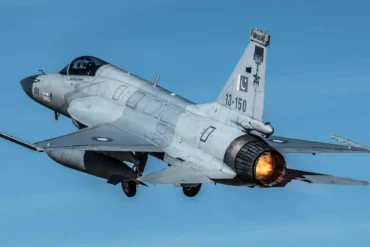
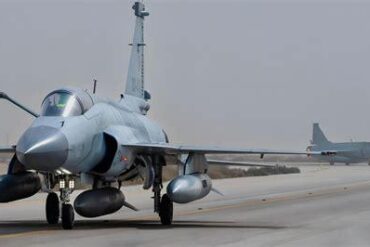
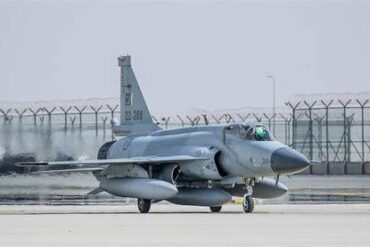
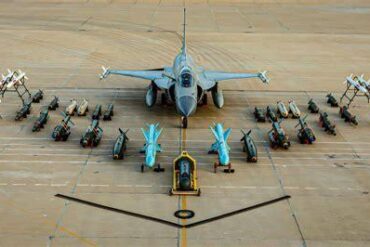
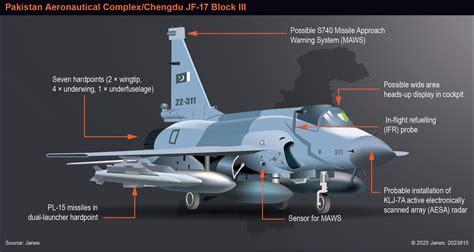
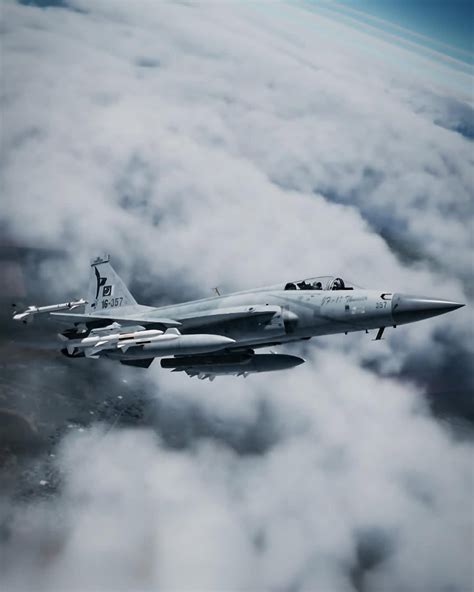
The JF-17 Thunder Block III represents the latest evolution of a fourth-generation, single-engine lightweight multirole fighter jointly developed by the Pakistan Aeronautical Complex and China’s Chengdu Aircraft Industry Group. Entering service in 2007, the platform has matured through operational use by the Pakistan Air Force, with export customers including Myanmar, Nigeria, and Azerbaijan.
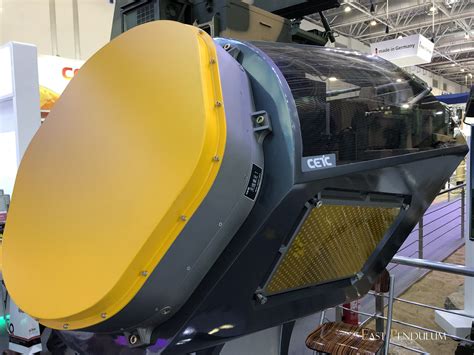
Block III is not a marginal upgrade. It incorporates an active electronically scanned array (AESA) radar, specifically the KLJ-7A air-cooled system, capable of tracking multiple airborne targets simultaneously and supporting beyond-visual-range engagements. AESA technology enhances detection range, target discrimination, and resistance to electronic countermeasures—capabilities that significantly elevate situational awareness in complex air environments.
Advanced Avionics and Combat Systems
The cockpit architecture of the Block III reflects contemporary network-centric warfare requirements. Three multifunction displays, a wide-angle holographic head-up display, and a helmet-mounted display and sight (HMD/S) system enable pilots to cue weapons simply by looking at a target. This dramatically reduces engagement time in close-range aerial combat.
The aircraft integrates an upgraded electronic warfare suite, an infrared search and track (IRST) system, and a missile approach warning system. Together, these components enhance survivability by detecting threats passively and alerting pilots to incoming missiles. In modern air combat, survival often depends on milliseconds of awareness; sensor fusion in the Block III is designed precisely for that edge.
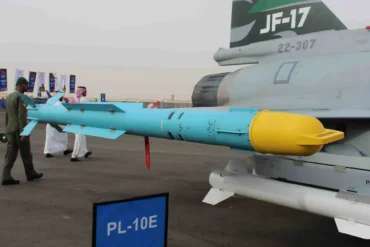
Weapon compatibility further expands operational flexibility. The fighter supports advanced PL-10 short-range and PL-15 beyond-visual-range air-to-air missiles, as well as precision-guided air-to-surface munitions and anti-ship weapons. For a coastal nation such as Somalia, anti-ship strike capability introduces a deterrent dimension that extends beyond purely aerial defense.
Airframe, Performance, and Operational Reach
Structurally, the JF-17 employs a semi-monocoque airframe primarily constructed from aluminum alloys, reinforced with titanium and high-strength steel in critical sections. Later variants incorporate increased composite materials to reduce weight and improve durability. The aircraft features seven external hardpoints and can carry up to 1,500 kilograms of external ordnance, supplemented by an internal 23 mm GSh-23-2 twin-barrel cannon.
Powered by the Russian Klimov RD-93MA afterburning turbofan engine, the Block III achieves a maximum speed of Mach 1.6. Its thrust-to-weight ratio approaches 0.99 with full internal fuel and no external payload, enabling agile maneuverability. Internal fuel capacity of 2,330 kilograms can be augmented by up to three external drop tanks, while in-flight refueling capability extends range and loiter time—critical for maritime patrol and extended surveillance missions.
The inclusion of a MIL-STD-1760-compatible stores management system ensures compatibility with a wide spectrum of munitions, reinforcing adaptability for evolving operational requirements. Enhanced data link capability supports coordinated operations within a broader air defense network.
Comprehensive Defense Package and Training Architecture
The Somali-Pakistani negotiations are structured as a holistic defense partnership rather than a simple aircraft purchase. The package under discussion includes pilot training pipelines, maintenance instruction, spare parts supply chains, and integrated weapons support. Such scaffolding is essential for a nation rebuilding an air combat arm from near zero.
Pilot conversion training will likely require Somali aviators to undergo extensive instruction in Pakistan, transitioning from light aircraft operations to high-performance supersonic jets equipped with digital fly-by-wire systems. Logistics infrastructure—hangars, maintenance facilities, simulators, and supply depots—must also be developed to sustain sortie generation rates.
External financial support from Saudi Arabia and Turkey has been mentioned as a possible mechanism to facilitate the arrangement. If realized, such backing would deepen regional security cooperation and reduce the fiscal strain on Somalia’s national budget.
Diplomatic engagement has already intensified, including steps toward visa-free travel for diplomatic passport holders between Mogadishu and Islamabad. Defense procurement, in this context, acts as both military modernization and geopolitical alignment.
Regional and Geopolitical Implications
The Horn of Africa is a strategically sensitive theater where maritime chokepoints, counterterrorism operations, and great-power competition intersect. The introduction of 24 modern multirole fighters would recalibrate Somalia’s security posture, signaling a shift from dependency toward sovereign capability.
More than 180 JF-17 aircraft have been produced across all variants, with production split between China and Pakistan. The Block III configuration aligns with Pakistan’s broader PFX program, which envisions continued avionics, radar, and weapons enhancements. Somalia’s potential entry into the operator community would expand the aircraft’s African footprint and reinforce Pakistan’s role as an exporter of cost-effective advanced combat platforms.
For Mogadishu, the acquisition is not merely about airframes and engines. It is about restoring institutional confidence, projecting state authority across land and sea, and embedding long-term security cooperation within a structured framework. A fighter jet cannot solve political fragmentation or economic hardship, but it can alter the strategic equation in which those challenges unfold.
Should the $900 million agreement conclude successfully, Somalia will move from an air force defined by absence to one defined by ambition. The sky above the Horn of Africa, long uncontested by Somali fighters, may soon echo again with the controlled thunder of supersonic engines—a signal that a nation once grounded is preparing to reclaim its airspace.