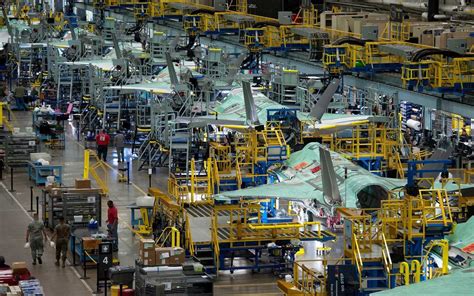
Canada has quietly initiated payments for long-lead components associated with 14 additional F-35 fighter jets, a development that underscores Ottawa’s careful balancing act between national defense requirements, industrial commitments, and ongoing tensions with the United States. These payments, which concern parts that must be ordered years in advance such as structural assemblies and avionics systems, are distinct from the initial 16 aircraft already approved and funded for delivery starting late 2026. While the Department of National Defence (DND) has emphasized that the broader review of Canada’s fighter fleet remains ongoing, these expenditures effectively preserve the country’s position in the production sequence managed by Lockheed Martin, preventing delivery slots from being reassigned to other international partners.
The move highlights the delicate interplay between political messaging and practical defense procurement. By advancing payments for key components without publicly announcing a formal acquisition commitment, the Canadian government maintains flexibility in the ongoing review of the originally planned 88-aircraft F-35 fleet. According to official sources, failure to secure long-lead items within the established timelines could jeopardize Canada’s access to the multinational production schedule, potentially delaying replacements for aging CF-18 Hornets.
Strategic Significance of Long-Lead Components
Long-lead components form the backbone of any advanced fighter program, representing parts that suppliers require several years ahead of final assembly. These include critical structural elements, complex avionics systems, and integrated mission packages that define the aircraft’s operational capability. For the F-35 program, these components are essential not only to ensure timely delivery but also to maintain interoperability with allied forces operating the Joint Strike Fighter. Canada’s advance payments demonstrate a commitment to sustaining industrial timelines while leaving the door open for political and budgetary review, reflecting a calculated approach to defense modernization.
The 14 additional jets are connected solely to these advance orders. The actual number of F-35s to be procured beyond the initial 16 remains under federal evaluation. The Department of National Defence has repeatedly clarified that no formal funding commitment exists for aircraft beyond the first tranche, emphasizing that the expenditures pertain strictly to production logistics rather than confirmed purchases. This strategy allows Canada to hedge against delays and preserve national industrial participation while avoiding premature political commitment, a subtle yet consequential maneuver within international defense procurement frameworks.
Historical Context: Canada’s Long-Term F-35 Engagement
Canada’s involvement in the F-35 program dates back nearly three decades. Beginning in 1997, the country contributed US$10 million to join the Concept Demonstration phase, signaling early interest in the advanced stealth fighter. By 2002, Canada had invested US$150 million in the System Development and Demonstration phase, a program spanning over a decade and encompassing extensive collaborative design work. In 2006, a memorandum of understanding formalized Canadian participation in Production, Sustainment, and Follow-on Development from 2007 to 2051, projecting a cost of over half a billion dollars.
The procurement plan initially proposed acquiring 65 F-35s to replace 80 CF-18 Hornets, with cost estimates ranging from C$9 billion for the aircraft to C$16 billion when factoring in ancillary elements such as maintenance, training, and infrastructure. Delivery was originally anticipated to begin in 2016, although delays in full production extended timelines significantly. Political scrutiny has remained intense throughout, largely due to concerns over sole-sourced contracting, cost transparency, and lifecycle expenditure. Assessments of unit costs have fluctuated, with initial estimates of C$75 million per aircraft rising to figures exceeding C$100 million when full program elements are included.
Political and Industrial Dimensions
The recent advance payments intersect with complex political and industrial considerations. Canada’s status as a Level Three industrial partner in the Joint Strike Fighter program has generated significant domestic economic activity, with 144 contracts awarded to Canadian companies, universities, and government research facilities between 2002 and 2012, valued at US$490 million. Future projections estimate an additional US$1.1 billion from 2013 to 2023, with potential total benefits ranging from US$4.8 billion to US$6.8 billion. These industrial returns provide a compelling rationale for maintaining participation, as they support high-skilled jobs in composites, advanced manufacturing, and aerospace logistics while positioning Canada within a global defense supply chain.
Domestically, public debate has centered on the balance between cost, operational capability, and industrial impact. Polling conducted by Ekos Politics indicated that 72 percent of Canadians favor integrating Sweden’s Gripen fighter into the fleet, either as a replacement or as part of a mixed force. Advocates argue that a mixed fleet could reduce program costs, expand domestic aerospace employment, and diversify supply chains. However, critics caution that reducing F-35 purchases could compromise interoperability with NATO and NORAD partners, forcing adjustments to longstanding defense arrangements with the United States.
Geopolitical Considerations and U.S. Relations
Canada’s F-35 decisions have not occurred in a vacuum; they are entwined with broader geopolitical dynamics, particularly trade and diplomatic tensions with Washington. In 2025, the United States imposed tariffs on Canadian steel, aluminum, and automotive exports while threatening additional restrictions on aircraft and aerospace certifications. In this context, the Canadian government’s review of its full F-35 commitment appears to function as both a defense procurement exercise and a negotiating tool in bilateral relations.
U.S. officials have signaled that any reduction or cancellation of Canadian F-35 orders could prompt Washington to fill operational gaps unilaterally, potentially through redeployment of American aircraft to Canadian airspace. Comments from U.S. Ambassador Pete Hoekstra stressed that deviations from the F-35 platform might necessitate reconfigurations within NORAD, given Canada’s traditional role in shared continental air defense. The overlap of military planning and economic diplomacy underscores the multidimensional nature of advanced fighter acquisition decisions, where national security, alliance commitments, and international trade considerations converge.
Ongoing Fleet Review and Policy Deliberations
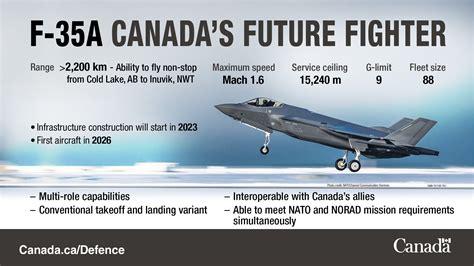
Prime Minister Mark Carney’s government initiated a comprehensive review of Canada’s fighter fleet in 2025, linking procurement decisions to broader economic and diplomatic factors. The review examines options ranging from full acquisition of 88 F-35s to smaller-scale purchases combined with alternative aircraft such as the Gripen. Cost projections, industrial implications, and alliance interoperability all feature prominently in these deliberations.
While 16 aircraft are firmly funded, the recent long-lead payments for 14 additional jets suggest Ottawa is positioning itself to retain flexibility. This dual-track approach allows Canada to preserve access to production slots while continuing political and fiscal evaluations. By separating payments for essential components from formal acquisition decisions, the government effectively hedges against both domestic political backlash and external pressure from Washington. The strategy highlights an often-overlooked aspect of defense procurement: the necessity of forward planning to maintain options without prematurely locking in expensive commitments.
Technical and Operational Implications
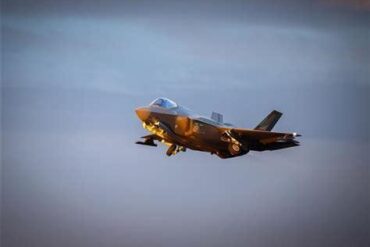
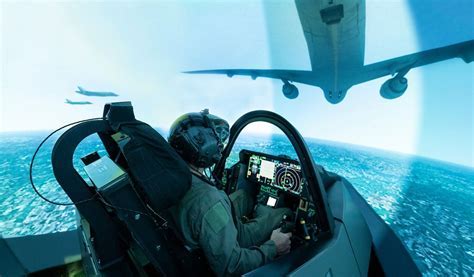
The F-35A variant, selected as Canada’s preferred fighter, integrates stealth capabilities, advanced sensors, and networked avionics that provide significant operational advantages over the aging CF-18 Hornets. The aircraft’s interoperability with U.S. and NATO systems is a key factor in its selection, allowing Canadian pilots to operate seamlessly in multinational missions. The long-lead components now being paid for are critical enablers of this performance, ensuring that structural integrity, avionics reliability, and mission systems are delivered on schedule.
From a technical standpoint, delaying or reducing orders could disrupt the carefully coordinated multinational production schedule. The F-35 program distributes manufacturing tasks across multiple international partners, meaning that production slots are tightly allocated. Without early procurement of structural assemblies and avionics, Canada risks losing its position in the sequence, potentially leading to delays of years for aircraft deliveries—a scenario that could compromise readiness as the CF-18 fleet approaches retirement.
Economic and Industrial Return on Investment
Canada’s F-35 participation has created measurable benefits for the national aerospace sector. From composites and avionics to advanced manufacturing and logistics, Canadian companies have captured significant portions of the Joint Strike Fighter supply chain. Long-term contracts support not only direct employment but also research and development in critical high-tech areas, reinforcing Canada’s strategic industrial base. Maintaining this participation through long-lead payments is therefore as much an economic decision as a military one, preserving opportunities for domestic firms while avoiding forfeiting lucrative contracts to other nations in the program.
The potential shift to a mixed fleet including Gripen aircraft has been presented as a compromise between fiscal prudence and industrial policy. Gripen manufacturing could generate thousands of domestic jobs, particularly if coupled with procurement of the GlobalEye surveillance platform. However, balancing these industrial benefits against interoperability concerns and alliance obligations complicates the decision-making process. Each scenario carries distinct implications for both operational readiness and the broader aerospace economy, requiring nuanced evaluation by policymakers.
Political and Public Discourse
The F-35 debate has consistently drawn public attention due to cost uncertainties and the strategic significance of fighter replacements. Early sole-source decisions in 2010 drew criticism for lacking transparency, prompting parliamentary and public scrutiny. Later competitions reaffirmed the F-35 as the preferred choice but left unresolved questions regarding total fleet size and lifecycle costs. Current discourse incorporates not only these fiscal and operational considerations but also domestic industrial strategy and diplomatic leverage with the United States.
Public opinion continues to favor diversified approaches. Support for integrating Gripen aircraft reflects broader concerns about cost control, domestic job creation, and strategic autonomy. Yet, government messaging emphasizes that F-35 procurement remains essential for fulfilling Canada’s commitments to NORAD and NATO, ensuring that operational capability is not compromised by fiscal or industrial decisions.
Future Outlook
As Canada navigates the overlapping imperatives of defense readiness, industrial participation, and international diplomacy, the advance payments for long-lead components represent a critical hedge. They preserve options, sustain industrial timelines, and maintain political flexibility. The ultimate decision on fleet size will likely weigh cost projections, alliance interoperability, industrial returns, and domestic political considerations in equal measure.
Given the complexity of these factors, Canada’s approach highlights the intricate dynamics of modern fighter procurement. It demonstrates how national defense decisions cannot be separated from economic and diplomatic contexts, particularly when engaging in multinational programs with high technological and strategic stakes. While the first deliveries of F-35s are expected before the CF-18 fleet reaches full retirement, the government’s ongoing review and the strategic maneuvering inherent in advance component payments suggest that Ottawa is preparing for multiple contingencies, balancing domestic priorities against international obligations.

Canada’s engagement with the Joint Strike Fighter program reflects decades of strategic planning, complex negotiations, and industrial foresight. By moving ahead with payments for 14 additional aircraft components, Ottawa ensures that it retains its place in the F-35 production line while continuing to assess political, fiscal, and operational realities. The coming years will test the government’s ability to reconcile public expectations, alliance obligations, and industrial commitments, shaping the future of Canadian airpower in an era of technological transformation and geopolitical tension.
The integration of these jets, alongside potential mixed fleet options, could redefine Canada’s air combat capabilities for decades, ensuring advanced readiness while navigating the competing pressures of cost, industrial benefit, and international diplomacy. The decisions made now will echo across defense policy, aerospace industry strategy, and bilateral relations with the United States, highlighting the complex calculus underpinning modern military procurement.