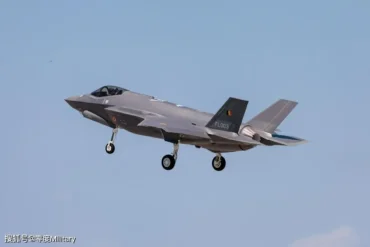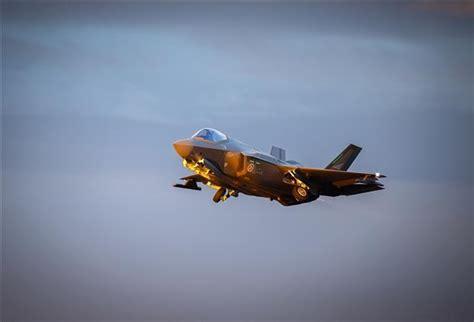
Belgium has formally committed to purchasing 11 additional F-35A Lightning II fighter jets from the United States, marking a pivotal step in its long-term defense strategy. The move follows a significant breakthrough in domestic politics, as a new federal coalition agreement enabled key legislative advancements, including this strategic military procurement.
Economy Minister David Clarinval announced the decision on July 1, 2025, during a radio interview on La Première, revealing that the acquisition was unlocked following consensus on a new capital gains tax. The tax agreement ended a major political deadlock, allowing the federal government to advance on critical files such as labor reforms, unemployment restructuring, and fiscal policy adjustments. Most importantly, it cleared the path for Belgium’s most consequential defense investment since the original F-35 contract signed in 2020.
Background: Belgium’s Strategic Shift Toward the F-35
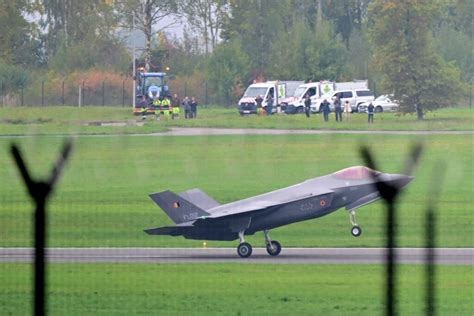
Belgium’s relationship with the F-35A began in earnest with its 2017 tender process to replace the aging F-16 fleet. Initially, five aircraft platforms were considered: the F/A-18 Super Hornet, Dassault Rafale, Eurofighter Typhoon, Saab Gripen, and Lockheed Martin’s F-35A. By mid-2017, only the Typhoon and F-35 remained under serious consideration after Boeing and Saab withdrew, and France made an informal Rafale proposal that bypassed official tender protocols.
In October 2018, the Belgian government selected the F-35A, citing its superior scores across seven evaluation criteria, including operational performance, interoperability, and lifecycle cost. The total project, valued at €4 billion, included 34 aircraft, infrastructure, training, and maintenance until 2030. Despite early speculation of favoritism—triggered by leaked documents in 2018 and 2019—subsequent audits and parliamentary reviews confirmed that the procurement adhered to Belgium’s legal and competitive standards.
Defense Strategy in the NATO Context
Belgium’s defense planning is directly shaped by NATO’s capability expectations. The alliance requires Belgium to provide 55 deployable F-35A aircraft to support:
- National airspace policing
- NATO Baltic Air Policing rotations
- Nuclear sharing responsibilities, with U.S. B61 nuclear bombs currently stationed at Kleine Brogel Air Base
Belgian F-16s are certified to deliver nuclear payloads, and the F-35A will assume that role. To fulfill its NATO mandate across nuclear deterrence, territorial defense, and coalition operations, Belgium is expected to operate 69 F-35As. The current expansion of 11 aircraft brings the projected total to 45, still short of the full requirement but viewed as a step forward under financial constraints.
Defense Minister Theo Francken confirmed that the 11 new jets are aligned with NATO commitments. Although a proposal was floated in June 2025 to procure 21 jets, budgetary limitations led to the reduced number. Francken signaled that future governments could authorize additional purchases depending on alliance guidance and fiscal conditions.
European Assembly at Italy’s Cameri FACO Plant
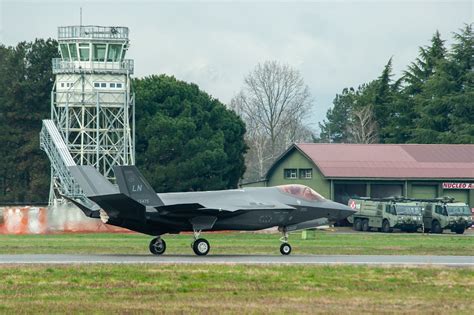
One of the most strategic shifts in this procurement is Belgium’s decision to assemble the 11 new F-35As in Italy at the Cameri Final Assembly and Check-Out (FACO) facility. Managed jointly by Leonardo and Lockheed Martin, Cameri has previously assembled aircraft for Italy and the Netherlands and serves as Europe’s F-35 Maintenance, Repair, Overhaul, and Upgrade (MRO&U) hub.
Belgian authorities have sought to label these jets as “European-made”, aligning with EU eligibility criteria for defense borrowing. In April 2025, Francken formally submitted the request to Italian Defense Minister Guido Crosetto, and Lockheed Martin leadership confirmed the feasibility in May. Though production at Cameri is slower than Lockheed’s Fort Worth facility, the cost per unit is comparable, and European assembly bolsters Belgium’s political narrative of strategic autonomy.
Financing Without a New Defense Tax
Minister Clarinval was unequivocal in rejecting a new “defense tax” proposed by Maxime Prévot of Les Engagés. Instead, the government will fund the aircraft through a combination of state asset sales, particularly BNP Paribas shares, debt instruments, and targeted spending reductions. The broader €30 billion defense budget over the next ten years includes investments in cybersecurity, training, logistics, and airbase infrastructure upgrades.
Belgian Industry’s Disappointing Returns and Revised Offsets
Despite early projections of €3.6 to €4 billion in economic returns from Belgian industry participation, actual figures have fallen short. As of 2022, only €700 million in industrial offsets had materialized. A revised offset agreement signed in 2024 forecasts €66 million annually over 40 years, totaling €2.7 billion.
Key Belgian companies involved include:
- SABCA: Builds horizontal tail components and fuselage longerons
- Asco: Manufactures titanium flaperon spars, integrated by Fokker in the Netherlands
- ILIAS Solutions: Provides software for fleet logistics and management
These components feed into a broader European supply chain that contributes 30% of the F-35’s global production. UK firms deliver ejection seats and fuselage parts; Italy produces wings; Germany, Denmark, Finland, and the Netherlands also supply critical systems. This collaborative structure supports Belgium’s claim that the F-35 is a “multilateral program” rather than a purely American export.
Infrastructure Overhaul and Ukraine Transfers
To support the incoming F-35s, Belgium has earmarked €275 million for infrastructure upgrades at Florennes and Kleine Brogel Air Bases. Enhancements include:
- Hardened aircraft shelters
- Simulator and training buildings
- New hangars and maintenance zones
- Quick Reaction Alert (QRA) zones
- Upgraded personnel accommodations
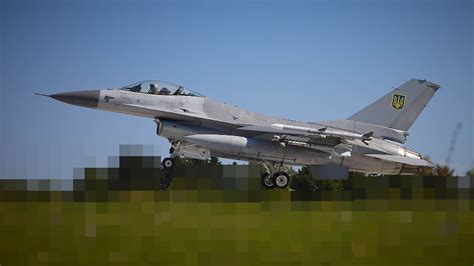
The transition also coincides with Belgium’s commitment to transfer 30 F-16s to Ukraine starting in 2026, further solidifying the F-35A’s role as the Belgian Air Force’s central fighter platform.
Political Optics and Strategic Autonomy
Prime Minister Bart De Wever and Defense Minister Francken have framed the F-35 procurement as a cornerstone of Belgium’s strategic autonomy, rejecting narratives that it increases dependence on the U.S. They argue that European co-production, assembly in Italy, and Belgium’s own industrial participation mitigate such concerns. This framing supports both NATO solidarity and European Union defense cooperation, two pillars of Belgium’s foreign policy.
Furthermore, the inclusion of the F-35 in Belgium’s nuclear deterrence doctrine, cyber-resilience framework, and airspace sovereignty mission reinforces its long-term strategic significance. Though the road to a 69-aircraft fleet remains long, the current expansion marks a firm political and defense commitment.
Future Outlook
Deliveries of the 11 additional jets are slated after 2033, allowing Belgium to fully integrate its initial fleet by that time. The staggered delivery schedule also permits extended training cycles, reduced operational risk, and alignment with broader EU and NATO capability timelines. As the Belgian Air Component modernizes, further purchases may be politically viable depending on NATO’s evolving threat assessments and EU defense financing mechanisms.
With this latest move, Belgium sends a clear signal: it intends to remain a reliable NATO ally, a European security contributor, and a country capable of adapting to the challenges of a rapidly shifting defense landscape.