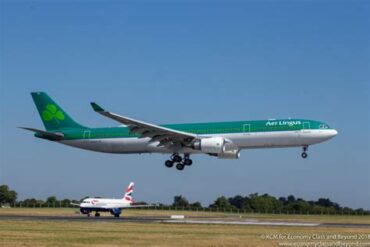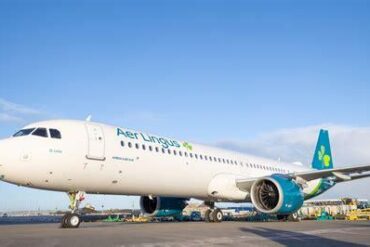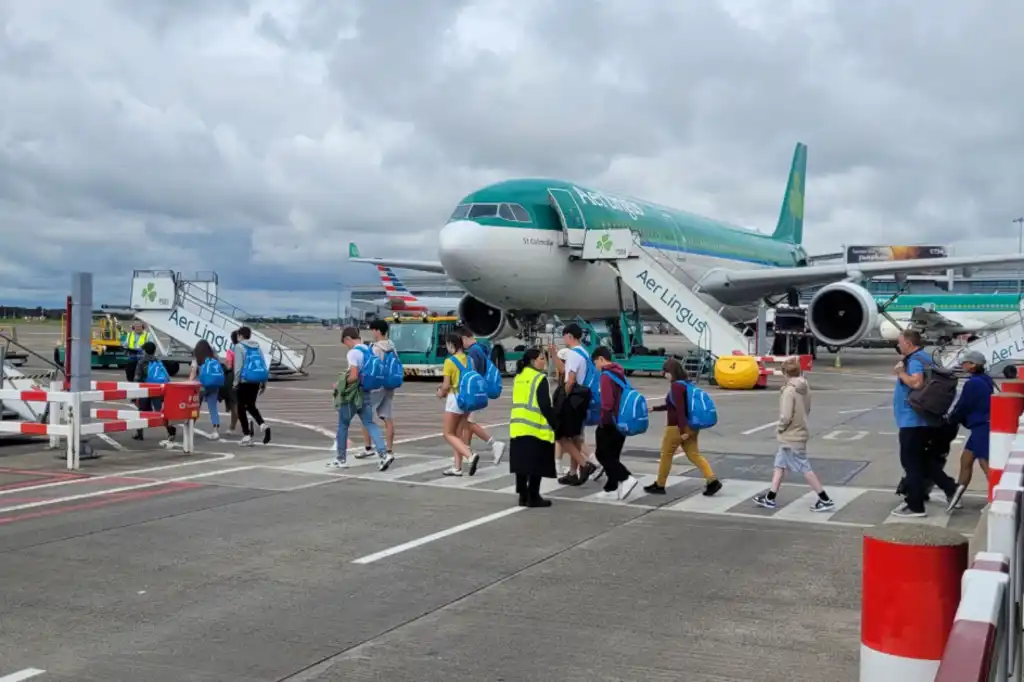
Aer Lingus is entering a pivotal phase of strategic reassessment as mounting financial strain forces the airline to re-evaluate its network structure and cost base. While no formal decisions have been announced, internal reviews and industry reports suggest that capacity reductions and operational restructuring are increasingly likely as the carrier struggles to meet profitability expectations set by parent company International Airlines Group (IAG). The concern is not limited to isolated routes but extends to broader efficiency across the airline’s expanding operations.
At the heart of the discussion is whether Aer Lingus’ aggressive transatlantic growth strategy can remain intact under current economic conditions. Although the airline has invested heavily in expanding its long-haul footprint, weaker-than-expected margins have prompted leadership to consider adjustments to schedules, staffing levels, and potentially underperforming sectors. The uncertainty has created industry speculation about whether this could eventually translate into reductions across parts of its network, even as demand for North American travel remains structurally strong.
Financial Strain and Rising Cost Pressures Shape Strategic Outlook
The airline’s financial performance has become the central driver behind its strategic review. Aer Lingus reported an operating loss of €103 million in Q1 2026, nearly double the deficit recorded during the same period the previous year. This deterioration reflects a combination of rising operating costs, intensified competition on transatlantic routes, and persistent pressure on yields, particularly at its Dublin hub.
Management has acknowledged the need for cost optimisation measures, including potential schedule realignments extending into 2027. Internal communications to staff indicate that both winter capacity and future summer flying programs may be adjusted downward if profitability does not improve. These signals suggest a more disciplined approach to expansion, prioritising margin improvement over network growth for its own sake.
The broader industry environment has not been favourable either. Higher fuel prices, inflationary cost pressures, and uneven demand recovery across key markets have created a challenging backdrop for long-haul operators. Aer Lingus, which relies heavily on transatlantic performance, is particularly exposed to shifts in North American and European demand balance.
US Network Expansion Remains Central to Long-Haul Strategy
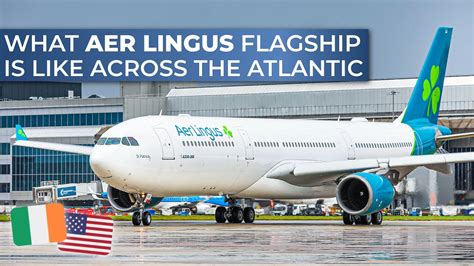
Despite speculation about cuts, Aer Lingus’ US strategy remains a cornerstone of its business model. The airline currently operates one of its largest-ever North American networks, serving 17 US destinations from Dublin and Shannon, including major hubs such as New York, Boston, Chicago, Los Angeles, and San Francisco. These routes are supported by a carefully designed schedule that strengthens Dublin’s position as a transatlantic connecting hub.
The airline has also outlined plans for continued expansion, including a record North American schedule projected for 2026 with up to 26 destinations across the continent. Frequency increases on established routes such as Dublin–New York and Dublin–Boston further reinforce the importance of the US market in Aer Lingus’ long-term growth strategy.
A key structural advantage supporting this network is Dublin Airport’s US Customs and Border Protection preclearance facility, which allows passengers to arrive in the United States as domestic travelers. Combined with Ireland’s geographic position on the North Atlantic corridor, this makes Dublin a highly efficient connecting point between Europe and North America.
Dublin Hub Strategy Faces Pressure from Network Balance Challenges
Aer Lingus’ transformation into a transatlantic connector airline depends heavily on the strength of its European short-haul network. While US routes generate significant revenue, their performance is closely tied to the availability of connecting traffic from the United Kingdom and continental Europe. If short-haul frequencies are reduced as part of cost-cutting measures, the knock-on effects could indirectly weaken long-haul profitability.
This interdependence creates a delicate balancing act. A reduction in European feeder routes could diminish Dublin’s attractiveness as a transfer hub, even if transatlantic services remain unchanged. In practice, this means that network cuts in one region can cascade into performance issues elsewhere, complicating any attempt to isolate efficiency measures without broader impact.
Financial Rebalancing and Past Network Adjustments Signal Direction
Recent operational decisions provide insight into how management may approach future restructuring. Earlier this year, Aer Lingus closed its Manchester long-haul base, discontinuing services to New York, Orlando, and Barbados. While these routes were commercially viable, their margins were reportedly weaker compared to core Dublin operations, prompting a strategic redeployment of aircraft and resources.

This move highlights a clear trend toward prioritising higher-yield markets and operational efficiency over geographic diversification. Rather than retreating from transatlantic flying, the airline appears focused on concentrating capacity where returns are strongest. Similar adjustments in European short-haul services suggest that further optimisation may occur before any consideration of US route reductions becomes necessary.
Indirect Risks May Matter More Than Direct US Route Cuts
While headlines often focus on the possibility of US route reductions, the more significant risk may lie in structural network weakening rather than outright cancellations. Aer Lingus’ transatlantic success depends on a steady flow of connecting passengers from across Europe, feeding into long-haul departures from Dublin.
If that feeder system is reduced, the impact would be felt across the entire network ecosystem. Lower connectivity reduces load factors, which in turn pressures yields on long-haul services. Even without cutting a single US destination, profitability could erode if the supporting network is scaled back too aggressively.
The airline is therefore navigating a complex optimisation problem: protecting its most valuable transatlantic routes while ensuring the broader network remains strong enough to sustain them. Industry observers note that Aer Lingus is more likely to pursue targeted efficiency measures rather than sweeping structural cuts, at least in the near term.
Outlook: Strategic Growth Meets Financial Discipline
At present, there is no confirmed evidence that Aer Lingus intends to reduce its US network, and transatlantic services remain central to its identity and revenue strategy. However, the financial pressure facing the airline means that every part of its operation is under scrutiny.
The coming planning cycles will likely determine whether Aer Lingus can maintain its expansion trajectory or shift into a phase of consolidation. Even if US routes remain untouched, adjustments elsewhere could reshape the economics of its entire transatlantic model. For now, the airline stands at a crossroads between ambitious long-haul growth and the realities of financial discipline in a highly competitive aviation market.