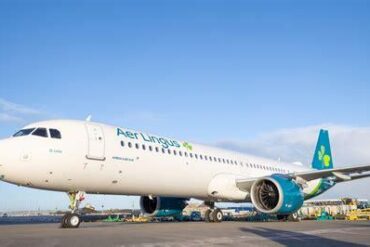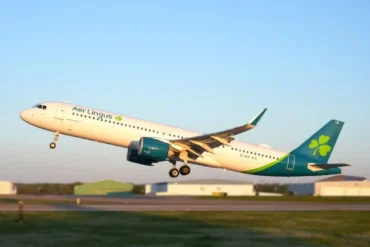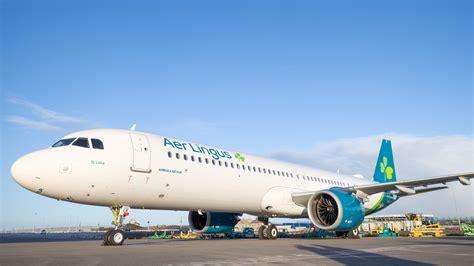
Aer Lingus has quietly delivered one of the most intriguing transatlantic announcements of the year, revealing a long-haul route that stretches the definition of narrowbody flying. Beginning March 31, the Irish flag carrier will link Dublin with Barbados using the Airbus A321XLR, a move that blends technical ambition with sharp commercial timing. At more than nine hours westbound, the flight is designed to test the aircraft’s true long-range credentials while opening a fresh leisure gateway from Ireland to the Caribbean.
This new service emerges as Aer Lingus reshapes its transatlantic network. With all long-haul flying from Manchester coming to an end, including the UK city’s Barbados link, Dublin is positioned as the natural replacement hub. The airline is clearly aiming to capture displaced UK demand, funnelling travelers through Ireland with pre-clearance advantages and seamless connections. The Barbados route will operate three times weekly, aligning with the cautious cadence typically used when launching long-haul services into seasonal leisure markets.
The numbers alone explain why this route is turning heads. Covering 3,485 nautical miles each way, Dublin–Barbados becomes Aer Lingus’ longest narrowbody flight by distance, edging past Dublin–Nashville by almost three percent. It also stands as the Caribbean nation’s only transatlantic narrowbody service, a symbolic milestone for both the aircraft type and the destination.
Operationally, the flight reveals how far single-aisle aircraft have evolved. The westbound leg is scheduled at 9 hours and 10 minutes, while the return benefits from favorable winds, trimming the journey to 7 hours and 50 minutes. That makes Barbados Aer Lingus’ second-longest narrowbody service by block time, narrowly behind Nashville. For passengers, the experience will hinge on the A321XLR’s long-haul cabin configuration, which balances efficiency with comfort across its 184 seats.
Globally, the route also reshuffles the leaderboard for the Airbus A321XLR. By great-circle distance, Dublin–Barbados becomes the world’s second-longest scheduled XLR flight, surpassed only by Iberia’s Madrid–Santo Domingo service. When block time is considered instead, the ranking changes, underscoring how airspace restrictions, winds, and routing decisions can redefine what “longest” truly means in aviation. In this context, Aer Lingus’ new Caribbean link still places the airline firmly among the most ambitious XLR operators worldwide.
A Strategic Caribbean Play For Aer Lingus
Barbados is not a random choice. The island has long attracted strong leisure demand from the UK and Ireland, particularly during spring and early summer. By scheduling the route from March 31 to May 31, Aer Lingus is targeting peak seasonal travel while limiting exposure should demand soften. Although the airline has not confirmed a return later in the year, the short initial window strongly suggests a performance test rather than a one-off experiment.

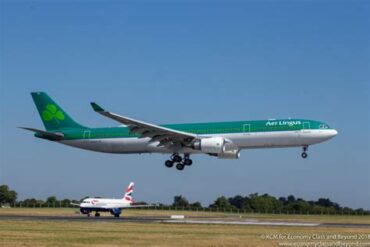
The decision to deploy the A321XLR exclusively is equally strategic. Compared with the larger A330 previously used from Manchester, the XLR dramatically lowers trip costs while preserving nonstop convenience. This allows Aer Lingus to serve thinner long-haul markets profitably, a core promise of the XLR program. For Dublin, it reinforces the airport’s growing role as a transatlantic connector capable of supporting routes once considered too niche for widebody aircraft.
How The Route Fits Into Aer Lingus’ Wider Network
The Barbados launch is part of a broader expansion that will see Aer Lingus operate up to 15 daily long-haul flights using the A321LR and A321XLR this year. In total, the two variants will serve 17 transatlantic routes from Dublin and Shannon, including new links to Pittsburgh and Raleigh-Durham. This marks a clear shift toward flexible, frequency-driven growth rather than reliance on high-capacity widebodies alone.
Even established markets are being tested through this lens. Chicago O’Hare, for example, will briefly see narrowbody service before reverting to the A330, highlighting how Aer Lingus is actively fine-tuning aircraft deployment based on demand patterns. The Barbados route fits squarely into this philosophy, offering long-haul reach without long-term risk.
In the bigger picture, Dublin–Barbados is less about one destination and more about what it represents. It signals confidence in the Airbus A321XLR as a genuine transatlantic workhorse and positions Aer Lingus as a carrier willing to explore the edges of narrowbody capability. For passengers, it offers a direct, efficient path to the Caribbean. For the industry, it serves as another data point proving that long-haul aviation is no longer defined solely by widebody aircraft.