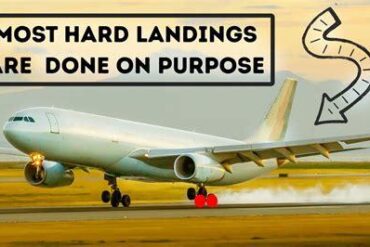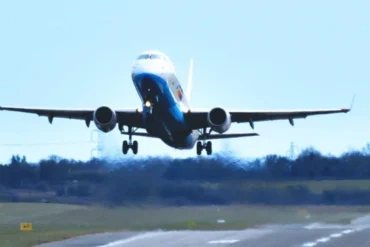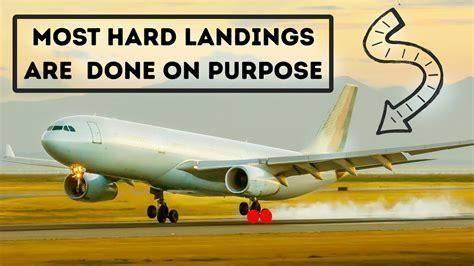
When passengers think about a perfect airplane landing, many imagine a touchdown so smooth that nobody in the cabin even notices the wheels reaching the runway. A “greased landing” has become a symbol of pilot skill, and a gentle arrival often creates a feeling of confidence among travelers. However, in professional aviation, the smoothest landing is not always the best landing.
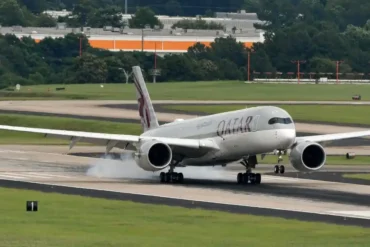
There are many situations where pilots intentionally choose a firm touchdown because it provides better control, improves braking performance, and places the aircraft exactly where it needs to be. From the passenger seat, a hard landing may feel uncomfortable or even alarming. From the cockpit, it may represent a carefully calculated decision based on runway conditions, aircraft performance, weather, and safety margins.
The purpose of an airline landing is not to impress passengers with elegance. The real objective is much more technical: the aircraft must cross the runway threshold correctly, touch down inside the designated touchdown zone, remain aligned with the centerline, and begin slowing down immediately.
A smooth landing that occurs halfway down a short runway is not a successful landing. A firmer touchdown that places the aircraft safely in the correct area, allowing spoilers, brakes, and reverse thrust to work effectively, is usually the better outcome.
The Best Landing Is Not Always The Softest Landing
One of the biggest misunderstandings about aviation is the belief that softer always means safer. Passengers naturally judge landings by what they feel. Pilots judge landings by precision.
During the final seconds before touchdown, pilots are managing multiple variables at once. They are monitoring airspeed, descent rate, wind changes, runway position, aircraft configuration, and available stopping distance. The touchdown itself is only one part of a much larger process.
A landing is considered successful when the airplane arrives in the correct place and the crew maintains control throughout the rollout. The sensation inside the cabin is secondary.
A very soft touchdown often requires the aircraft to remain slightly above the runway while the pilot gradually reduces the descent rate during the flare. This technique can create a longer period where the aircraft is flying just above the pavement. While this may feel luxurious, it can also consume valuable runway distance.
On a long, dry runway, a little extra floating time may not create a problem. On a short runway, a wet runway, or an airport surrounded by challenging terrain, those extra seconds can significantly reduce safety margins.
Pilots therefore focus on a concept known as touchdown zone accuracy. The aircraft needs to land within a specific area, usually the first third of the runway, where maximum stopping performance can be achieved.
A firm landing is often the result of a pilot choosing accuracy over comfort.
Why Floating During Landing Can Be Dangerous
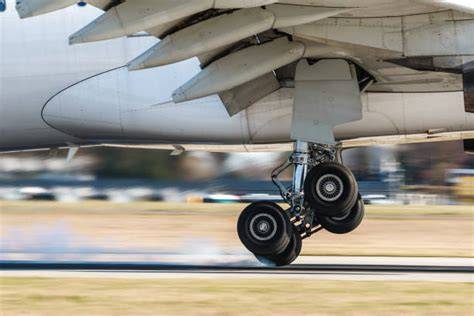
The aircraft does not begin its most effective braking immediately after crossing the runway threshold. Until the wheels are firmly on the ground, several important systems cannot operate at their full capability.
Once the main landing gear touches down, several things happen almost instantly:
- Ground spoilers deploy, reducing lift and transferring more weight onto the wheels.
- Wheel brakes become more effective because the tires are carrying more aircraft weight.
- Reverse thrust can be applied on many commercial aircraft.
- Directional control improves because the aircraft is fully connected to the runway surface.
A long flare delays these actions.
Even a small amount of extra floating can have a surprisingly large impact. A pilot who allows the aircraft to remain airborne only a few seconds longer may use hundreds of additional feet of runway.
The Federal Aviation Administration highlights that crossing the runway threshold higher than normal can significantly increase landing distance. For example, approximately every additional 10 feet of height above the standard threshold crossing altitude can add around 200 feet to the landing roll.
This is why pilots are trained not to chase the smoothest possible touchdown. They are trained to achieve the most appropriate touchdown.
A passenger may prefer a landing that feels like the aircraft is gently placed onto the runway. A pilot may prefer a landing where the aircraft firmly meets the pavement exactly where planned.
In aviation, those two goals are not always the same.
Short Runways Require More Positive Touchdowns
Some airports demonstrate the importance of firm landings better than others. Airports with limited runway length leave pilots with less room for error, making touchdown accuracy extremely important.
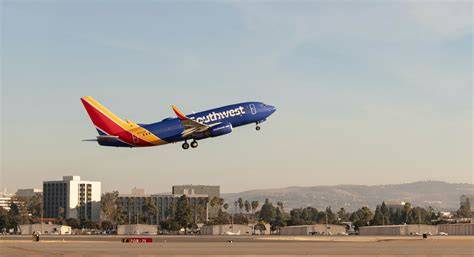
John Wayne Airport is a well-known example in the United States. Its main runway is approximately 5,700 feet long, which is relatively short for an airport serving regular commercial flights with aircraft such as the Boeing 737 and Airbus A320 family.
At airports like this, pilots are not looking for a long, gentle flare. They want the aircraft firmly established on the runway within the intended touchdown area. Every additional foot used before the wheels touch reduces the remaining distance available for braking.
Short runways can become even more challenging when combined with:
- High aircraft weight.
- Warm temperatures that reduce aircraft performance.
- Wet or contaminated pavement.
- Tailwinds or strong crosswinds.
- Runway slopes.
The same principle applies at airports around the world. A landing technique that works perfectly at a large airport with a 12,000-foot runway may not be appropriate at a smaller airport with significantly less stopping distance.
For pilots, the runway itself is part of the landing equation.
Wet Runways Change The Landing Strategy
Rain is one of the most common reasons passengers experience a firmer-than-normal touchdown. When a runway is wet, the priorities change immediately.
On a dry runway, pilots have more flexibility to focus on comfort. On a wet runway, they must consider reduced braking performance, possible hydroplaning, and the need to achieve reliable contact between the tires and pavement.
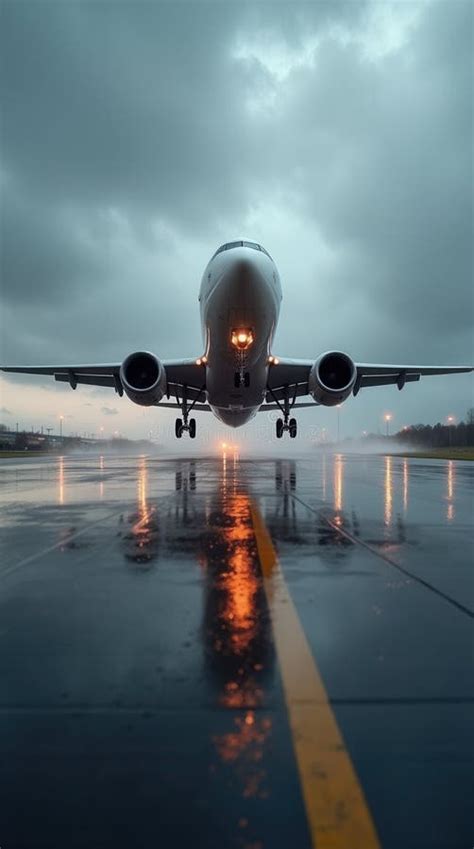
A firm touchdown helps transfer aircraft weight onto the landing gear sooner. This improves tire contact with the surface and allows braking systems to begin working more effectively.
Water, snow, slush, and ice create additional challenges because they reduce friction between the tires and runway. Aircraft crews rely on runway condition reports and standardized assessment systems to determine how much stopping performance may be affected.
A runway covered with contaminants is not simply a runway with a different appearance. It is a completely different operating environment.
For example, an aircraft landing on a wet runway may need more distance to stop compared with the same aircraft landing under dry conditions. A pilot who attempts an extremely soft touchdown could unintentionally reduce the available stopping margin.
This is why rainy-day landings often feel more deliberate. The aircraft may touch down with a noticeable bump because the pilot is prioritizing immediate control.
The harder feeling is not necessarily a sign of poor technique. It can be a sign that the pilot is adapting correctly to the conditions.
Windy Airports Reward Control Over Comfort
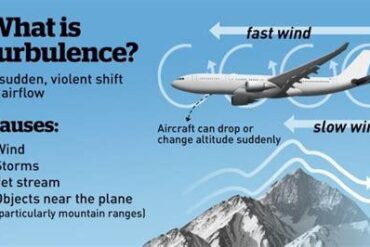
Wind is another major factor that influences landing technique. Strong crosswinds, gusts, and turbulence during the final approach can make a perfectly smooth touchdown less important than maintaining control.
During a crosswind landing, pilots must ensure the aircraft is aligned with the runway while dealing with sideways forces pushing the aircraft away from the centerline.
A soft touchdown is difficult to achieve when the aircraft is constantly being affected by changing wind conditions. A slightly firmer landing may allow the aircraft to settle onto the runway more positively and begin the rollout under control.
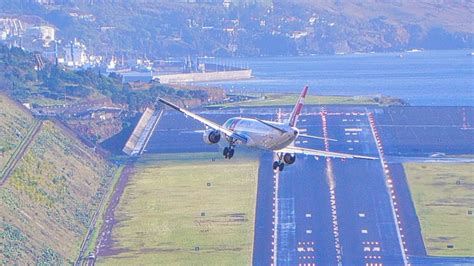
Madeira Airport is famous among aviation enthusiasts because of its challenging wind environment. Located near mountains and the Atlantic Ocean, the airport can experience turbulence, wind shear, and rapidly changing conditions.
At airports with difficult wind patterns, pilots receive specialized training because the landing environment demands a different approach. The goal is not a beautiful touchdown. The goal is a controlled touchdown.
The same philosophy applies at airports affected by frequent crosswinds, including locations where runway direction, geography, or surrounding terrain creates unpredictable wind conditions.
When the aircraft is fighting the wind, control always comes first.
Steep Approaches And Special Airports Create Different Techniques
Not every firm landing is caused by runway length, weather, or wind. Some airports require unique procedures because of terrain, obstacles, or noise restrictions.
London City Airport is one example. The airport uses a steeper approach angle than many traditional airports, requiring pilots to manage a different descent profile.
A steep approach changes the landing experience because the aircraft arrives with a different energy state and descent rate. The touchdown may naturally feel more noticeable compared with a standard approach.
Other factors that can influence landing feel include aircraft type. Turboprop aircraft, for example, may provide passengers with a different touchdown sensation because of their landing gear design, engine characteristics, and handling qualities.
Operational requirements can also influence technique. At busy airports, crews may need to vacate the runway quickly to maintain traffic flow. A positive touchdown followed by efficient deceleration can help keep operations moving safely.
Why Passengers And Pilots See Landings Differently
The difference between passenger perception and pilot evaluation explains why hard landings are often misunderstood.
Passengers experience landing as a single event: the moment the wheels touch the runway.
Pilots experience landing as an entire sequence:
- Stabilized approach.
- Correct airspeed.
- Proper runway alignment.
- Accurate touchdown point.
- Effective deceleration.
- Controlled rollout.
A passenger may remember only the sound and feeling of the tires hitting the pavement. The pilot is evaluating whether the aircraft achieved all of those objectives.
A smooth landing can be impressive, but it is only one measure of skill. A professional pilot knows that a visually perfect landing is meaningless if it compromises runway safety.
The best landing is the one that leaves the aircraft, passengers, and crew with the greatest safety margin.
A Hard Landing Can Be A Sign Of Good Judgment
The phrase “hard landing” often carries a negative meaning, but aviation requires more nuance. There is a difference between an uncontrolled hard landing caused by poor technique and a deliberate firm landing chosen because conditions demand it.
Professional pilots are not trying to make landings uncomfortable. They are making decisions based on physics.
When a runway is short, when rain reduces braking ability, when gusty winds challenge control, or when airport procedures require a specific approach technique, a firmer touchdown may be the safest option available.
The next time an aircraft touches down with a noticeable thump, it may not represent a mistake. It may represent a pilot doing exactly what training and experience require.
In commercial aviation, the goal has never been the softest landing.
The goal is always the safest landing.