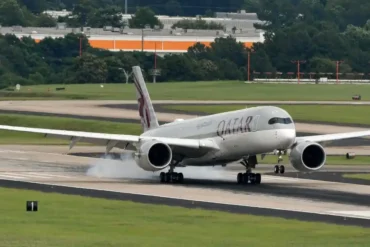
Aviation has developed its own precise language, built over a century of global collaboration, tragedy, innovation, and painstaking refinement. Among the most important linguistic tools in the cockpit are radiotelephony emergency signals, and within that system the term Pan-Pan occupies a unique, often-misunderstood space. It is neither casual nor catastrophic; it represents a critical middle ground where something has gone wrong, yet not so wrong that the aircraft is at immediate risk. Understanding why pilots use Pan-Pan, how controllers respond to it, and why it remains vital to modern aviation safety allows us to appreciate the layered architecture that keeps aircraft moving safely through the skies.
Pan-Pan is internationally recognized under both the International Civil Aviation Organization (ICAO) and the International Telecommunication Union (ITU). At its core, the term signals urgency rather than distress. The aircraft is not crashing, burning, or uncontrollable, but something important is amiss. The pilots need a clear frequency, priority handling, and ATC attention—without launching fire trucks, ambulances, and specialized rescue teams unless circumstances escalate.
Pan-Pan is used when a situation is abnormal, potentially dangerous, but still manageable. Pilots maintain control of the aircraft, have time to troubleshoot, and can continue flying for the moment. Unlike a Mayday call, which signals “grave and imminent danger,” Pan-Pan communicates that something requires prompt coordination and priority without triggering a full emergency response.
In the tightly choreographed dance of air traffic, this degree of nuance matters enormously. The global aviation system manages hundreds of thousands of flights at once, and every priority call ripples outward across frequencies, airports, and air routes. Pan-Pan allows the pilot to convey urgency without sending an entire airport into crisis mode.
Typical Pan-Pan scenarios include:
- A single engine failure in a multi-engine aircraft
- Electrical system degradation that threatens further failure
- Hydraulic anomalies affecting flaps, landing gear, or braking systems
- Navigation equipment failures in otherwise clear weather
- A medical issue onboard requiring expedited landing but not immediate rescue activation
- Fuel endurance concerns that may become critical if not addressed promptly
In each case, the pilot is signaling: We are not fine, but we are not doomed. Give us space. Give us priority. Let’s keep this under control.
How Pan-Pan Interacts With Air Traffic Control Procedures
When a pilot repeats the phrase “Pan-Pan, Pan-Pan, Pan-Pan”, the frequency immediately shifts. Controllers acknowledge the call and begin isolating traffic so the affected aircraft gains priority over all routine operations. Only a Mayday, or another Pan-Pan, can supersede or match its importance.
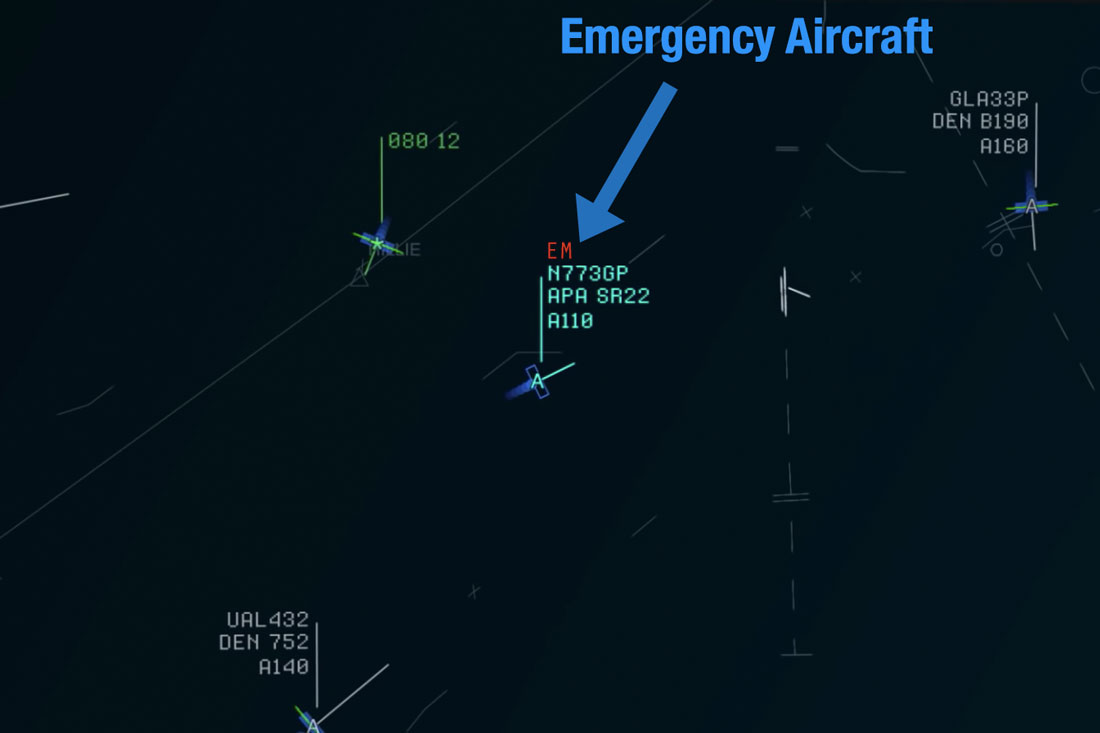
From the controller’s perspective, this involves several rapid adjustments. The aircraft’s datatag on radar may be marked as an emergency. ATC may direct other aircraft to hold, reroute, or reduce communication to keep the frequency clear. Ground emergency teams at the destination airport are informed but not yet activated. If radio contact is lost or intermittent, pilots may also select transponder code 7700, the universal emergency squawk. This alerts all ATC facilities simultaneously.
Inside the Cockpit: Pilot Decision-Making Behind a Pan-Pan Call
Declaring Pan-Pan is not a gesture of hesitation; it is a deliberate, professional move. Modern aviation culture encourages clear communication, and both ICAO and the FAA emphasize that pilots should declare an emergency without delay if they have any doubt about flight safety.
A Pan-Pan declaration triggers a standard urgency message, similar to a Mayday call but without the same level of severity. Pilots provide:
- Aircraft identification
- Nature of the problem
- Intentions
- Position and heading
- Altitude
- Weather
- Number of people on board and other details if relevant
Experienced aviators often describe Pan-Pan as the “yellow” stage—a situation transitioning from normal to abnormal but not yet crossing the line into immediate danger. A generator failure, for instance, may be easily handled at first, yet it represents a vulnerability that could spiral into multiple system failures. Likewise, a sick passenger may require a diversion, but no one is performing CPR at 35,000 feet.
Medical and Technical Conditions That Often Trigger Pan-Pan
One of the clearest examples of a real-world Pan-Pan involves medical urgency. A passenger suffering a cardiac episode, severe allergic reaction, or fainting spell might stabilize with first aid but still need rapid medical care on the ground. In such cases, pilots often opt for Pan-Pan because the issue is urgent without being immediately life-threatening.
From a technical standpoint, many Pan-Pan calls arise from system degradations. Aircraft are built with extensive redundancy—backup electronics, backup hydraulics, multiple power sources—but losing one layer of protection means the aircraft is statistically more vulnerable. Pan-Pan becomes a way of communicating that the situation is not catastrophic yet, but caution is required.
Fuel management is another classic scenario. If fuel dips below required reserves but remains above absolute minimums, pilots may issue a Pan-Pan to obtain priority for descent or landing before the situation deteriorates.
What Happens After a Pan-Pan Declaration
Once the urgency call is made, ATC takes several critical steps to ensure safety. They maintain communication with the flight, coordinate any necessary runway changes, adjust traffic flows, and prepare support teams without launching full-scale emergency responses. Everything is done with calm precision.
Controllers may also monitor the aircraft’s trajectory more closely. If the crew’s tone or updates suggest deterioration, they quickly escalate handling to Mayday-level urgency. The system is built to adapt in seconds.
If radio contact is unreliable, pilots can reinforce the urgency through the transponder. The combination of verbal and electronic signals ensures maximum visibility across the air traffic network.
Mayday vs. Pan-Pan: Understanding the Boundary Line
To appreciate Pan-Pan fully, it helps to understand what it is not. It is not a declaration of imminent danger or certain disaster. That is the exclusive domain of Mayday, a call reserved for events such as:
- Total engine failure
- Smoke or fire in the cabin
- Structural failure
- Loss of control
- Fuel exhaustion or inability to reach a safe landing
- Severe onboard medical emergencies requiring immediate touchdown
- Confirmed onboard security threats
A Pan-Pan event can turn into a Mayday if new failures cascade or the situation deteriorates. In aviation reporting, upgrading a Pan-Pan to a Mayday is considered a prudent, professional choice, not an overreaction.
Historical Roots of Pan-Pan: A Linguistic Legacy From Early Aviation
Pan-Pan originated in early 20th-century Europe, during the formative years of international aviation. The earliest air routes connected England and France, and French terminology became woven into aviation and maritime communication.
Mayday derives from the French phrase “venez m’aider” (“come help me”). Likewise, Pan-Pan comes from the French “panne”, meaning a breakdown or mechanical failure.
Long before pilot voices echoed across radios, an older version of urgency signaling existed in Morse code: XXX, a precursor to today’s Pan-Pan. The International Radiotelegraph Convention of 1927 formalized these categories to standardize global communication.
This linguistic continuity remains essential today. Even with modern digital systems, the human voice carries a clarity and urgency that no automated signal can match.
Why Pan-Pan Remains Relevant in Modern Aviation Safety Systems
Aircraft have never been more reliable, yet Pan-Pan is just as important today as it was decades ago. The reason lies in aviation’s deeply hierarchical safety culture. Emergencies are not binary; they are gradients. A mislabeled event can lead to overload or underreaction. Pan-Pan ensures:
- Controllers receive timely notice of an abnormal condition
- Aircraft obtain priority in busy airspace
- Crews can troubleshoot in a stable communication environment
- Ground medical and technical support teams receive early notice
- The aviation system avoids unnecessary full-scale emergency mobilization
The structure may appear bureaucratic, but it is engineered from the lessons of countless incidents. Each word in aviation radiotelephony carries weight, and Pan-Pan holds a place of balance—urgent, but not fatal; abnormal, but controllable.
The Human Element: Why Pilots Are Encouraged to Declare Early
Modern flight training emphasizes decisive communication. Pilots are told repeatedly that declaring an emergency early is a sign of strength, not weakness. The FAA underscores that the pilot-in-command has absolute authority to determine when an emergency exists, and that controllers will support the declaration without judgment.
This culture encourages transparency. Mechanical failures rarely improve on their own, and medical conditions can deteriorate faster than expected. By saying Pan-Pan early, pilots keep options open and reduce risk. Just as importantly, ATC benefits from having time to plan.
A well-timed Pan-Pan often prevents a situation from ever reaching the severity of Mayday.
Conclusion: A Critical Tool in the Architecture of Flight Safety
Pan-Pan is an indispensable part of the aviation safety framework. It serves as a measured, structured signal that something important has gone wrong, but not catastrophically so. By carving out space between routine operations and full-scale distress, Pan-Pan preserves clarity, reduces risk, and maintains the extraordinary safety record modern aviation is known for.
The next time the term appears in an air incident report or discussion, it can be understood as a sign of professionalism and prudence—a moment when pilots, controllers, and the entire aviation safety system work in synchronous calm to keep a small problem from becoming a big one.