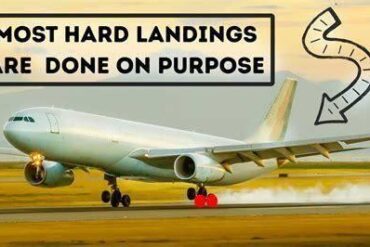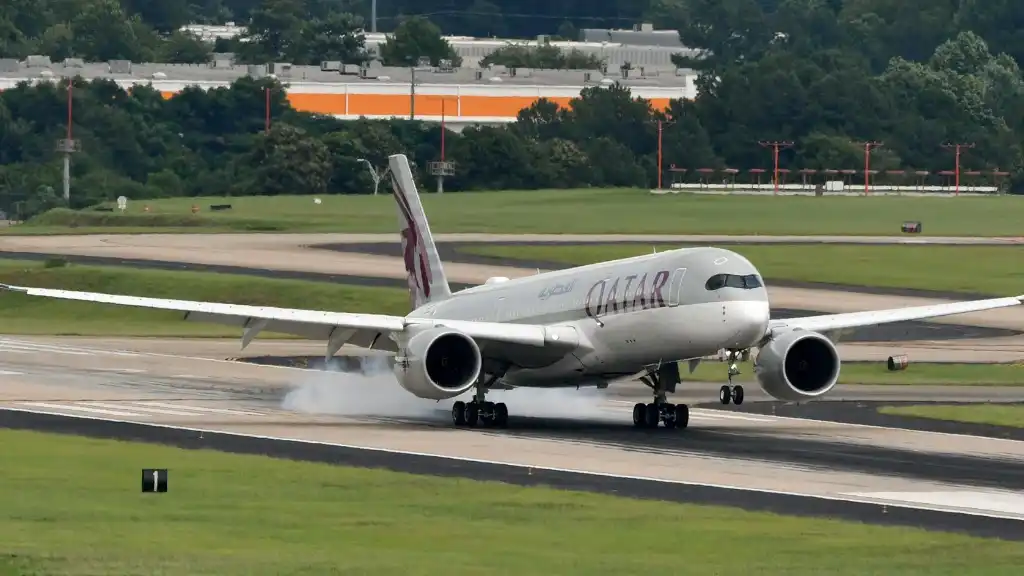
Air travel has conditioned passengers to expect smoothness—gliding descents, gentle flares, and near-silent touchdowns that feel like a feather brushing asphalt. Yet reality occasionally interrupts that expectation with a jolt: a landing that feels abrupt, even aggressive. The instinctive reaction is concern. Was something wrong? Did the pilot misjudge the approach? In truth, a hard landing is often a calculated, deliberate maneuver, rooted not in error but in precision and safety.
Understanding why aircraft sometimes meet the runway with force requires stepping into the cockpit mindset. Pilots are not chasing comfort as a primary objective; they are managing physics, runway limitations, environmental variables, and operational constraints simultaneously. In that equation, a firmer touchdown frequently emerges as the smartest, safest outcome.
The Misconception of the “Perfect” Landing
Passengers often equate a smooth landing with a successful one. It feels intuitive—after all, minimal sensation suggests control and finesse. However, aviation professionals evaluate landings through an entirely different lens. The true measure of success lies in touchdown accuracy, speed control, and runway positioning, not softness.
A perfectly executed landing might feel firm because it prioritizes immediate stability. Pilots aim to place the aircraft within a specific touchdown zone at a precise speed. Floating too long in pursuit of a gentle arrival can push the aircraft dangerously far down the runway, reducing stopping distance and increasing risk.
That’s why aviation authorities have consistently emphasized a critical point: a soft landing is not inherently a safe landing. In fact, under certain conditions, chasing smoothness can introduce unnecessary hazards.
Short Runways and the Need for Immediate Control
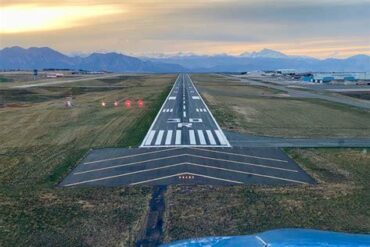
Runway length is one of the most decisive factors influencing landing technique. When an aircraft approaches a shorter strip of asphalt, hesitation is not an option. Every meter counts, and the priority becomes achieving weight-on-wheels as quickly as possible.
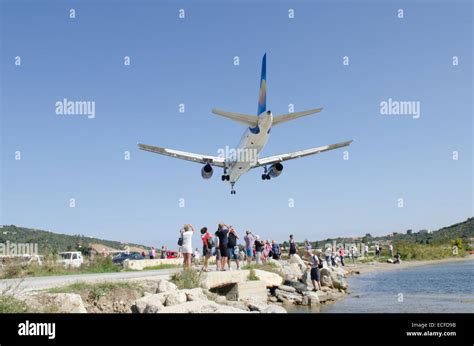
The moment the wheels firmly contact the runway, critical systems activate. Spoilers deploy to kill lift, brakes begin their work, and reverse thrust engages to slow the aircraft efficiently. A delayed or overly soft touchdown can postpone these actions, effectively wasting precious runway.
Airports like Skiathos International Airport in Greece, known for its relatively short runway, illustrate this perfectly. Aircraft operating in such environments often perform what industry insiders call a “positive landing”—a decisive, controlled contact designed to maximize stopping performance from the very first second.
Aircraft Design: Why Some Planes Land Harder Than Others
Not all aircraft are created equal, and their design characteristics significantly influence landing behavior. Structural differences, landing gear configurations, and aerodynamic profiles all play a role in how a touchdown feels inside the cabin.
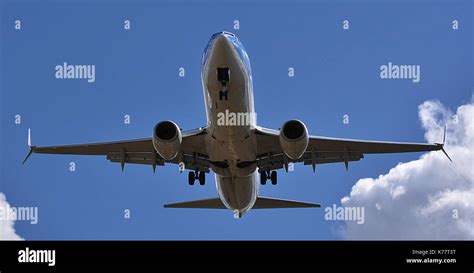
Take the Boeing 737, a workhorse of short- and medium-haul routes. Its relatively low ground clearance and robust landing gear make it more sensitive to over-flaring—the act of raising the nose too much before touchdown. Excessive flare increases the risk of a tail strike, a potentially serious incident. To mitigate this, pilots often opt for a firmer, more controlled landing.
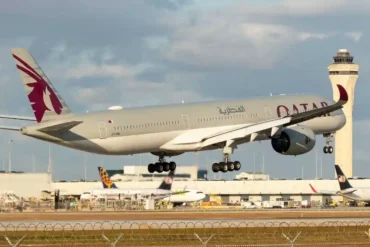
On the other end of the spectrum, larger aircraft like the Boeing 777 or Airbus A350 carry immense mass and inertia. Their landing gear systems are engineered to absorb significant impact forces, which means a landing that feels “hard” to passengers may actually fall well within normal operational parameters.
In essence, what passengers perceive is not always an accurate reflection of the forces involved. Aircraft are built to handle these loads comfortably, even when the touchdown feels assertive.
Weather and Runway Contamination: When Grip Becomes Uncertain
Weather introduces a layer of unpredictability that pilots must counter decisively. Rain, snow, slush, and ice can all compromise runway friction, turning a routine landing into a carefully managed operation.
In these scenarios, a firm touchdown is not just advisable—it’s often essential. The goal is to establish immediate traction and activate deceleration systems without delay. A soft landing on a slippery surface risks prolonged floating, reduced braking effectiveness, and even hydroplaning.
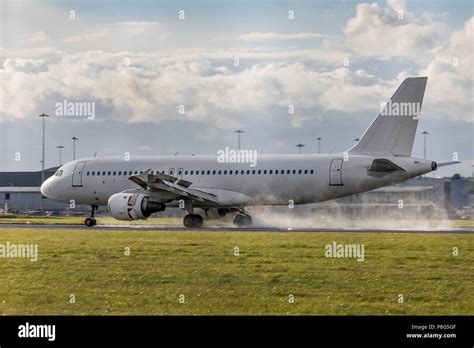
Aircraft manufacturers provide detailed performance guidelines for such conditions, emphasizing early touchdown and rapid deceleration. The logic is straightforward: aerodynamic drag and reverse thrust are most effective at higher speeds, so engaging them sooner enhances stopping capability.
Pilots also avoid delaying nose wheel contact with the runway. Lowering it promptly increases weight distribution across the landing gear, improving braking performance and directional control—two factors that become critical when surfaces are less than ideal.
Challenging Airports and Steep Approaches
Some airports demand unique landing profiles due to geography, urban density, or regulatory constraints. These locations often require steeper-than-normal descent angles, which naturally lead to firmer touchdowns.
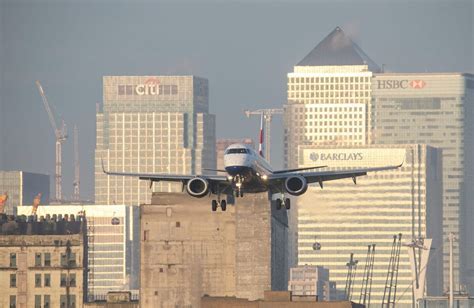
London City Airport is a textbook example. Its approach angle of approximately 5.5 degrees is significantly steeper than the standard 3-degree glide path used at most airports worldwide. This steeper descent reduces the opportunity for extended flare, resulting in a more pronounced contact with the runway.
Terrain can also play a role. Airports surrounded by mountains or built at higher elevations present additional challenges. At higher altitudes, thinner air reduces aerodynamic drag, meaning aircraft maintain higher true airspeeds during approach. Without compensatory measures—such as longer runways—pilots must rely on firmer landings and stronger braking to achieve safe deceleration.
Operational Efficiency and the Reality of Turnaround Pressure
While safety remains the overriding priority, operational efficiency quietly shapes many aspects of aviation. Airlines operate on tight schedules, and minimizing time on the ground is essential for profitability.
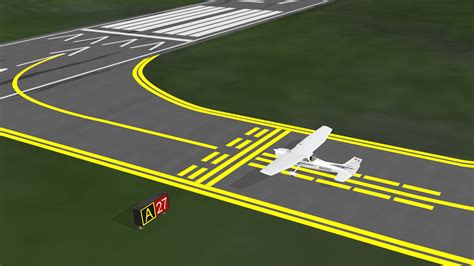
This is where practices like brake-to-vacate come into play. Modern aircraft systems allow pilots to pre-select a specific runway exit, optimizing deceleration to leave the runway quickly. Achieving this often requires a more assertive touchdown, ensuring that braking systems can engage immediately and effectively.
Low-cost carriers, known for rapid turnaround times, frequently employ such techniques. A firm landing can shave valuable minutes off taxi and gate arrival times, contributing to overall operational efficiency. However, it’s important to note that these decisions are never made at the expense of safety—they simply align efficiency with sound aerodynamic principles.
The Physics Behind a Firm Touchdown
At its core, landing an aircraft is an exercise in energy management. A plane in flight carries kinetic energy that must be dissipated safely upon reaching the ground. The sooner the aircraft transitions from flying to rolling, the sooner that energy can be reduced through braking and drag.
A soft landing, while aesthetically pleasing, often involves extended floating just above the runway. During this time, the aircraft continues to travel forward at significant speed without effective deceleration. In contrast, a firm landing converts airborne energy into ground-based braking opportunity instantly.
This immediate transition is particularly valuable in constrained environments—short runways, contaminated surfaces, or high-density airports—where every second and every meter matter.
When a Hard Landing Is Actually the Safest Choice
It may feel counterintuitive, but there are many scenarios where a hard landing represents the safest possible outcome. These include:
- Situations involving reduced runway length or performance margins
- Adverse weather conditions affecting braking efficiency
- Aircraft-specific limitations that discourage excessive flare
- Approaches requiring steep descent angles
- Operational needs to vacate the runway promptly
Each of these factors reinforces a single principle: control and predictability outweigh comfort in aviation decision-making.
Redefining Passenger Perception
For passengers, the experience of a hard landing can be unsettling. The sudden jolt contrasts sharply with the otherwise smooth journey, creating a moment of doubt. Yet understanding the rationale behind such landings transforms that perception.
What feels rough is often a sign of precision. What seems abrupt is usually deliberate. Pilots are not reacting impulsively; they are executing a plan shaped by training, data, and real-time conditions.
The Bottom Line: Confidence in Controlled Impact
A hard landing is rarely an accident. More often, it is the visible result of invisible calculations—runway length assessed, wind evaluated, aircraft performance optimized, and safety margins preserved.
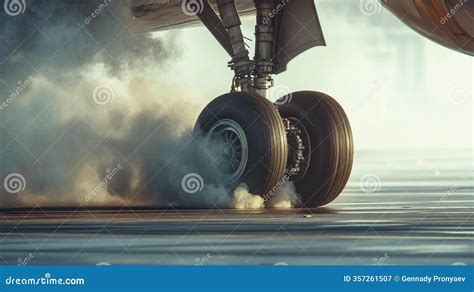
The next time an aircraft meets the runway with a noticeable thud, it’s worth reconsidering the instinctive reaction. That firm touchdown likely reflects a pilot making the right call at the right moment, prioritizing safety over sensation.
In aviation, smoothness is a luxury. Control is everything.