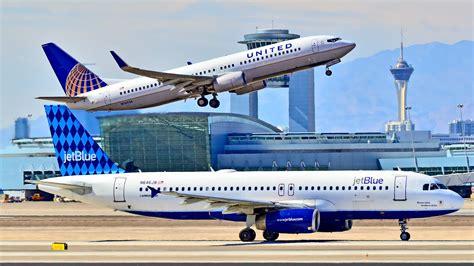
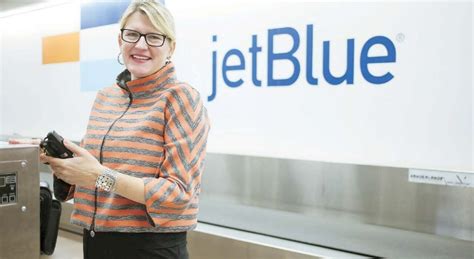
JetBlue Airways has categorically denied any merger plans with United Airlines, despite rising speculation following their recently announced “Blue Sky” strategic partnership. Speaking at the International Air Transport Association (IATA) annual meeting in Delhi, JetBlue’s newly appointed CEO Joanna Geraghty responded decisively with a single-word answer — “No” — when asked if the cooperation signaled the beginning of a merger. Her concise dismissal put an end to mounting industry chatter but simultaneously opened up a broader discussion about JetBlue’s evolving strategy in a turbulent U.S. airline landscape.
JetBlue’s Strategic Repositioning After Spirit Merger Collapse
The speculation of a possible merger with United Airlines did not arise in a vacuum. It came just months after JetBlue’s high-profile $3.8 billion acquisition attempt of Spirit Airlines was blocked by the U.S. Department of Justice (DOJ). The failed merger was a substantial setback to JetBlue’s ambitions of creating a fifth major U.S. carrier capable of competing with the entrenched dominance of American, Delta, Southwest, and United. Geraghty referenced the DOJ’s decision in her IATA remarks, highlighting a shift in JetBlue’s approach.
“We’ve spent a lot of time with the Department of Justice over the last five years, and we’re playing it safe,” said Geraghty.
This cautious posture is a marked pivot for JetBlue, which has traditionally leaned into disruptive growth strategies, such as expanding into transatlantic markets and prioritizing premium cabin upgrades. In 2025, however, it appears the airline is realigning toward organic growth, financial recalibration, and tactical partnerships instead of aggressive consolidations.
The Blue Sky Partnership: More Than Just Mileage Benefits
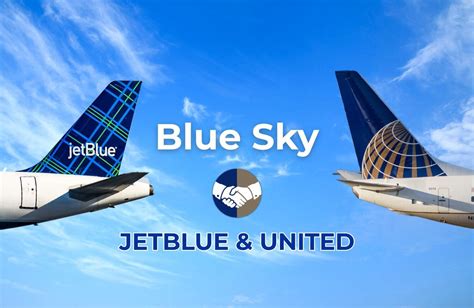
Announced on May 29, 2025, the “Blue Sky” partnership between JetBlue and United Airlines marks a notable collaboration in an era where alliances are becoming critical to airline survival. Though not a full codeshare agreement like the disbanded Northeast Alliance (NEA) between JetBlue and American Airlines, this interline agreement still offers compelling benefits:
- TrueBlue and MileagePlus members can now earn and redeem miles on both networks.
- JetBlue slots at New York JFK have been transferred to United Airlines, allowing the Chicago-based carrier to re-enter JFK airspace after more than two decades.
- United’s flight timings at Newark Liberty International Airport (EWR) have been shared with JetBlue in what both airlines described as a “net-neutral exchange.”
Geraghty emphasized the uniqueness of the agreement by drawing attention to the non-codeshare nature of the partnership. This framework allows for flexibility and minimal regulatory friction while unlocking considerable customer-facing benefits.
Industry Shockwaves: United Returns to JFK
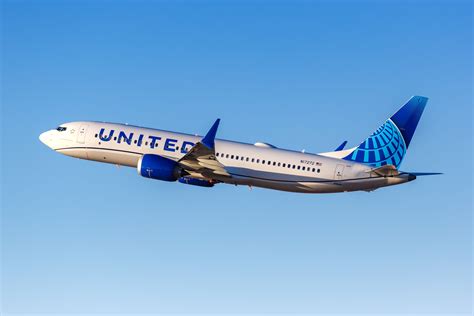
One of the most eye-catching elements of the Blue Sky agreement is United Airlines’ return to New York’s John F. Kennedy International Airport (JFK), a move that has stirred industry observers. United abandoned JFK more than 20 years ago to focus on operations out of Newark Liberty International Airport, but its renewed presence in JFK reshapes competitive dynamics across the tri-state area.
According to the joint statement, United is expected to commence JFK operations in 2027, using JetBlue’s reassigned slots. The move raises questions about how Delta and American — both heavily entrenched in JFK — will respond. It also signifies a soft power rebalancing in the New York air travel market, with JetBlue effectively serving as a bridge-builder between two historically separate strongholds.
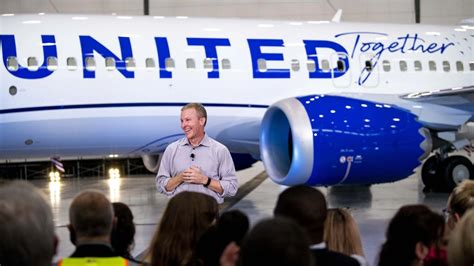
United CEO Scott Kirby: Praising JetBlue, Criticizing Others
While addressing airline business models during a press event, United CEO Scott Kirby made headlines for criticizing the low-cost carrier (LCC) paradigm. Referring to budget carriers as a “dead” and “crappy” business model that “screws the customer,” Kirby was unequivocal in his remarks. However, he made a notable exception for JetBlue.
“JetBlue is not like the others. They were founded on enhancing the customer experience, not just cost-cutting,” Kirby said.
This distinction is more than just a compliment. It’s a strategic acknowledgment that JetBlue — often mislabeled as a budget airline — actually operates under a hybrid premium-leisure model, blending competitive fares with value-rich services such as free Wi-Fi, live TV, and extra legroom. Kirby’s remarks likely reflect a calculated effort to pave the way for closer cooperation without triggering antitrust scrutiny or brand dilution.
Regulatory Climate: A Minefield for Airline Consolidation
JetBlue’s outright dismissal of merger rumors underscores a wider reality — the current U.S. regulatory environment is increasingly hostile toward airline consolidation. The DOJ’s rejection of the JetBlue-Spirit merger in early 2024 signaled a strong intent to preserve competition and protect consumers in a market dominated by just four players.
Any further attempt by JetBlue to merge with another major airline like United would almost certainly invite legal battles. Unlike the NEA, which was struck down in 2023, the Blue Sky partnership is intentionally designed to avoid regulatory red flags by avoiding deep integration or shared revenue pools.
Geraghty’s statement about “playing it safe” isn’t mere rhetoric — it’s a reflection of strategic necessity in an industry that has become increasingly scrutinized by federal antitrust enforcers.
JetBlue’s Broader Strategy: Survival Through Differentiation
The Blue Sky agreement is just one pillar of JetBlue’s multifaceted survival and growth strategy. In the wake of its failed Spirit acquisition, JetBlue has focused on:
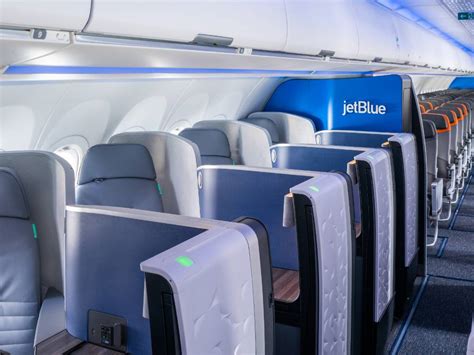
- Premium service differentiation, including the expansion of its Mint business class on transatlantic routes.
- Fleet modernization, including new Airbus A220s that are more fuel-efficient and customer-friendly.
- Targeted international growth, such as routes to London, Paris, and Amsterdam.
- Selective partnerships, like those with Aer Lingus and now United, that expand global reach without triggering regulatory backlash.
By avoiding full mergers and instead opting for creative joint ventures, JetBlue is positioning itself as a flexible, customer-centric challenger in a landscape dominated by legacy behemoths.
What This Means for Passengers
For frequent flyers, the JetBlue–United Blue Sky partnership means more than just cross-platform mileage accrual. It’s a signal of future interoperability, with possible reciprocal lounge access, improved baggage handling, and coordinated schedules for key domestic and international connections. While no formal alliance has been announced, insiders speculate that more integrated services could roll out over the next 18–24 months.
Customers can expect a more seamless travel experience when flying routes that would previously have required separate bookings or long layovers. Whether this will be enough to sway loyalty from the big four alliances remains to be seen, but it certainly increases the competitiveness of both brands in crowded air corridors.
Conclusion: Strategic Clarity Without Consolidation
Joanna Geraghty’s blunt denial of a United merger should not be seen as a retreat, but rather as a declaration of strategic clarity. JetBlue is proving that in a tightly regulated and highly competitive market, innovation, not integration, may be the key to long-term viability. By crafting an agreement that provides substantial customer and operational benefits without triggering antitrust alarms, JetBlue and United have charted a new course for airline partnerships in the post-pandemic era.
While the ghosts of failed mergers and dismantled alliances still linger, JetBlue is setting the tone for what comes next — a smarter, more agile, and more customer-forward airline model that plays the long game without overextending. Whether this strategy will elevate JetBlue to major-player status remains an open question, but one thing is clear: they’re not looking for a merger. They’re building something different.