Two Navy pilots remain hospitalized in stable condition following a serious hard landing incident involving a TH-73A Thrasher helicopter at Outlying Field (OLF) Santa Rosa on June 2, as the U.S. Navy launches a full-scale investigation into the cause of the crash and environmental ramifications.
The incident occurred during what was reportedly a routine training mission conducted by Training Air Wing FIVE, a key aviation unit based out of Naval Air Station Whiting Field (NAS Whiting Field) in East Milton, Florida. The crash happened on one of the designated helicopter pads at OLF Santa Rosa, though officials have not confirmed whether the maneuver was part of a scheduled landing, emergency response, or an aborted aerial exercise.
Condition of the Pilots and Ongoing Medical Care
Both the instructor pilot and student pilot were evacuated from the crash scene and transported to a local medical facility shortly after the accident. Morgan Galvin, spokesperson for Chief of Naval Air Training (CNATRA), confirmed in a written statement that the two individuals are in stable condition, though HIPAA regulations prevent the release of further details about the nature or severity of their injuries.
“This is an active investigation, and at this time, we are focused on ensuring their recovery and collecting accurate data from the site,” Galvin said.
The names of the two aviators have not been disclosed, and there is no official word yet on whether either suffered long-term injuries.
The Aircraft: TH-73A Thrasher
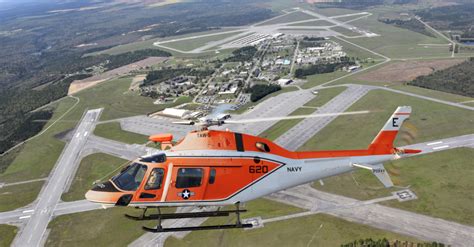
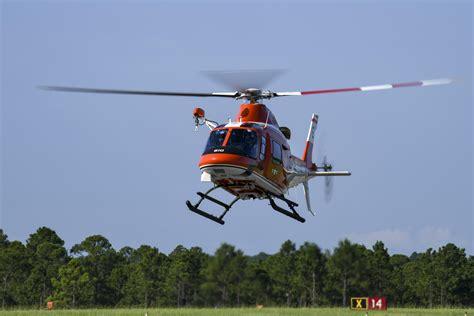
The aircraft involved in the incident is the TH-73A Thrasher, a recently introduced training helicopter intended to replace the aging TH-57 fleet. Designed for advanced rotary wing training, the Thrasher represents a substantial technological leap forward, offering modern avionics and improved performance.
The helicopter remained at the crash site more than 24 hours after the incident. Jamie Coffey, Public Affairs Officer for NAS Whiting Field, stated that the aircraft had been defueled as part of an environmental safety protocol. A thorough environmental assessment is ongoing to evaluate any potential contamination from fuel or hydraulic fluids.
Investigation Underway by CNATRA
CNATRA has assumed leadership over the investigation, encompassing mechanical forensics, flight data analysis, and pilot interviews. The team is also overseeing the environmental cleanup and logistical recovery of the damaged aircraft.
Initial field reports describe the event as a hard landing, but technical specifics—such as whether a mechanical failure, human error, or external factor played a role—remain unconfirmed. Coffey noted the difficulty in categorizing the maneuver:
“We don’t know if it was a takeoff or a hover, there are so many different maneuvers they practice.”
Given the critical nature of this new helicopter model in pilot training programs, any indication of a systemic issue could prompt broader reviews across the Navy’s aviation instruction infrastructure.
OLF Santa Rosa: A Vital but Aging Airfield
Outlying Field Santa Rosa is one of 12 auxiliary fields supporting NAS Whiting Field, which spans roughly 12,000 acres and handles up to 1 million takeoffs and landings annually. It is the busiest Naval Air Station in the world, supporting every Navy, Marine Corps, and Coast Guard helicopter pilot during their initial rotary-wing training.
Located off State Road 87 near Interstate 10, OLF Santa Rosa has recently been at the center of a land-swap negotiation between the U.S. Navy and Santa Rosa County. County officials are eager to acquire the land, viewing it as a prime location for industrial development in a rapidly growing commercial corridor.
Shannon Ogletree, the county’s Economic Development Director, has spearheaded discussions aimed at exchanging the aging military parcel for a similarly sized property elsewhere in the region. The crash may complicate those negotiations, at least temporarily, as environmental concerns and the aircraft recovery process unfold.
NAS Whiting Field: Training the Nation’s Military Aviators
NAS Whiting Field plays a central role in the training pipeline for U.S. military aviation. With more than 250 aircraft in operation, including 142 T-6 Texan II planes for fixed-wing instruction and 112 TH-57 helicopters for rotary-wing operations, the base logs between 120,000 and 160,000 flight hours annually. Approximately 17% of all Navy flight hours are conducted through Whiting Field, along with 12% of all Navy and Marine Corps flight hours.
The TH-73A Thrasher is currently in the midst of a phased integration into this ecosystem, replacing legacy platforms and offering expanded capabilities to student pilots. The aircraft’s adoption was intended to modernize the Navy’s approach to helicopter flight instruction with enhanced safety, digital cockpit interfaces, and performance metrics tailored for today’s aerial challenges.

Broader Implications for Navy Flight Training
Though no fatalities occurred in the crash, the event is already prompting scrutiny from both military leadership and aviation safety experts. The TH-73A’s deployment is relatively new, and any operational anomalies may carry weighty implications for the broader training curriculum. If design or maintenance flaws are found, subsequent modifications or even fleet-wide grounding could be warranted.
Moreover, given that the crash occurred during what was likely a controlled maneuver, questions are now surfacing about the flight envelope of the TH-73A under training conditions. The Navy has emphasized safety and protocol adherence, especially in high-tempo training environments like Whiting Field, where repetition, complexity, and pilot inexperience converge.
Environmental Recovery and Site Clearance
Before the helicopter can be removed, the Navy must complete its environmental safety protocol. This involves not only draining fuel and hydraulic fluids from the aircraft but also conducting soil and surface water tests to ensure no hazardous contaminants pose a risk to the surrounding ecosystem.
Coffey indicated that, although the aircraft was defueled promptly, the full recovery process could take days or even weeks, depending on weather conditions, laboratory results, and logistical resources.
Conclusion: A Sobering Reminder Amid a Modernization Drive
The June 2 incident at OLF Santa Rosa stands as a stark reminder of the inherent risks in military aviation, particularly during the high-pressure environment of pilot training operations. As the Navy continues to modernize its fleet with aircraft like the TH-73A Thrasher, each crash—even one with no loss of life—represents a critical learning opportunity.
With a comprehensive investigation underway, the Navy aims not only to pinpoint the technical or procedural root causes of the hard landing but also to reinforce its safety and training standards for future aviators. The resilience of the injured pilots and the swift response of NAS Whiting Field personnel underscore the professionalism that defines Navy aviation.
More updates are expected from CNATRA and NAS Whiting Field as the investigation progresses and findings are released.