Definition
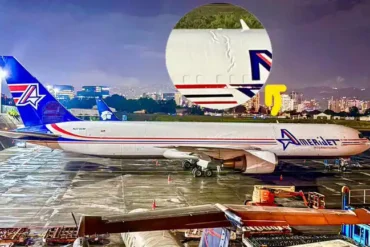
A hard landing, sometimes known as a heavy landing, occurs when an aircraft exceeds the manufacturer’s touchdown limitations. These limits can be defined in terms of descent rate or ‘g’ loading. A hard landing can lead to potential loss of control or damage to the aircraft, requiring a hard landing inspection as defined by the manufacturer.
Criteria
Most of us have experienced less-than-ideal landings, whether as pilots or passengers. These can include firm or bounced touchdowns, sudden movements to align the aircraft with the runway, harsh deceleration, or even the unexpected deployment of oxygen masks. While these moments can be uncomfortable or frightening, they often don’t meet the criteria for a hard landing. In some cases, a firm touchdown may be intentional, especially on contaminated runways. As mentioned, a hard landing is identified when a manufacturer’s limit is exceeded, which varies by aircraft type and purpose. For instance, an aircraft designed for carrier landings, like the McDonnell Douglas F-4 Phantom, typically has a higher threshold than a commercial airliner like the MD-11. However, for most commercial aircraft, the hard landing threshold is generally set at a touchdown ‘g’ loading of 2.6 or a descent rate exceeding 600 feet per minute (fpm) for weights up to the maximum certified limit. In cases where aircraft are certified for emergency landings above their normal limits, the thresholds drop to 1.7g or 360 fpm when overweight. Exceeding these values requires a mandatory hard landing inspection, but manufacturers may also provide cautionary thresholds that prompt supplementary inspections based on severity.
Cause
Unstable approaches are the leading cause of hard landings. Factors contributing to this instability include tailwinds, rushed approaches, demanding air traffic control clearances, adverse weather, and improper automation use. Abnormal speeds or high descent rates complicate landing flares, making visual cues unreliable. Gusty winds, rain, and poor visibility further increase the risk of a hard landing.
Prevention
To minimize the chances of a hard landing, consider the following:
-
Fly a stabilized approach. If the criteria in the Operations Manual aren’t met by the designated height above the runway, abandon the approach and go around.
-
Use the manufacturer’s recommended landing configuration and approach speed, adjusting for aircraft weight and any icing.
-
Apply speed adjustments based on reported wind conditions.
-
Execute the flare at the recommended wheel height while avoiding excessive heights or prolonged hold-offs.
-
Follow manufacturer guidelines in case of a bounced landing. Implement baulked landing protocols if necessary.
Accidents and Incidents
-
DH8A, Nuuk, Greenland, 2011: On March 4, an aircraft left the runway during a mishandled landing, collapsing the right main landing gear due to excessive ‘g’ loading. An unstabilized approach in tough weather led to the incident. The crew focused solely on landing, neglecting the decision to go around.
-
CRJ2, Barcelona, Spain, 2011: On July 30, an Air Nostrum CRJ200 continued an unstable approach into Barcelona near a storm. The crew ignored 16 seconds of EGPWS warnings, leading to a hard landing that caused structural damage.
-
A332, Caracas, Venezuela, 2013: On April 13, an Air France A330-200 sustained damage during a hard landing after the crew continued an unstabilized approach. Initial inspections missed significant damage, forcing a return shortly after takeoff.
-
A321, Fuerteventura, Spain, 2016: On July 16, an Airbus A321’s unstabilized approach during training resulted in a hard landing, causing serious main landing gear damage that was overlooked before the next flight.
-
A320, Macau SAR, China, 2018: On August 28, an Airbus A320 bounced upon landing, damaging the nose gear and engines. The incident was attributed to unpredicted severe wind shear, resulting in an emergency diversion and evacuation.