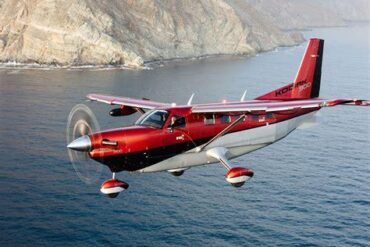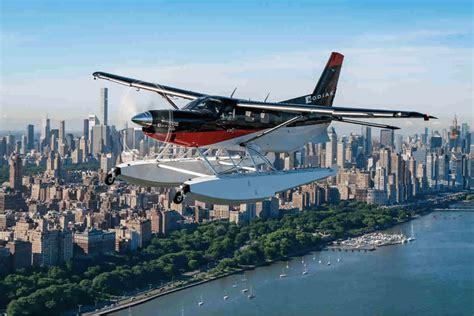
A Kodiak 100 seaplane carrying six passengers and two pilots was involved in a hard landing on New York City’s East River on Sunday, July 5, resulting in a dramatic rescue that ended without any serious injuries. Emergency crews quickly responded after the aircraft sustained significant damage during touchdown, successfully evacuating all eight occupants before towing the aircraft back to its docking facility. While only two people sustained minor injuries and declined further medical treatment, the incident has once again highlighted the unique operational challenges associated with seaplane flights in one of America’s busiest waterways.
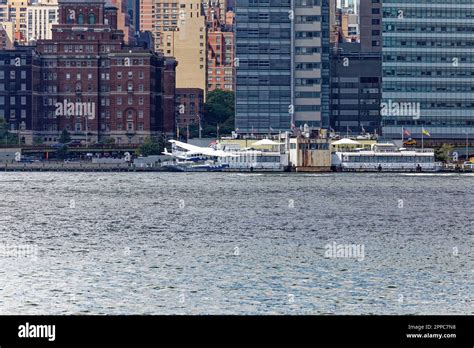
The aircraft, identified by the Federal Aviation Administration (FAA) as a Daher Kodiak 100, experienced structural damage after touching down on the river near Manhattan around midday. According to initial reports, the force of the landing caused the pontoon struts to snap, leaving the aircraft partially resting on one float while its left wing settled into the water. The damaged airplane remained afloat long enough for rescue personnel to safely evacuate everyone aboard before a New York Fire Department vessel towed it to the nearby seaplane base.
The flight had departed from East Hampton on Long Island at approximately 10:38 AM, operating a scheduled seaplane service into Manhattan. The aircraft was being operated by Acadian Seaplanes on behalf of Blade Air, a company well known for providing premium helicopter and seaplane transportation around the New York metropolitan area. Shortly after the accident, passengers were transported ashore, their baggage was recovered within minutes, and alternative ground transportation was arranged to complete their journeys.
The Hard Landing Left The Aircraft With Significant Structural Damage
Although every passenger escaped safely, photographs and video captured immediately after the accident revealed the extent of the aircraft’s damage. The left wing dipped toward the water, while the cabin rested awkwardly against one of the amphibious floats after the supporting struts failed during impact.
Investigators classify a hard landing as a touchdown involving an excessive descent rate beyond the aircraft manufacturer’s certified operating limits. On conventional runways, determining whether a landing exceeded those limits can often be straightforward through flight data analysis. Water operations, however, introduce a far more complex environment because the landing surface itself is constantly changing.
Unlike asphalt or concrete, the East River’s surface is affected by wind, boat wakes, tidal movement, and changing currents, all of which influence how a floatplane contacts the water. Even a skilled pilot may encounter rapidly changing conditions during the final moments before touchdown.
A representative familiar with the operation suggested that heavy ferry traffic may have contributed to the challenging conditions. Fast-moving ferries regularly create steep wakes, and when combined with shifting winds, those waves can significantly complicate an otherwise routine water landing.
East River Conditions Create Unique Challenges For Seaplane Operations
The latest accident is another reminder that the East River remains one of the most demanding operating environments for commercial seaplanes in the United States. Although thousands of marine vessels safely navigate the waterway every year, float-equipped aircraft face additional aerodynamic and hydrodynamic challenges that are rarely encountered elsewhere.
The river is not actually a traditional river but a tidal strait connecting Long Island Sound with New York Harbor. Ocean tides reverse direction several times each day, producing fast-moving currents that interact with constant commercial vessel traffic.
Because the waterway is bordered by seawalls and dense urban infrastructure, wave energy cannot dissipate naturally. Instead, ferry wakes frequently reflect off shoreline structures, creating unpredictable patterns of overlapping waves. These constantly changing water conditions demand exceptional precision from pilots during both takeoff and landing.
Similar Incident Occurred Only Weeks Earlier
The July accident followed another seaplane mishap that occurred just three weeks earlier near the Throgs Neck Bridge and Whitestone area of Queens. During that earlier event, a two-seat floatplane suffered structural damage after encountering rough water while attempting takeoff.
Fortunately, no injuries were reported in that occurrence either. However, investigators noted similarities between both incidents, particularly regarding damage sustained by the float assemblies.
While each accident involves different operational circumstances, both underscore the importance of understanding how environmental conditions can rapidly change on busy urban waterways. Every investigation helps safety authorities identify whether weather, water conditions, pilot technique, mechanical factors, or a combination of issues contributed to the outcome.
The FAA and the New York Police Department have launched investigations into Sunday’s accident, with inspectors expected to examine the aircraft, weather information, maintenance records, and operational procedures before reaching any conclusions.
Why Wind And Water Currents Can Complicate Every Landing
Landing a seaplane requires pilots to align the aircraft directly into the prevailing wind whenever possible to maximize lift reduction and improve control during touchdown. The challenge arises when the water beneath the aircraft is moving in a different direction from the airflow above it.
If the river current pushes strongly across the floats while the airplane lands into the wind, each float experiences different levels of resistance. This asymmetrical drag can cause the aircraft to yaw unexpectedly, increasing the likelihood of a wing contacting the water or placing excessive stress on the float attachment structure.
In severe situations, these opposing forces may even contribute to capsizing or substantial structural damage. Although modern floatplanes are specifically engineered to withstand demanding environments, they still operate within carefully defined performance limits.
The Kodiak 100 Is Built For Tough Conditions
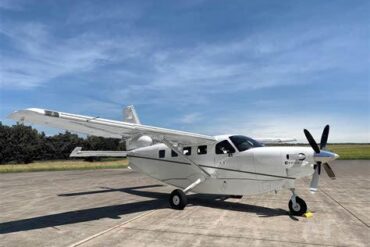
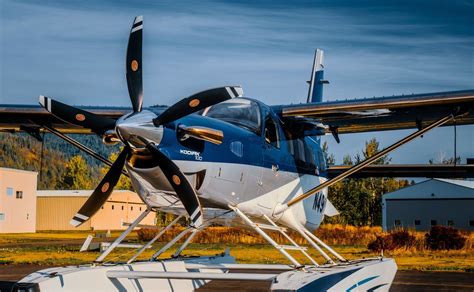
The Daher Kodiak 100 has earned a strong reputation as one of the aviation industry’s most capable short takeoff and landing (STOL) turboprop aircraft. Originally designed as a rugged utility airplane capable of serving remote communities, it has also become a popular platform for commercial seaplane operations.
The aircraft involved in the East River accident was manufactured in 2022 and equipped with Aerocet 6650 amphibious composite floats, allowing it to operate from both conventional runways and open water. Powered by the highly respected Pratt & Whitney Canada PT6A-34 turboprop engine, the Kodiak 100 cruises at approximately 175 knots while carrying up to ten occupants in a spacious, non-pressurized cabin.
Its amphibious floats feature multiple watertight compartments that enhance buoyancy and damage tolerance, providing an additional safety margin during emergencies. Those design characteristics likely contributed to the aircraft remaining afloat long enough for every passenger and crew member to evacuate safely, turning what could have been a far more serious accident into a successful rescue operation.