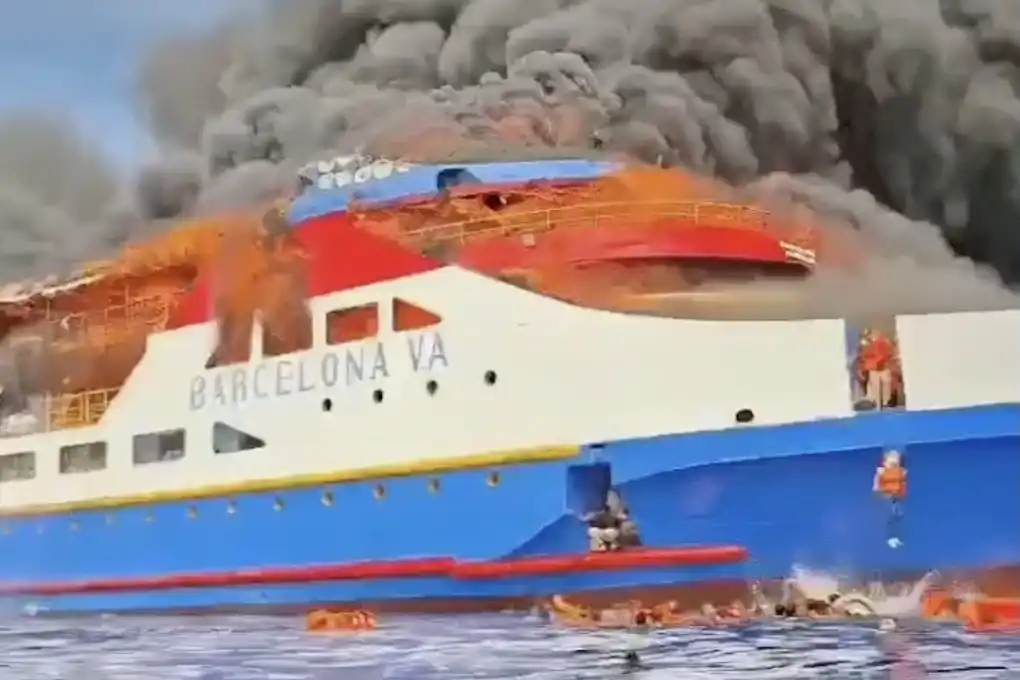
A ferry fire off the coast of Sulawesi, Indonesia, on Sunday, July 21, 2025, has resulted in a tragic loss of life and a major rescue operation. The KM Barcelona 5, which was en route to Manado, suddenly erupted in flames at the rear of the vessel, forcing terrified passengers into the sea. As chaos unfolded, many jumped overboard wearing life jackets, desperately trying to escape the encroaching inferno. Thick plumes of black smoke rose into the sky, marking the scene of despair.
The response from the Indonesian Coast Guard was swift and commendable. Coast guard vessels arrived promptly to combat the blaze and rescue those in peril. A dramatic video released by the Manado Rescue Agency showcased the intensity of the emergency response, highlighting the urgent efforts to douse the flames and save lives. Despite the severity of the fire, authorities confirmed that 568 people were successfully rescued from both the water and the stricken ferry. However, the initial death toll reported five fatalities, which was later revised down to three as the victims were located amidst the chaos.
The discrepancy between the official passenger count and the actual number of individuals rescued raises critical questions regarding the safety protocols aboard the ferry. The official logbook indicated only 295 passengers, including crew members, while local media sources suggested that the ferry had a capacity for 600 people. This discrepancy hints at a potential overcapacity issue, which could have exacerbated the tragedy.
A Desperate Situation Amidst a Lack of Safety Regulations
This incident is not an isolated event; it reflects a troubling trend within Indonesia’s maritime safety record. The country, comprising around 17,000 islands, has witnessed numerous maritime accidents, primarily attributed to lax safety regulations and unpredictable weather conditions. Over the years, Indonesia has grappled with significant maritime safety challenges, leading to frequent disasters. Earlier this year, another ferry sank off the coast of Bali due to adverse weather, claiming at least 19 lives. Just months prior, a boat capsized in the same region, resulting in the death of an Australian tourist and injuries to another passenger.
In 2018, Indonesia experienced one of its deadliest ferry disasters when over 150 people drowned after a ferry sank in Lake Toba, one of the world’s deepest lakes. These incidents underscore systemic issues within the country’s maritime safety standards, characterized by overcrowded vessels, inadequate lifesaving equipment, and insufficient crew training. Although there have been recent efforts by the Indonesian government to enhance safety protocols—such as tightening regulations for ferry operators and improving inspection processes—the frequency of such tragedies remains a pressing concern.
Search and Rescue Operations Underway
In the aftermath of the ferry fire, the Indonesian National Search and Rescue Agency (Basarnas) has mobilized its resources to locate any remaining missing passengers and ensure that all survivors are accounted for. A dedicated joint rescue team continues to scour the area for additional survivors, with authorities urging families who may have loved ones aboard to report any missing persons. The head of the Manado Rescue Agency, George Leo Mercy Randang, informed reporters that their operations remain ongoing, stating, “Our post is still open 24 hours a day, in case families want to report about their missing relative.”
As the recovery mission progresses, the Indonesian Coast Guard has committed to conducting a thorough investigation into the cause of the fire, with preliminary reports suggesting that an electrical fault may have ignited the blaze. However, the exact cause remains unconfirmed, leaving many questions unanswered.
Rising Concerns Over Maritime Safety Standards
The catastrophic incident has reignited alarm over the state of maritime safety in Indonesia. Ferry accidents have regrettably become commonplace, despite attempts to implement stricter regulations and more rigorous inspections. Issues such as overcrowding, poorly maintained vessels, and a lack of essential safety equipment continue to plague the maritime industry. In light of the KM Barcelona 5 tragedy, there is growing pressure on the Indonesian government to adopt stronger oversight and enforcement of safety standards.
In the wake of previous maritime disasters, Indonesian authorities have pledged to enhance safety measures, yet incidents like the one off Sulawesi Island highlight the urgent need for continued vigilance. Calls for better regulation of passenger ferries are intensifying, including demands for stricter capacity limits and more frequent safety inspections.
A Nation at the Crossroads of Reform
As Indonesia confronts its maritime safety challenges, the KM Barcelona 5 fire has spotlighted the pressing need for reform within the industry. While rescue operations have yielded positive outcomes, the reality of this disaster leaves an indelible mark on the national conscience. As the nation strives to bolster its safety protocols, many hope that this tragedy will serve as a catalyst for meaningful change in the maritime sector.
The resilience of the Indonesian people shines through during such calamities, showcasing their strength in the face of adversity. However, to ensure that future tragedies can be avoided, it is imperative for the government, maritime industry, and the public to collaborate on enforcing stricter regulations and enhancing safety precautions.
As search and rescue missions continue for the victims of the KM Barcelona 5, the people of Sulawesi and Indonesia are once again reminded of the critical necessity for improved safety measures in maritime travel. This disaster is expected to galvanize reforms aimed at safeguarding the lives of passengers throughout the archipelago, where ferries serve as vital transport links. By addressing these safety concerns head-on, Indonesia can work towards preventing such heartbreaking incidents in the future.