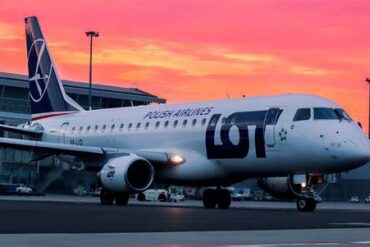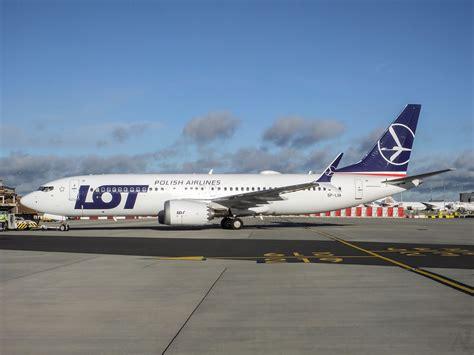
The sight of three commercial jets flying in close formation is something usually reserved for military airshows, not routine airline operations. Yet on a cold January day, aviation trackers noticed exactly that: three brand-new Boeing 737 MAX aircraft crossing the North Atlantic side by side, their paths neatly aligned as they headed toward Europe. The unusual flight immediately caught attention on Flightradar24, raising questions about why these aircraft were traveling together and what the moment signaled for their new operator.
This was not a publicity stunt or a test flight. It was a carefully coordinated ferry operation for LOT Polish Airlines, Poland’s national carrier, as it welcomed three factory-fresh narrowbody jets into its rapidly modernizing fleet. The formation flight offered a rare glimpse into how new aircraft are delivered at scale—and how airlines use these moments to mark strategic transitions.
The three jets, registered SP-LYB, SP-LYD, and SP-LYE, departed from Boeing Field in Seattle, the historic heart of Boeing’s narrowbody production. From there, they embarked on a transatlantic journey bound for Warsaw, with a planned technical stop in Iceland. While ferry flights themselves are routine, moving three identical aircraft together in a tight V-shaped formation is anything but common in commercial aviation.
By the time the aircraft reached Icelandic airspace near Keflavik, their synchronized movement was impossible to miss. Aviation enthusiasts quickly shared screenshots, and the formation became one of the most talked-about airline movements of the week.
A Coordinated Delivery From Seattle to Warsaw
Flying multiple aircraft together across the Atlantic offers practical advantages. The jets share weather planning, fuel strategy, and crew coordination, reducing complexity during long-range ferry flights. It also reflects confidence in the aircraft type; these 737 MAX jets were fresh from the factory, requiring no extended proving flights before entering service.
For LOT Polish Airlines, the delivery carried symbolic weight. Receiving three aircraft on a single day increased its 737 MAX fleet by roughly 15 percent overnight, a striking example of accelerated fleet renewal. Each jet was handed over in Seattle before joining the mini-armada for the ocean crossing, a logistical ballet involving Boeing, the airline, and international airspace authorities.
The stop in Iceland served as a traditional North Atlantic stepping stone. Keflavik’s long runways and strategic location make it a favored waypoint for ferry flights between North America and Europe, especially for narrowbody aircraft operating without passengers.
Inside LOT’s New Boeing 737 MAX Cabins
Beyond the choreography in the sky, the real transformation waits inside the cabin. These new aircraft debut LOT Polish Airlines’ latest interior concept, designed to create a strong sense of place from the moment passengers step onboard.
The design was developed with UK-based studio Tangerine, drawing inspiration from Poland’s Tatra Mountains. Warm amber and copper tones echo sunrise over mountain ridgelines, while deep blues provide contrast and calm. The result is a cabin that feels modern without being clinical, expressive without becoming theatrical.
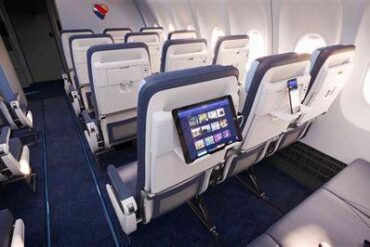
Passengers will notice new RECARO seats, each equipped with 60W USB-C power ports and integrated device holders, a nod to contemporary travel habits. The cabin language mirrors LOT’s long-haul Boeing 787 Dreamliners, reinforcing a consistent brand experience whether flying across Europe or the Atlantic.
Izabela Leszczyńska, Director of Product Development and Customer Experience at LOT, described the philosophy succinctly: the aircraft interior is meant to reflect Poland itself, extending the national identity into the air long before arrival.
The “Yankee Era” and a Growing MAX Fleet
LOT marked the arrival of the three jets with enthusiasm, informally dubbing the moment the start of its “Yankee Era”, a playful reference to the aircraft’s American birthplace. Crews documented the journey with air-to-air photographs, underscoring just how rare it is to see three commercial narrowbodies delivered in formation.
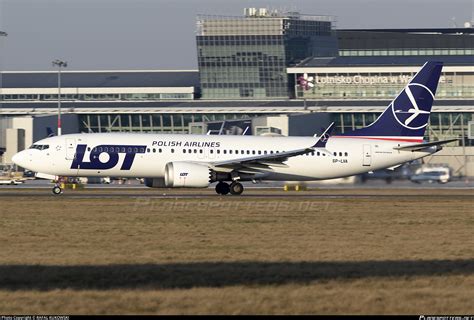
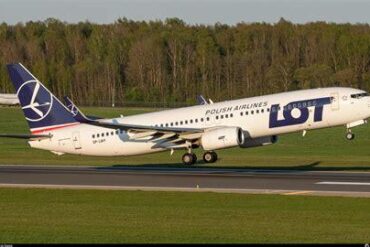
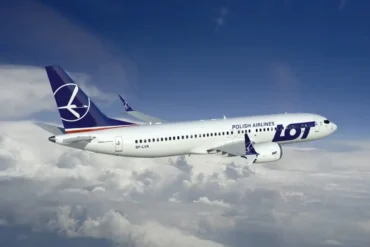
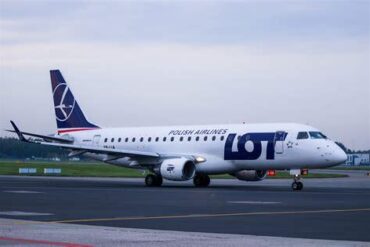
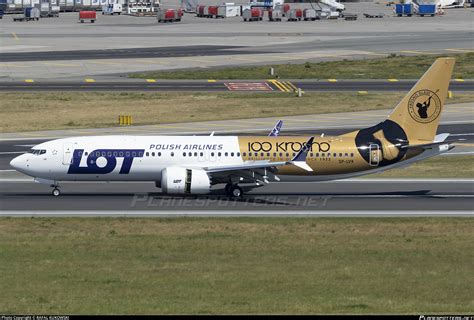
With these deliveries, LOT now operates more than 20 Boeing 737 MAX 8 aircraft, steadily replacing older 737-800 models. Only a handful of the previous generation remain in service, and their days are clearly numbered. The MAX has become the backbone of LOT’s short- and medium-haul network, connecting Warsaw with destinations across Europe and feeding long-haul routes.
A Boeing-Centric Strategy for Long-Term Efficiency
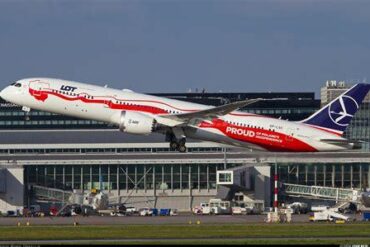
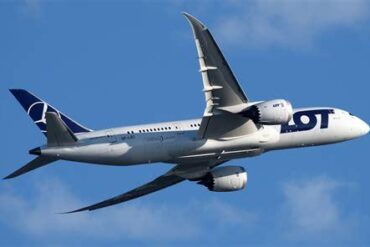
LOT’s fleet strategy is unusually focused. Alongside the 737 MAX, the airline operates Boeing 787 Dreamliners on long-haul routes, creating a two-type mainline fleet that simplifies training, maintenance, and operations. The 787’s composite structure and fuel efficiency set the benchmark for LOT’s intercontinental services, while the 737 MAX brings similar efficiency gains to regional and European flights.
Notably, LOT operates no Airbus aircraft, relying instead on Boeing for mainline operations and Embraer regional jets for thinner routes. This streamlined approach supports the airline’s hub-and-spoke model centered on Warsaw Chopin Airport, positioning LOT as Central Europe’s primary connector to North America.
Why the Formation Flight Matters
The image of three Boeing 737 MAX aircraft slicing across the Atlantic together is compelling because it represents more than a delivery. It signals confidence, momentum, and intent. Confidence in the aircraft, momentum in fleet renewal, and intent to compete aggressively on efficiency and passenger experience.
For aviation watchers, the flight was a rare spectacle. For LOT Polish Airlines, it was a statement in motion—three aircraft, one direction, and a clear trajectory toward a younger, more cohesive fleet designed for the next decade of European and transatlantic travel.