LOT Polish Airlines, legally incorporated as Polskie Linie Lotnicze LOT S.A., stands as a venerable institution in global aviation and the proud flag carrier of Poland. With a rich history stretching back nearly a century, LOT is not merely an airline but a symbol of Polish resilience, innovation, and connection to the world. As one of the world’s oldest airlines still in operation, its journey mirrors the tumultuous and triumphant chapters of Poland’s own history. From its early days in the Second Polish Republic, through the challenges of the Cold War, to its modern-day status as a key European carrier and member of the prestigious Star Alliance, LOT has consistently adapted and evolved. Operating from its primary hub at Warsaw Chopin Airport (WAW), the airline connects Poland with a vast network of destinations across Europe, Asia, and North America, utilizing a modern and diverse fleet that notably includes the advanced Boeing 787 Dreamliner, of which LOT was the first European operator.
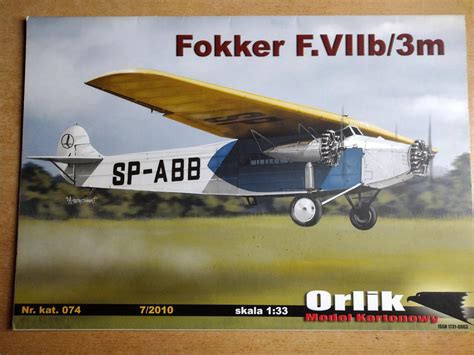
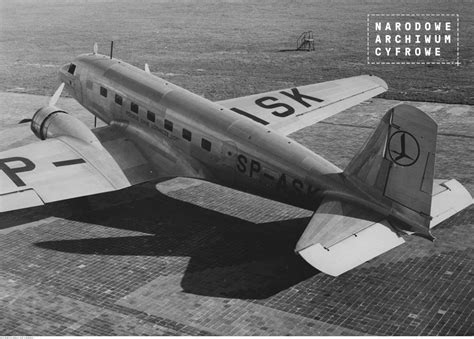
Founded on 29 December 1928, LOT Polish Airlines commenced operations on 1 January 1929, emerging from the consolidation of existing domestic airlines Aerolot (established in 1922) and Aero (founded in 1925). This strategic move by the Polish government aimed to create a unified, robust national carrier. The airline’s early years were marked by ambitious expansion, both domestically and internationally. By the 1930s, LOT’s network had grown significantly, connecting Warsaw with key Polish cities and extending its reach to international capitals. The iconic “Flying Crane” logo, designed by Tadeusz Gronowski in 1931 after winning a design competition, became synonymous with the airline and remains a cherished emblem to this day, a testament to its enduring brand identity. This period also saw the modernization of its fleet with the acquisition of American-made aircraft like the Douglas DC-2 and Lockheed Model 10A Electra and Model 14H Super Electra, signalling Poland’s ambition in the burgeoning field of air travel. The move to the new, modern Warsaw Okęcie Airport in 1934 provided LOT with state-of-the-art facilities, further bolstering its operational capabilities. However, the promising trajectory of LOT was abruptly halted by the outbreak of World War II in 1939, leading to the suspension of services and the evacuation of most of its aircraft and personnel.
A Storied Past: Navigating Through History
The Dawn of Polish Aviation: Pre-War LOT (1928-1939)
The establishment of Polskie Linje Lotnicze ‘LOT’ (the spelling later updated to Polskie Linie Lotnicze ‘LOT’ in 1938) was a significant national undertaking. The Polish State Treasury held a majority stake (86%), with regional contributions from the Province of Silesia and the city of Poznań. Initial routes connected Warsaw to major Polish cities like Kraków, Poznań, Gdańsk, and Lwów, soon expanding to include Bydgoszcz, Katowice, and Wilno by 1932. International services commenced with a multi-segment flight from Warsaw to Bucharest via Lwów and Czerniowce in 1931. The network rapidly expanded to include Berlin, Athens, Helsinki, and Budapest. By 1939, LOT’s routes stretched over an impressive 10,250 kilometers, reaching as far as Beirut, Rome, and Copenhagen. The fleet was a mix of European and American aircraft, with the Douglas DC-2s and Lockheed Electras being particularly noteworthy. A well-publicized transatlantic test flight in 1938, from Los Angeles to Warsaw via South America and Africa, underscored LOT’s ambition to connect Poland with the United States, a plan unfortunately thwarted by the war. When hostilities began, most of LOT’s fleet was evacuated, with aircraft finding refuge in Romania, the Baltic states, and Great Britain, while operations ceased for the duration of the conflict.
Resilience in the Post-War Era: LOT in the Polish People’s Republic (1945-1989)
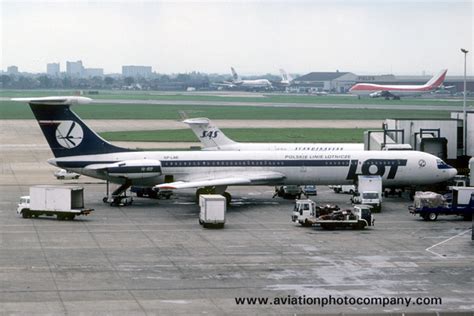
Following the devastation of World War II and the subsequent establishment of a communist state in Poland, LOT was re-established on 10 March 1945 as a state-owned enterprise. The geopolitical realities of the Cold War meant that, for decades, LOT’s fleet would be predominantly comprised of Soviet-built aircraft. Operations restarted in 1946 with ex-Air Force Lisunov Li-2s (a Soviet version of the Douglas DC-3) and acquired Douglas C-47s. Domestic and international services were gradually reinstated, initially to European capitals like Berlin, Paris, Stockholm, and Prague. The fleet saw additions such as the Ilyushin Il-12, Ilyushin Il-14, and later, the turboprop Ilyushin Il-18 and the jet-powered Tupolev Tu-134 and Antonov An-24. Despite the political climate, LOT managed to acquire a few Western aircraft in the late 1950s and early 1960s, including Convair 240s and Vickers Viscounts, though these were exceptions. The introduction of the long-range Ilyushin Il-62 in the early 1970s was a landmark, enabling LOT to launch its first transatlantic flights to Toronto (charter in 1972) and New York City (scheduled in 1973), connecting Poland with the significant Polish diaspora in North America. The airline also expanded its network to the Middle East and Far East, with destinations like Baghdad, Beirut, and Bangkok. In 1977, the distinctive livery featuring a large blue ‘LOT’ inscription on the forward fuselage and a blue tailplane, designed by Roman Duszek and Andrzej Zbrożek, was introduced, though the original Gronowski crane logo was retained. The period of martial law in Poland in the early 1980s severely impacted operations, with international connections suspended and only gradually restored.
Embracing a New Era: Post-1989 Modernization and Growth
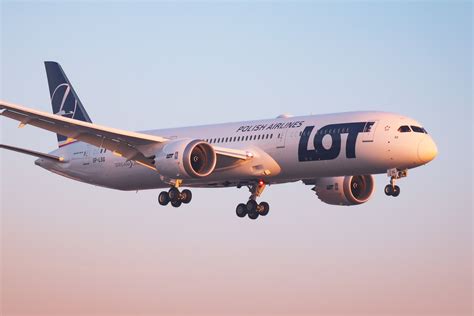
The fall of communism in 1989 heralded a new chapter for LOT Polish Airlines. The airline swiftly began modernizing its fleet with Western aircraft, a pivotal shift marked by the acquisition of Boeing 767-200ERs in April 1989, followed by Boeing 767-300ERs, ATR 72s, Boeing 737-500s, and Boeing 737-400s. These aircraft enabled LOT to enhance its long-haul capabilities and expand its European network. The Boeing 767s were instrumental in serving North American routes to cities like Chicago, New York, and Toronto, and even briefly to Singapore. The 1990s saw LOT actively developing its Warsaw hub, aiming to become a significant transit airline for Central and Eastern Europe. In 1997, EuroLOT was established as a regional subsidiary to handle domestic flights and feed traffic into the Warsaw hub. A significant milestone was achieved on 26 October 2003, when LOT became the 14th member of the Star Alliance, integrating its services with a global network of leading airlines. The early 2000s saw continued network expansion and fleet renewal. A defining moment came in 2012 when LOT became the first European airline to operate the Boeing 787 Dreamliner, a technologically advanced aircraft that significantly enhanced passenger comfort and operational efficiency on long-haul routes. This acquisition underscored LOT’s commitment to innovation and providing a superior travel experience.
Navigating the 21st Century: Expansion and Challenges (2008-2019)
The period from 2008 to 2019 was characterized by strategic growth, fleet modernization, and adaptation to a dynamic aviation landscape. LOT pursued an ‘East meets West’ strategy, launching new routes to Asia, including Hanoi and Tokyo, leveraging Warsaw’s geographical position as a convenient transit point. The airline also expanded its European network with newly acquired Embraer E-Jets. Fleet renewal continued with the introduction of Dash 8-Q400 aircraft for regional routes, replacing older turboprops. The long-haul fleet was further bolstered by additional Boeing 787 Dreamliners, and LOT introduced a premium economy class on these aircraft to cater to diverse passenger needs. In a notable expansion beyond its home base, LOT initiated long-haul flights from Budapest Ferenc Liszt International Airport in Hungary in 2018, with services to New York and Chicago, and later to Seoul. This period also saw the order and introduction of the Boeing 737 MAX 8, further modernizing its narrow-body fleet. Despite these advancements, the airline faced challenges, including a failed privatization attempt with Turkish Airlines, primarily due to EU regulations on airline ownership. Nevertheless, by the late 2010s, LOT had successfully restructured and returned to profitability, demonstrating its resilience and strategic acumen.
Recent Developments and Future Outlook (Since 2020)
The global COVID-19 pandemic, beginning in early 2020, presented unprecedented challenges for the aviation industry, and LOT Polish Airlines was no exception. The airline temporarily suspended operations in March 2020, with domestic flights resuming in June and international flights on a limited basis from July 2020. A planned acquisition of German leisure airline Condor by LOT’s parent company, Polish Aviation Group (PGL), was announced in January 2020 but ultimately fell through in April 2020. Despite the financial impact of the pandemic, which resulted in a significant net loss in 2020, LOT demonstrated a strong recovery, posting a gross profit in 2022 and a substantial net profit in 2023. Looking ahead, the airline continues to adapt its strategy. In February 2025, LOT announced the cessation of its long-haul operations from Budapest by March 2025, consolidating its long-haul services at Polish airports. The airline remains focused on leveraging its Warsaw hub, modernizing its fleet, and providing extensive connectivity for its passengers.
Corporate Structure and Operations
Ownership and Financial Performance
LOT Polish Airlines is currently wholly owned by the Polish Aviation Group (Polska Grupa Lotnicza S.A.), a state-owned holding company. Over the years, there have been discussions and attempts at privatization. A notable attempt involved advanced talks with Turkish Airlines in 2011-2012, which did not proceed, largely due to European Union regulations restricting majority ownership of EU airlines by non-EU entities. After a period of financial challenges, LOT implemented a successful restructuring plan, returning to profitability in 2016. The airline’s financial performance has since shown positive trends, with reported profits in subsequent years, underscoring the effectiveness of its strategic initiatives and operational adjustments.
Subsidiaries: Past and Present
LOT Polish Airlines has managed several subsidiary companies throughout its history to support its diverse operational needs. Currently, its key subsidiaries include:
- LOT Charters: A wholly owned subsidiary dedicated to operating charter flights for Polish and international tour operators, utilizing LOT’s fleet capacity efficiently.
- LOT Flight Academy: Providing comprehensive flight training services, contributing to the development of aviation professionals.
Former subsidiaries played significant roles in LOT’s operational strategy. EuroLOT, established in 1997, operated as a regional airline, primarily handling domestic routes and feeding traffic to LOT’s Warsaw hub. It was eventually liquidated in 2015, with its operations and some aircraft integrated back into LOT. Centralwings was LOT’s foray into the low-cost carrier market, operational from 2004 to 2009. Due to sustained unprofitability, it was dissolved, and its assets were reabsorbed. LOT also held a 49% stake in the Estonian airline Nordica between 2016 and 2020.
Global Reach: Destinations and Alliances
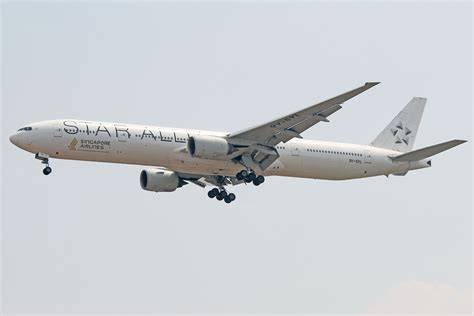
LOT Polish Airlines operates an extensive network, connecting Poland to numerous destinations across Europe, Asia, the Middle East, and North America. Its primary hub at Warsaw Chopin Airport serves as a critical transit point, facilitating seamless connections for passengers traveling between East and West. While it briefly operated long-haul flights from Budapest, its focus remains on strengthening its Warsaw hub. As a proud member of the Star Alliance since 2003, LOT offers its passengers access to a vast global network, reciprocal frequent flyer benefits, and coordinated services with other leading member airlines.
Codeshare Partnerships
To further enhance its network reach and provide passengers with more travel options, LOT Polish Airlines maintains codeshare agreements with a wide array of international carriers. These partnerships allow LOT to market flights operated by other airlines under its own ‘LO’ flight code, and vice-versa. As of recent information, these partners include:
- Aegean Airlines
- Air Canada
- Air China
- Air India
- airBaltic
- All Nippon Airways
- Asiana Airlines
- Austrian Airlines
- Croatia Airlines
- EgyptAir
- El Al
- ITA Airways
- JetBlue
- Lufthansa
- Luxair
- Scandinavian Airlines
- Singapore Airlines
- Swiss International Air Lines
- TAP Air Portugal
- Turkish Airlines
The LOT Fleet: A Blend of Modernity and Efficiency
LOT Polish Airlines operates a diverse and modernizing fleet designed to meet the demands of its varied route network, from short domestic hops to long intercontinental journeys. The airline has consistently invested in new aircraft technology to enhance passenger comfort, operational efficiency, and environmental performance.
Current Fleet Composition
As of May 2025, the LOT Polish Airlines fleet comprises the following aircraft:
| Aircraft | In service | Orders | B | Y+ | Y | Total passengers | Notes |
|---|---|---|---|---|---|---|---|
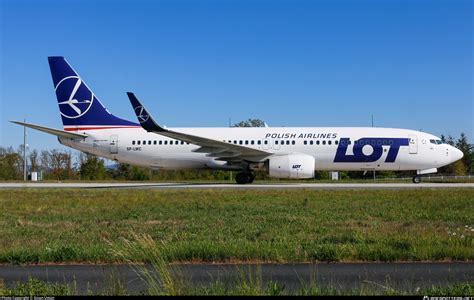
| Boeing 737-800 | 6 | — | — | — | 186 | 186 | |
| Boeing 737 MAX 8 | 18 | 13 | — | — | 186 | 186 | 13 to be delivered in 2025/2026 with new interiors. |
| Boeing 777-200ER | 1 | — | 30 | 24 | 239 | 293 | Leased from EuroAtlantic Airways. |
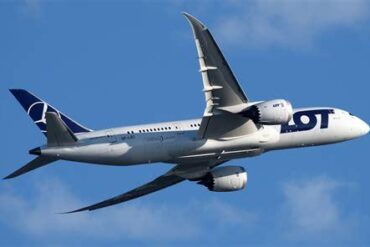
| Boeing 787-8 | 8 | 2 | 18 | 21 | 213 | 252 | First European 787 operator. Two aircraft acquired from Thai Airways. |
| Boeing 787-9 | 7 | — | 24 | 21 | 249 | 294 | |
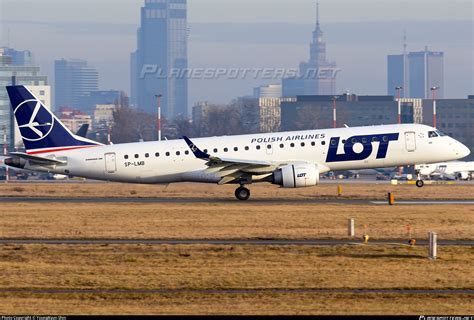
| Embraer 170 | 5 | — | — | — | 76 | 76 | |
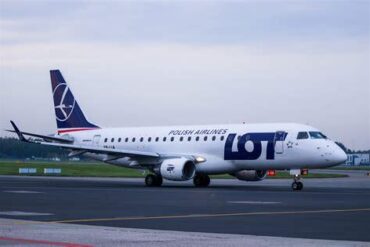
| Embraer 175 | 13 | — | — | — | 82 | 82 | 2 VIP permanently chartered to the Ministry of National Defence. |
| Embraer 190 | 8 | — | — | — | 106 | 106 | |
| Embraer 195 | 16 | — | — | — | 112/118 | 112/118 | |
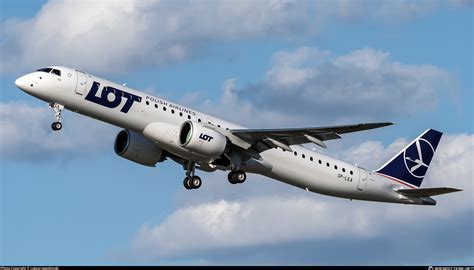
| Embraer 195-E2 | 3 | — | — | — | 136 | 136 | Delivery began in July 2024. |
| Total | 87 | 15 |
A Look Back: Historic Fleet
Over its long history, LOT Polish Airlines has operated a wide variety of aircraft types, reflecting technological advancements and geopolitical influences. Notable aircraft from its past include:
- Pre-War Era: Fokker F.VII, Junkers F.13, PWS-24, Douglas DC-2, Lockheed L-10 Electra, Lockheed L-14 Super Electra.
- Soviet Era: Lisunov Li-2, Ilyushin Il-12, Ilyushin Il-14, Ilyushin Il-18, Antonov An-24, Tupolev Tu-134, Ilyushin Il-62, Tupolev Tu-154, Yakovlev Yak-40.
- Western Aircraft (Early acquisitions): Convair 240, Vickers Viscount.
- Post-1989 Modern Fleet (Retired): Boeing 767-200ER/300ER, Boeing 737-300/400/500, ATR 42/72, Embraer 145, De Havilland Canada Dash 8 Q400.
Strategic Fleet Development
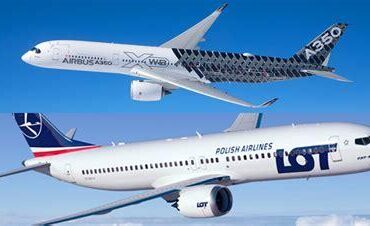
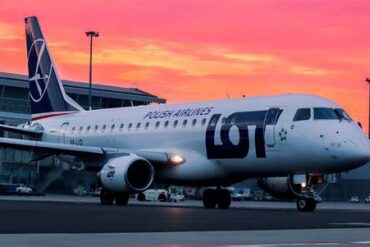
LOT’s fleet strategy has been marked by significant milestones. The order for Boeing 787-8 Dreamliners in 2005, with the first delivery making LOT the European launch customer, was a transformative move for its long-haul operations. The airline has also extensively utilized Embraer regional jets (E170, E175, E190, E195) for its European network, valuing their efficiency and passenger comfort. More recently, LOT has introduced the Embraer E195-E2, the newest generation of Embraer jets, further enhancing its regional capabilities. The acquisition of Boeing 737 MAX 8 aircraft represented a significant upgrade for its narrow-body fleet, offering improved fuel efficiency and range. The airline continues to evaluate future fleet needs, with considerations reportedly given to types like the Airbus A220 for regional jet replacement, ensuring its fleet remains competitive and aligned with its strategic goals.
Brand and Passenger Experience
Evolution of the LOT Livery
LOT’s aircraft livery has evolved over the decades, reflecting changes in design trends and the airline’s own development. The original “Flying Crane” logo by Tadeusz Gronowski has remained a constant, a symbol of enduring heritage.
- Pre-War and Early Post-War (1930s-1950s): Early aircraft often featured a natural metal finish with the crane logo and “Polskie Linie Lotnicze LOT” titles. A thin blue cheatline appeared in the early 1950s.
- Mid-Century Modern (1956-1976): This era saw a white upper fuselage, unpainted lower fuselage, and a prominent blue cheatline along the window line. The tail was initially white with a black crane, later evolving to a blue tail with a white circle crane logo and a larger Polish flag.
- The Iconic Blue Livery (1977-2010s): Introduced in 1977, this livery became synonymous with LOT for decades. It featured a predominantly white fuselage, a dark blue under-cockpit “mask,” a blue cheatline, and the large crane logo on a blue tail. The “LOT” titles were prominently displayed in large blue letters.
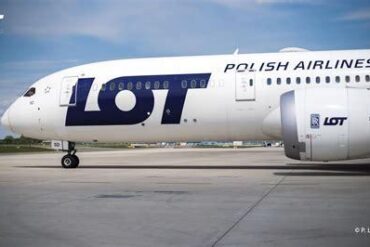
- Contemporary Design (Post-2011/12): With the arrival of the Boeing 787 Dreamliners, LOT introduced a refreshed livery. While retaining the core elements, it features a cleaner, more modern look. The blue cheatline was removed, and the “POLISH AIRLINES” title in English appears on the starboard side. The tail design was subtly updated, with the crane logo’s circle becoming an outline.
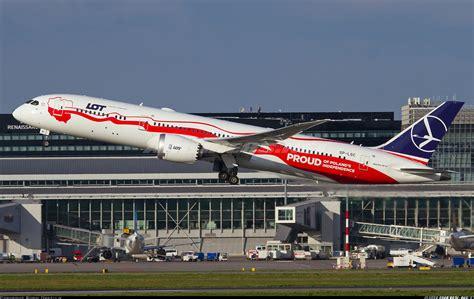
LOT frequently adorns its aircraft with special liveries and stickers to commemorate significant events, partnerships, or Polish heritage, such as liveries celebrating Poland’s independence or promoting Polish regions and brands.
Loyalty and Lounge Services
LOT Polish Airlines participates in Miles & More, Lufthansa’s frequent flyer program, which is also the largest traveler loyalty program in Europe. This allows LOT passengers to earn and redeem miles across the extensive Star Alliance network and with other partners. Miles & More offers tiered benefits, including lounge access, priority services, and bonus miles for frequent travelers.
At its Warsaw Chopin Airport hub, LOT offers premium passengers access to its well-appointed lounges:
- LOT Business Lounge ‘Polonez’: Accessible to Business Class passengers and Star Alliance Gold members, offering a comfortable space with amenities for relaxation and work.
- LOT Elite Lounge: An exclusive section within the Polonez lounge, providing enhanced privacy, a quiet zone, and upgraded catering for eligible guests.
- LOT Business Lounge ‘Mazurek’: Another business lounge option, providing similar high-quality services and views of the apron.
LOT also operated a Polonez Lounge at Budapest Airport during the period of its long-haul operations from the Hungarian capital.
Safety and Operational Record: Incidents and Accidents
Like all long-standing airlines, LOT Polish Airlines has experienced incidents and accidents over its extensive operational history. The airline maintains a strong commitment to safety, adhering to rigorous international standards and continuously working to ensure the highest levels of operational security. It’s important to view historical incidents within the context of the prevailing aviation technology and standards of their time.
Fatal Accidents
Throughout its nearly century-long history, LOT has had several accidents resulting in fatalities, particularly in its earlier decades and during the era of older aircraft technology.
- Notable pre-WWII incidents involved Lockheed Electras and a Douglas DC-2, often attributed to challenging weather conditions or technical issues of the time.
- Post-war, incidents involved Lisunov Li-2s and an Ilyushin Il-14. The crash of a Vickers Viscount in 1962 near Warsaw and another in 1965 in Belgium were significant events.
- The crash of an Antonov An-24W in 1969 near Zawoja due to pilot disorientation in a snowstorm resulted in the loss of all on board.
- The 1980s saw two major Ilyushin Il-62 crashes: LOT Flight 007 in March 1980 near Warsaw Okęcie Airport due to engine failure during approach, and LOT Flight 5055 in May 1987 in the Kabaty forest near Warsaw, also due to catastrophic engine failure. These were the deadliest accidents in Polish aviation history.
- An An-24 crash-landing in 1981 near Słupsk resulted in one fatality. Another An-24 incident in 1988, Flight 703, involved an emergency landing near Rzeszów due to engine icing, leading to one passenger fatality. This 1988 accident remains the last fatal crash in Polish commercial aviation as of 2025.
Other Incidents and Accidents (Non-Fatal)
LOT has also recorded a number of non-fatal incidents, including runway overruns, gear-up landings, and precautionary diversions. A highly publicized event was LOT Flight 16 on November 1, 2011, when a Boeing 767-300ER (SP-LPC) captained by Tadeusz Wrona performed a successful gear-up landing at Warsaw Chopin Airport after a hydraulic failure prevented the landing gear from deploying. All passengers and crew evacuated safely, and Captain Wrona was hailed as a hero. More recently, in January 2018, a Bombardier Dash 8 Q400 experienced a nose gear failure upon landing in Warsaw, with no injuries reported.
Communist-Era Hijackings
During the Cold War, LOT Polish Airlines flights were targets for numerous hijacking attempts by individuals seeking political asylum in Western Europe. These incidents typically involved passengers forcing aircraft, often An-24s or Tu-134s on domestic or intra-bloc routes, to divert to West Berlin (primarily Tegel or Tempelhof airports), Austria, or Scandinavian countries. While these events posed significant security risks, they often ended without violence once the aircraft landed in Western territory, with hijackers and sometimes other passengers seeking asylum. These hijackings were a stark reflection of the political tensions of the era.
LOT Polish Airlines continues to uphold its legacy as a cornerstone of Polish aviation, navigating the complexities of the modern airline industry while honoring its profound history. Its commitment to connecting Poland with the world, coupled with ongoing fleet modernization and a focus on passenger service, positions LOT to remain a significant player in European and global air transport for years to come.