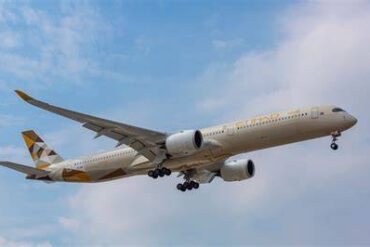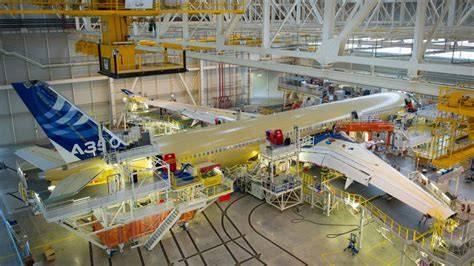
The Airbus A350 has become one of the defining widebody aircraft of the modern aviation industry, combining extensive composite construction, advanced aerodynamics, efficient engines, and a cabin designed for long-haul passenger operations. Demand for the aircraft remains exceptionally strong, with airlines around the world ordering the A350-900 and A350-1000 to replace aging fleets and support new international routes. Yet Airbus is entering an unusual phase in which increasing factory output may be moving faster than some customers can absorb new aircraft.
That sounds contradictory at first. Airlines have spent years complaining about aircraft shortages, delivery delays, and constrained production at the world’s major manufacturers. Widebody aircraft are particularly valuable because they provide the capacity needed for international growth, while airlines are increasingly seeking fuel-efficient replacements for older Boeing 777s, Airbus A330s, and other long-range jets. Nevertheless, manufacturing an A350 and delivering an A350 are two very different industrial processes.
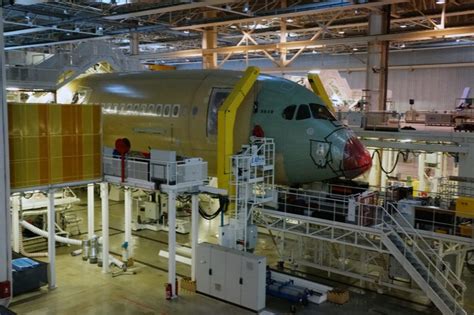
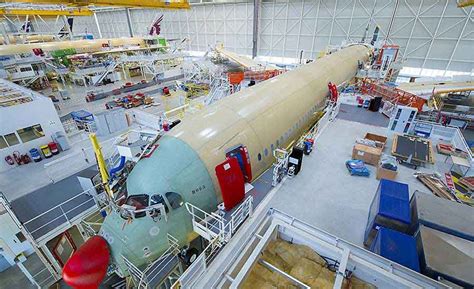
The distinction matters because an aircraft can be structurally complete without being ready for an airline. An A350 still needs engines, systems validation, customer-specific cabin equipment, seats, galleys, lavatories, connectivity equipment, paint, documentation, inspections, and acceptance work before it can enter commercial service. Airbus is therefore trying to increase production while simultaneously coordinating an enormous network of suppliers, manufacturing facilities, cabin specialists, airlines, and regulators.
Airbus A350 Production Is Accelerating Toward 12 Aircraft Per Month
Airbus has been pursuing a major production increase for the A350 as it works through a substantial backlog of widebody orders. The manufacturer’s long-term objective is to reach 12 A350 aircraft per month by 2028, a rate that would represent a significant increase in industrial output compared with recent delivery levels.
The logic behind the ramp-up is straightforward. Airbus has a large number of A350 aircraft on order, while airlines continue to need new-generation widebodies for fleet renewal and network expansion. Keeping production artificially low would leave customers waiting even longer and prevent Airbus from converting its order backlog into revenue at the desired pace. Higher production should, in theory, allow the company to satisfy customers more quickly while making better use of its manufacturing infrastructure.
The difficulty is that production rate is not synonymous with delivery rate. During the first half of 2026, Airbus recorded only 26 A350 deliveries, according to the supplied reference material. That works out to an average of roughly four to five aircraft per month, substantially below the eventual 12-per-month production ambition.
The gap does not necessarily mean Airbus is producing dozens of finished A350s that nobody wants. Instead, it demonstrates how complicated the final stages of aircraft manufacturing have become. An aircraft can move through structural assembly while another part of the industrial network remains unable to complete its assigned work. The result is a growing need to synchronize production stages that historically did not always operate under such intense pressure.
Airbus CEO Guillaume Faury has emphasized the distinction between production and deliveries, an important point as the company increases manufacturing rates. The manufacturer can improve its ability to assemble aircraft, but airlines ultimately determine when many aircraft can be accepted and placed into service.
The A350 Supply Chain Is Far More Complicated Than Final Assembly
One of the most important reasons behind the production challenge is the A350’s extensive use of composite materials. Unlike conventional aluminum-heavy aircraft, the A350 relies heavily on carbon-fiber-reinforced composite structures, including major fuselage and wing components.
These parts are produced across a geographically dispersed industrial network. Airbus has also been integrating important aerostructures operations previously associated with Spirit AeroSystems, including facilities involved in A350 component production. Bringing those operations more closely into Airbus’s own manufacturing structure offers long-term advantages, but integration itself is not frictionless.
The Kinston, North Carolina, facility is particularly important because it produces major composite structures for Airbus aircraft. The site covers more than 500,000 square feet, while other important production operations are located in places such as Saint-Nazaire in France, Broughton in the United Kingdom, and Prestwick in Scotland.
Every location must maintain an extremely precise production rhythm. A structural component arriving a few hours late may not sound disastrous in isolation, but repeated disruptions can eventually affect the final assembly schedule. At higher production rates, there is considerably less room for recovery.
This creates an industrial paradox. Increasing the A350 final assembly rate does not automatically increase the rate at which every supplier can produce its components. Airbus must raise the performance of the entire production ecosystem rather than simply adding more aircraft to the final assembly line.
Carbon Fiber Creates a Physical Limit on Airbus A350 Production
The A350’s composite construction delivers important benefits, including lower structural weight and improved fuel efficiency. But composite manufacturing also creates production constraints that cannot simply be solved by hiring additional workers.
Large composite structures require highly controlled manufacturing processes. Carbon-fiber materials are laid onto large structures using sophisticated automated equipment before being cured under controlled temperature and pressure. Industrial autoclaves play a critical role in this process, and their capacity can become a genuine bottleneck.
An autoclave cannot simply be told to work twice as fast. A curing cycle requires carefully controlled conditions to ensure that the finished structure meets demanding structural requirements. Compressing the process too aggressively could compromise quality, while unexpected equipment downtime can disrupt an entire sequence of component deliveries.
Automated tape-laying systems create another potential constraint. These machines place carbon-fiber material with extremely high precision. Small defects can require substantial rework or even the rejection of an affected structure. At high production rates, maintenance of these machines becomes just as important as their nominal operating speed.
That is why the proposed 12-aircraft-per-month A350 rate is an industrial challenge rather than merely a scheduling target. Airbus needs its composite manufacturing facilities, automated equipment, curing infrastructure, transportation systems, final assembly lines, and quality-control teams to operate in harmony.
A single weak link can reduce the effective output of the entire network.
Cabin Installation Is Becoming a Major Delivery Bottleneck
Even after an A350 is structurally assembled, another difficult stage begins: cabin completion.
Widebody aircraft are highly customized products. Airlines rarely accept identical interiors from the manufacturer. Instead, each carrier specifies its own seat designs, cabin layouts, galleys, lavatories, lighting, entertainment systems, connectivity equipment, monuments, crew areas, and premium-cabin features.
This customization creates enormous complexity.
A basic narrowbody aircraft can often move through its final completion process relatively quickly because configurations are more standardized. An A350 destined for a major international carrier may require a completely different interior from another A350 being prepared for a competing airline. Premium suites, business-class seats, privacy doors, advanced lighting, onboard connectivity, and specialized galley equipment all have to be installed and certified.
That means the aircraft’s arrival at a cabin completion facility can become the beginning of another production queue.
The problem becomes especially significant when Airbus increases structural output faster than cabin specialists can absorb aircraft. The aircraft may be ready, but the interior may not be. In such circumstances, simply producing more fuselages and wings does not produce more revenue-generating aircraft for the customer.
The cabin problem also extends beyond seats. A missing component can hold up an otherwise finished aircraft if that component is required for certification or customer acceptance. Modern widebody interiors contain thousands of individual parts, many of which are customized for particular airlines.
Airline Delivery Schedules Are Tied to Billion-Dollar Financial Plans
For airlines, an A350 delivery is not simply the arrival of another aircraft. It is a major financial and operational event.
Carriers build fleet plans years in advance around expected delivery dates. They assign aircraft to routes, arrange crew training, schedule maintenance, prepare airport operations, and plan capital expenditures around those assumptions. When an aircraft arrives six months late, the consequences can extend far beyond the aircraft itself.
An airline expecting to retire an older widebody may have to keep it operating longer. That means additional maintenance expenditure, continued crew qualification requirements, and potentially higher fuel consumption. Alternatively, the carrier may have to lease replacement capacity, alter route frequencies, or delay the launch of a new service.
For airlines such as Turkish Airlines, Emirates, and Air India, which have significant A350 commitments, delivery timing can influence long-term network planning. The A350 is particularly valuable on long-haul routes where fuel efficiency and range can make a meaningful difference to operating economics.
If the new aircraft does not arrive on schedule, an airline may have to continue flying older jets that are less efficient and potentially more expensive to maintain.
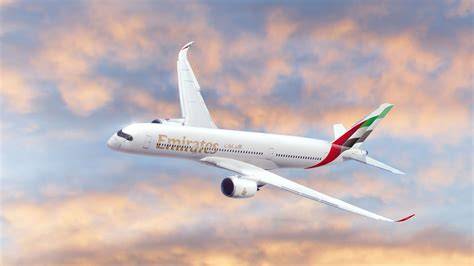
The result is an unusual situation in which both sides can be under pressure. Airbus wants to increase output and reduce its backlog, while airlines want their aircraft as soon as possible but may not always be operationally prepared to accept them at exactly the moment Airbus reaches structural completion.
Why Airbus Cannot Simply Slow Down the A350 Line
It might seem logical for Airbus to reduce production if deliveries are running behind. In reality, doing so could create a different set of problems.
Aircraft manufacturing depends on a highly specialized workforce and an enormous supplier ecosystem. Production rates are not easily switched on and off without consequences. Suppliers need predictable demand, factories need stable workloads, and employees require continuous training and experience.
If Airbus slowed A350 production every time deliveries encountered temporary friction, it could create instability throughout the supply chain. That would make it harder to achieve the higher production rates required to clear the backlog later.
The company therefore has to balance industrial momentum against delivery synchronization. Building aircraft ahead of customer readiness carries costs, but stopping production also carries costs.
This is why the transition toward 12 aircraft per month is so important. Airbus is effectively betting that today’s delivery constraints can be resolved as the broader industrial system matures.
Airlines May Have to Keep Older Widebodies Flying Longer
The consequences of delayed A350 deliveries are not limited to Airbus factories. They can reshape airline fleets.
A carrier planning to replace an older aircraft with an A350 may have already scheduled the retirement of that aircraft. If the replacement is delayed, the older jet may need to remain in service. That can disrupt maintenance planning and create additional pressure on an already busy global maintenance industry.
The situation can also affect route planning. Airlines may have intended to use new A350s on routes where fuel efficiency, passenger capacity, and premium seating demand justify the aircraft’s economics. If those aircraft are unavailable, the airline may have to deploy another widebody type or reduce capacity.
This is particularly important in a market where international travel demand remains strong. Airlines are not ordering A350s simply because they like new aircraft. They need additional capacity, replacement aircraft, and better operating economics.
Airbus Is Managing a Production Problem Created by Success
There is an important irony in the A350 situation: strong demand is helping create the operational problem.
Airbus would not need to pursue such an aggressive production ramp if the A350 order book were weak. The aircraft’s success has created pressure to increase manufacturing capacity, integrate suppliers, expand industrial throughput, and deliver aircraft at a faster pace.
Yet every increase in production exposes another part of the system.
Composite manufacturing must accelerate. Logistics must become more reliable. Final assembly needs consistent component flow. Cabin completion capacity must expand. Airlines must coordinate acceptance schedules. Engine availability must remain synchronized. Quality control cannot be compromised simply because more aircraft are required.
That makes the A350 ramp-up a test of Airbus’s entire industrial architecture rather than just its Toulouse assembly line.
What Happens to the Airbus A350 Program by 2028?
The next two years will reveal whether Airbus can transform its ambitious production targets into consistently higher delivery numbers.
The most important question is not whether Airbus can physically assemble more A350s. The company has demonstrated that it can increase industrial output. The harder question is whether composite production, supplier integration, cabin completion, airline acceptance, and final certification can all accelerate together.
If those systems become synchronized, Airbus could significantly reduce its widebody backlog while giving airlines access to new aircraft faster. That would strengthen the company’s position in a highly competitive long-haul market and allow carriers to modernize fleets more aggressively.
If bottlenecks remain, however, the manufacturer could find itself with an increasingly complicated inventory-management problem. Aircraft completed too early may consume valuable space and capital while waiting for final delivery. Production momentum could then become a liability rather than an advantage.
The A350 story therefore represents a fascinating shift in commercial aviation. For years, airlines primarily worried that manufacturers could not build aircraft quickly enough. Now, at least within parts of the A350 production system, the challenge is becoming more nuanced.
Airbus is trying to make aircraft faster, but the entire aviation ecosystem has to be ready to receive them.
That distinction will define the next stage of the A350 program. The aircraft itself is already one of the industry’s most successful long-haul platforms. The real test is whether Airbus can make its factories, composite facilities, cabin suppliers, logistics network, and airline customers move at the same speed.
If Airbus succeeds, the 12-per-month target could become a milestone in modern widebody manufacturing. If the synchronization fails, the company may discover that the hardest part of building more A350s is not assembling the aircraft at all, but ensuring that every link between the factory and the passenger gate is ready when the airplane arrives.