A seemingly routine domestic flight aboard American Airlines has ignited a fierce debate about passenger rights, airline procedures, and the fragile trust between frequent flyers and carriers. What began as a standard boarding process quickly spiraled into a viral controversy after a top-tier traveler claimed he was removed from his confirmed seat—after already boarding—so a standby passenger could take his place.
The incident, shared widely across social media by digital creator Minh Nguyen, struck a nerve with seasoned travelers and aviation insiders alike. His account paints a troubling picture: a passenger who followed every rule, boarded on time, presented a valid boarding pass, and still found himself displaced in what he described bluntly as “super rude.”
At the core of the outrage lies a simple but powerful question: how can a confirmed, seated passenger lose their spot to a standby after boarding is complete? The answer reveals a deeper complexity within airline operations—one that is rarely visible to passengers but has profound implications when things go wrong.
A Boarding Process That Went Off the Rails
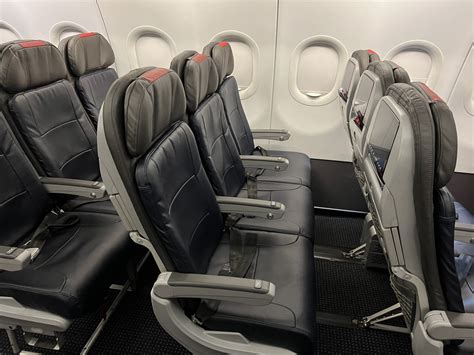
According to Nguyen’s account, everything proceeded normally until the final moments of boarding. He had already taken his assigned seat when a late-arriving passenger boarded and claimed it belonged to her. Confusion quickly escalated when flight attendants, after checking their onboard system, allegedly informed Nguyen that his name did not appear on their check-in list—even though he held a valid boarding pass.
This contradiction—physical proof versus digital record—created a scenario that should never occur in a tightly controlled boarding process. Airlines rely on synchronized systems between gate agents and onboard crew, but when those systems fall out of alignment, passengers are left exposed to the consequences.
Nguyen’s removal, if accurately described, suggests a breakdown in real-time data synchronization, or worse, a procedural misstep in assigning or clearing standby passengers. Either scenario raises uncomfortable questions about how airlines reconcile discrepancies once a flight is fully boarded.
The Hidden Mechanics of Standby and Overbooking
To understand how such a situation can unfold, it’s essential to examine the industry-standard practice of overbooking. Airlines routinely sell more tickets than available seats, anticipating no-shows. This strategy maximizes revenue and keeps load factors high—but it also introduces risk.
Standby passengers exist within this system as a flexible buffer. They are typically accommodated only after all confirmed passengers have boarded. Priority is often determined by elite status, fare class, or operational necessity. In theory, once a passenger is seated, their claim to that seat is secure.
But theory and execution don’t always align.
In rare cases, duplicate seat assignments or last-minute aircraft swaps can disrupt the seating matrix. When this happens, airline staff must make rapid decisions under pressure. The expectation, however, remains clear: a boarded passenger should not be displaced unless safety or regulatory requirements demand it.
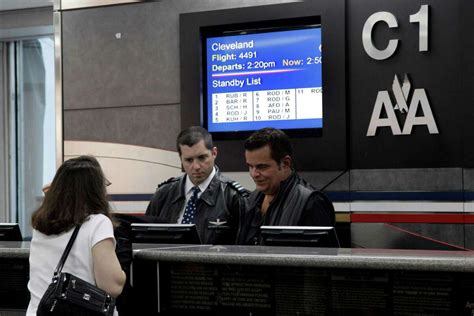
When Systems Fail, Passengers Pay the Price
Nguyen’s experience exposes a critical vulnerability in modern airline operations: over-reliance on digital systems without robust fail-safes. When discrepancies arise between a passenger’s boarding pass and the crew’s device, the resolution process can become arbitrary—especially if time is limited and the cabin is full.
For frequent flyers, particularly those with elite status, this scenario feels like a breach of an unspoken contract. Loyalty programs promise priority, consistency, and recognition. Yet incidents like this suggest that even top-tier status offers no absolute protection when operational chaos takes over.
The optics are equally damaging. Removing a seated passenger—especially in front of a full cabin—creates a perception of disorder and unfairness. In an era where every incident can be broadcast instantly, such moments carry reputational risks far beyond the flight itself.
A Legal and Policy Gray Zone
From a regulatory standpoint, the situation occupies a murky space. In the United States, passenger protections are well-defined for denied boarding scenarios at the gate, where compensation is mandated under specific conditions. But once a passenger has boarded, the rules become less explicit.
Airlines typically retain broad discretion under their contracts of carriage, allowing them to reassign seats for operational reasons. However, the lack of transparency around what constitutes a valid reason leaves passengers vulnerable to inconsistent enforcement.
This gray area is precisely why Nguyen’s story resonates. It highlights the gap between policy language and passenger expectations, a gap that becomes glaring when things go wrong.
Social Media Amplifies the Fallout
The viral spread of Nguyen’s account underscores the growing influence of digital platforms in shaping airline accountability. What might once have been a private complaint is now a public narrative, dissected by thousands of travelers who recognize the stakes.
Stories like this don’t exist in isolation. Past controversies involving seat reassignments, crew priority, and overbooking have demonstrated how quickly customer dissatisfaction can evolve into brand damage. Airlines are no longer judged solely by their policies, but by how those policies are perceived in real-world scenarios.
Operational Efficiency vs. Passenger Trust
At its core, this incident reflects a fundamental tension in aviation: the pursuit of operational efficiency versus the preservation of passenger trust. Airlines operate in a high-pressure environment where delays, equipment changes, and system glitches are daily realities. Yet passengers expect—and deserve—consistency and fairness.
Resolving this tension requires more than procedural tweaks. It demands clearer communication protocols, stronger system integration, and a commitment to prioritizing confirmed passengers once they are onboard. Without these safeguards, similar incidents will continue to surface.
A Wake-Up Call for Frequent Flyers
For travelers, particularly those who fly often, Nguyen’s experience serves as a cautionary tale. It reinforces the importance of documenting irregularities, understanding airline policies, and advocating firmly—but calmly—when discrepancies arise.
Elite status may open doors, but it is not an absolute shield against operational missteps. In a system as complex as modern air travel, even the most loyal customers can find themselves caught in unexpected turbulence—this time, not at 35,000 feet, but right in their assigned seat.
The broader implication is unmistakable: trust in airline systems is only as strong as their weakest moment of execution. And when that moment fails in full view of passengers, the fallout extends far beyond a single seat.