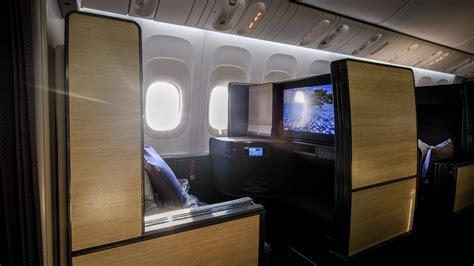
Luxury in aviation has long been measured in inches. Wider seats, larger cabins, more personal space—these have traditionally been the benchmarks airlines use to signal superiority. Yet the modern reality of premium travel tells a far more nuanced story. The world’s most celebrated business class product, offered by Qatar Airways, challenges this assumption directly. Its flagship Qsuite does not dominate in width, yet it consistently ranks at the top of global passenger satisfaction surveys.
This contradiction reveals something deeper about how comfort is actually experienced in the air. It is not defined by sheer size, but by intelligent design, emotional comfort, and the subtle orchestration of privacy, ergonomics, and service. The result is a cabin that feels not just spacious—but complete.
The Myth of Bigger Equals Better in Business Class
For years, airlines have leaned heavily on dimensions as a marketing tool. A wider seat creates an immediate visual impact, suggesting abundance and exclusivity. It is an easy metric to communicate and an even easier one for passengers to compare.
But human comfort doesn’t scale linearly with size. Beyond a certain point, additional width introduces diminishing returns. The body doesn’t relax more simply because there are extra inches to the left and right. In fact, too much space can subtly work against comfort.
Passengers seated in overly wide business class seats often encounter an unexpected issue: lack of support. Without properly positioned armrests or sidewalls, the body struggles to find natural resting points. Shoulders tense. Posture slips. Over time, this can lead to fatigue rather than relaxation.
This is particularly noticeable during sleep. A seat that is too wide can feel exposed rather than secure, like lying in an empty box rather than a cocoon. The psychological comfort of being gently enclosed—something designers now prioritize—becomes absent.
Engineering Comfort: Why Ergonomics Beat Dimensions
Aircraft seat designers have increasingly turned to ergonomics as the true foundation of comfort. Instead of expanding outward, they refine inward—shaping foam density, contouring lumbar support, and optimizing how the seat interacts with the human body.
A well-designed 21-inch seat can outperform a poorly structured 30-inch one. The difference lies in how the seat distributes pressure, supports the spine, and adapts to different sitting and sleeping positions.
By resisting the urge to maximize width, airlines unlock valuable cabin space for other features:
- Deeper personal storage compartments
- Larger, more stable tray tables
- Higher privacy walls and doors
- Integrated lighting and control systems
These elements contribute more directly to the passenger experience than raw seat width ever could.
The Extreme End: Ultra-Wide Seats in Asia
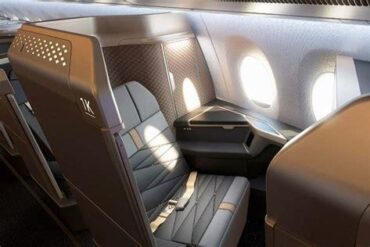
Some airlines have pushed the concept of space to its absolute limit. All Nippon Airways redefined expectations with its “The Room” business class on the Boeing 777-300ER. At an astonishing 38 inches wide, it feels less like a seat and more like a private lounge.
Passengers can sit cross-legged, stretch freely, or even treat the space like a personal sofa. The openness is unmatched, creating a sense of freedom rarely experienced in commercial aviation.
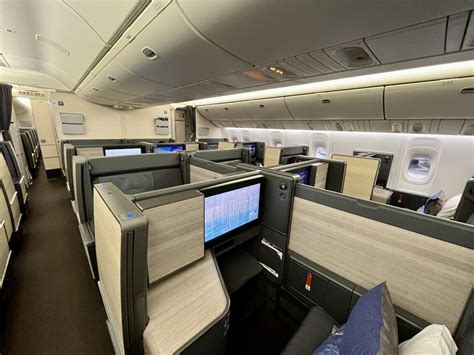
Yet even this groundbreaking design is not without trade-offs. The bed length, while adequate, can feel limiting for taller travelers. The vast width also reduces the sense of enclosure, which some passengers subconsciously rely on for restful sleep.
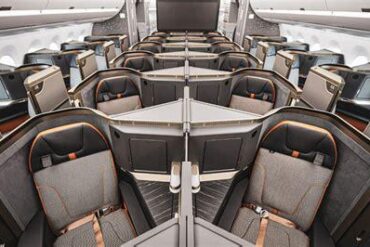
Similarly, Singapore Airlines offers wide seats that prioritize openness. But these often require diagonal sleeping positions due to footwell constraints—a compromise that highlights the complexity of balancing space with usability.
These products excel in one dimension—literally—but reveal that width alone cannot define excellence.
Qsuite: The Strategic Decision to Stay Narrower
When Qatar Airways introduced Qsuite in 2017, it took a radically different approach. Instead of chasing width records, it focused on redefining what business class could feel like.
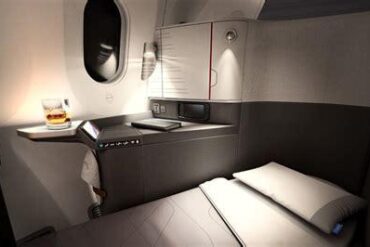
At approximately 21.5 inches wide, the Qsuite seat is modest by comparison. Yet this deliberate restraint allowed for something far more impactful: a fully enclosed suite with a sliding door.
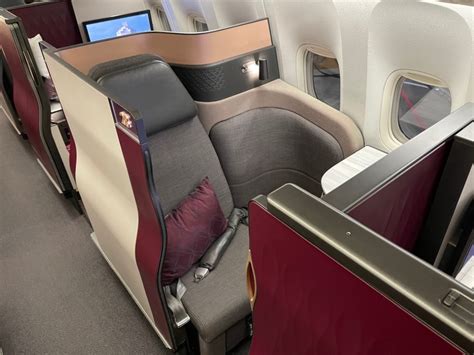
This design transformed the passenger experience. Rather than sitting in an open cabin, travelers step into a private, self-contained space. The psychological effect is profound. Noise fades. Visual distractions disappear. The journey becomes personal.
The narrower footprint enabled higher walls, better sound insulation, and more efficient use of space. Instead of spreading outward, the design builds upward and inward—creating a sense of intimacy that wider seats cannot replicate.
The Power of Privacy Over Space
Privacy has emerged as the defining luxury in modern aviation. In an era where passengers are constantly connected and surrounded by stimuli, the ability to retreat into a quiet, personal environment carries immense value.
Qsuite delivers this through its enclosed design, but also through thoughtful spatial planning. Everything a passenger needs—storage, controls, lighting—is within arm’s reach. There is no need to stretch or search.
This creates a feeling of control. And in long-haul travel, control is comfort.
The suite becomes more than a seat. It becomes a personal domain.
Flexibility: The Hidden Advantage of Smarter Design
Perhaps the most innovative aspect of Qsuite is its adaptability. The cabin can be reconfigured into multiple layouts, including the famous “Quad” arrangement that allows four passengers to share a common space.
Couples can convert adjacent seats into a double bed. Families can create a shared environment. Business travelers can turn their space into a collaborative workspace.
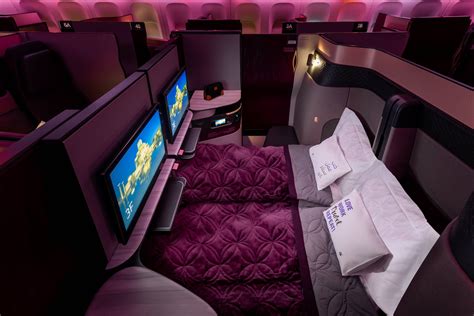
This level of flexibility would be impossible with ultra-wide, fixed seats. By keeping dimensions efficient, Qatar Airways created a modular system that adapts to different passenger needs.
It’s not just about comfort—it’s about relevance.
The Soft Product Revolution: Service as a Differentiator
Even the most advanced seat cannot compensate for poor service. This is where leading airlines distinguish themselves further.
Singapore Airlines and Qatar Airways have elevated the “soft product” to an art form. Personalized service, dine-on-demand menus, and intuitive hospitality transform the journey into an experience rather than a transaction.
Passengers are no longer bound to rigid meal schedules. They can dine when they choose, sleep when they want, and shape the flight around their own rhythm.
This autonomy enhances the perceived value of the seat itself. A slightly narrower seat paired with exceptional service often feels more luxurious than a larger one with indifferent delivery.
Technology and Sleep: The New Frontiers of Comfort
Modern business class has evolved into a hybrid environment—part office, part bedroom, part entertainment hub. High-speed connectivity, advanced lighting systems, and intuitive controls now play a central role.
The best products integrate these seamlessly. Passengers can stream content, adjust lighting, and control seat positions without friction.
Sleep, however, remains the ultimate benchmark. Airlines now invest heavily in bedding:
- Custom-designed mattresses
- High-thread-count linens
- Temperature-regulating blankets
- Ergonomic pillows
These elements transform the seat into a true sleeping system. And once again, width becomes secondary. A well-designed 21-inch sleeping surface can outperform a wider but less refined alternative.
Western Carriers: Consistency Over Innovation
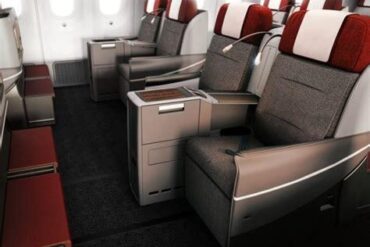
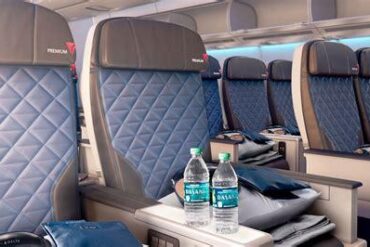
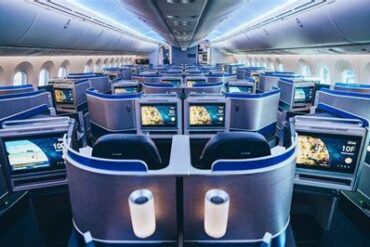
In markets like the United States and Europe, airlines such as Delta Air Lines and American Airlines typically offer seats around 21 inches wide.
While functional and comfortable, these products often lack the innovation seen in Middle Eastern and Asian carriers. The challenge lies in operational complexity—diverse fleets, varying aircraft ages, and different route structures.
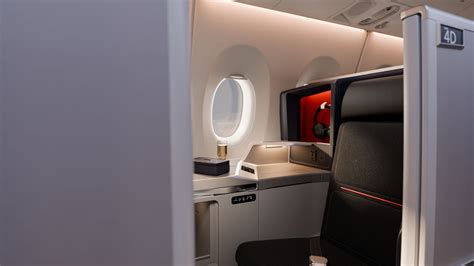
The result is inconsistency. A passenger might experience a cutting-edge suite on one flight and an outdated seat on another. This inconsistency weakens the overall perception of the product, regardless of seat dimensions.
European carriers like Lufthansa have made strides with new offerings, but still struggle to match the holistic experience delivered by their top-ranked competitors.
The Emotional Dimension of Luxury Travel
What ultimately separates the best business class products is not physical space, but emotional impact. A seat that feels private, intuitive, and thoughtfully designed creates a sense of ease that transcends measurements.
Passengers remember how a flight made them feel:
- Did they sleep well?
- Did they feel cared for?
- Did the environment reduce stress?
These factors define luxury far more than inches ever could.
Qsuite excels because it addresses these emotional needs directly. It creates a space that feels secure, personal, and adaptable—qualities that resonate deeply with frequent travelers.
The Future: Intelligent Design Over Bigger Seats
The next generation of business class will likely move even further away from the “bigger is better” philosophy. Instead, airlines will focus on adaptability and personalization.
Emerging concepts include:
- Adjustable seat firmness for different activities
- Smart surfaces that respond to body pressure
- Modular layouts tailored to passenger profiles
- Enhanced privacy through advanced materials
Airlines like Qantas are already exploring this middle ground, prioritizing sleep quality and ergonomic precision over sheer width.
The goal is no longer to create the largest seat—but the most effective one.
Why the Widest Seat Doesn’t Win
The evidence is clear. While ultra-wide seats impress at first glance, they do not consistently deliver the best experience. Comfort is multi-dimensional, shaped by privacy, ergonomics, service, and emotional resonance.
Qsuite’s success proves that intelligent design can outperform brute scale. By focusing on how space is used rather than how much exists, it redefines what business class can be.
In the end, the best seat is not the widest. It is the one that disappears beneath you—allowing the journey itself to fade into effortless comfort.