Booking an Emirates Airbus A380 business class ticket can feel strangely unpredictable. One traveler might secure a lie-flat seat from Dubai to New York for around $2,500, while another passenger sitting just a few rows away may have paid more than $10,000 for what is essentially the exact same onboard experience. The champagne is identical, the lounge access is identical, and the famous onboard bar at the rear of the upper deck certainly does not serve “budget” cocktails to passengers who booked earlier.
That enormous price gap is not random. It is the result of one of the most advanced airline revenue systems in commercial aviation. Emirates, like most global carriers, uses sophisticated dynamic pricing technology that constantly recalculates fares based on demand, timing, seat inventory, travel patterns, and competitive pressure. On premium-heavy routes operated by the Airbus A380, those calculations can change ticket prices dramatically within hours.
The fascinating part is that the physical product often remains unchanged. Whether someone books months in advance during a sale or purchases a last-minute corporate ticket days before departure, both passengers may end up enjoying the same spacious business class suite, the same premium dining service, and the same access to the A380’s iconic onboard lounge.
Understanding why those prices fluctuate so aggressively reveals how modern airlines maximize revenue from every single premium cabin seat.
The Emirates A380 has become one of the most recognizable premium travel experiences in aviation. While economy passengers admire the giant double-decker aircraft from afar, Emirates built much of its global brand identity around the luxury of its upper deck cabins. Business class, in particular, sits at the center of that strategy.
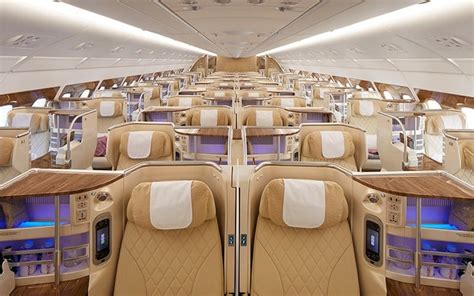
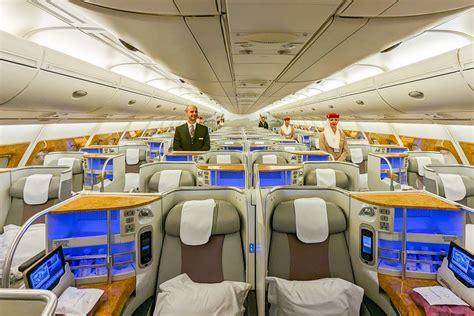
Passengers flying Emirates A380 business class receive access to features that continue to distinguish the airline from many competitors. Depending on the departure city, travelers may receive complimentary chauffeur-drive transfers to the airport, priority check-in, lounge access, premium baggage allowances, gourmet dining, and fully lie-flat seating in a 1-2-1 configuration. On ultra-long-haul routes such as Dubai to Sydney, New York, or London, those amenities are especially attractive for corporate travelers and luxury leisure passengers.
That premium positioning allows Emirates to charge substantial fares. Yet the airline also knows that not every business class customer behaves the same way. Some travelers book vacations six months in advance and carefully monitor fare sales. Others are executives whose companies pay for tickets booked two days before departure. Dynamic pricing exists to capture the highest possible revenue from both groups simultaneously.
How Dynamic Pricing Changed Airline Ticket Economics
Before airline deregulation reshaped the industry in the late twentieth century, airfare pricing was far more rigid. Governments heavily controlled routes and fares, especially in markets like the United States. Airlines had limited flexibility to adjust pricing based on demand fluctuations or seasonal trends.
Modern aviation economics completely transformed that system.
Today, airlines use complex revenue management software that continuously evaluates hundreds of variables. Instead of assigning a fixed price to a business class seat, carriers divide cabins into multiple booking classes, each with different prices and restrictions. Those fare buckets open and close automatically depending on how tickets are selling.
For Emirates, this system is especially important because premium cabins generate a massive share of long-haul revenue. An Airbus A380 may carry hundreds of economy passengers, but business and first class travelers contribute disproportionately large profits.
Dynamic pricing allows Emirates to strategically manage that revenue. If business class seats are selling slowly months before departure, cheaper fare categories may remain available longer. If bookings suddenly accelerate due to conferences, holidays, or strong corporate demand, lower fares disappear quickly and prices surge upward.
This explains how two passengers searching for the exact same flight on different days can encounter radically different prices.
Airlines no longer think of seats as fixed products. They think of them as perishable inventory. Once an aircraft departs, every unsold premium seat becomes lost revenue forever. Revenue management systems therefore aim to sell the right seat to the right passenger at the highest achievable price.
Why Booking Timing Changes Emirates Business Class Prices So Dramatically
Timing remains one of the single biggest factors influencing Emirates A380 business class fares. Travelers who reserve seats early often gain access to lower fare categories before demand intensifies.
Emirates generally releases a limited number of cheaper business class seats well ahead of departure. These lower-priced fares are designed to stimulate early bookings and ensure the airline begins filling premium cabins months in advance. Once those seats are sold, the system automatically moves remaining inventory into higher pricing tiers.
The closer a flight gets to departure, the more aggressive pricing usually becomes.
This happens because last-minute travelers tend to be less price-sensitive. Corporate passengers, urgent travelers, and high-income customers frequently book close to departure dates because schedules change rapidly. Emirates understands that these passengers prioritize convenience over price, especially on key international business routes.
For example, a passenger booking Dubai to London five months before departure may find a Saver business class fare near $3,000. Another traveler purchasing the same flight three days before departure could easily encounter fares exceeding $8,000 or even $10,000.
The airline’s revenue system is constantly forecasting how many passengers are likely to book later. If projections suggest the cabin will sell out, Emirates has little reason to discount remaining seats.
Travel patterns also influence how sharply fares rise. Routes dominated by business travelers experience some of the steepest last-minute pricing increases because corporate demand remains consistently strong throughout the year.
The Routes Where Emirates Can Charge The Highest Premiums
Not all Emirates A380 routes are priced equally. Certain city pairs naturally command far higher business class fares because of their mix of corporate demand, luxury tourism, and limited premium competition.
Routes such as:
- Dubai to New York
- Dubai to London
- Dubai to Sydney
- Dubai to Paris
- Dubai to Los Angeles
consistently rank among Emirates’ most lucrative premium markets.
These destinations attract affluent travelers willing to pay for comfort during extremely long flights. A fourteen-hour journey becomes significantly more appealing when passengers can sleep on a fully flat bed, enjoy premium meals, and relax in an onboard lounge rather than remain confined to economy seating.
London remains especially important because it combines financial industry traffic, luxury tourism, and deep business ties with the Middle East. New York generates similarly strong premium demand due to banking, technology, and international corporate travel.
Competition also shapes pricing strategy. On routes where Emirates faces aggressive rivals like Qatar Airways, Singapore Airlines, British Airways, or Turkish Airlines, fares may become more competitive. Airlines constantly monitor one another’s pricing and adjust accordingly.
However, Emirates often benefits from its enormous Dubai hub network. Travelers connecting from Asia, Africa, Europe, and Australia funnel through Dubai International Airport, giving Emirates unmatched network reach. That convenience allows the airline to maintain stronger pricing power on many routes.
Seasonality Can Push Business Class Fares Into Extreme Territory
Seasonal demand changes can dramatically reshape airfare pricing. During peak travel periods, Emirates business class fares often climb rapidly because premium cabins fill much faster.
Major demand spikes typically occur during:
- Christmas and New Year holidays
- Summer vacation periods
- School breaks
- International sporting events
- Major trade exhibitions in Dubai
- Religious holiday travel periods
During these windows, both leisure and corporate demand rise simultaneously. Wealthier leisure travelers compete directly with business passengers for the same premium seats.
Dubai itself plays a major role in seasonal pricing. The city hosts massive international conferences, trade events, and exhibitions throughout the year. Events such as the Dubai Airshow or major financial summits can create sudden surges in premium cabin demand.
Meanwhile, routes connecting Australia and Europe through Dubai often experience intense seasonal traffic during northern hemisphere summer months. Families, tourists, and business travelers all converge during these periods, allowing Emirates to raise fares substantially.
Interestingly, off-peak travel periods can produce remarkable bargains. Travelers flying during quieter months sometimes find Emirates A380 business class fares at thousands below peak-season pricing levels.
This is one reason experienced premium travelers monitor fare trends obsessively. The exact same seat may fluctuate wildly in value depending on calendar timing alone.
Emirates Business Class Fare Types Explained
One reason fare differences appear so confusing is that Emirates sells multiple business class fare categories simultaneously.
At first glance, passengers may assume every business class ticket includes identical conditions. In reality, Emirates separates fares into different levels with varying flexibility and benefits.
Business Saver
Business Saver fares represent the cheapest entry point into Emirates business class. These tickets usually offer the lowest prices but come with stricter conditions regarding cancellations, refunds, and changes.
Availability is limited, especially during busy travel periods.
Business Flex
Business Flex fares sit in the middle range. They generally allow itinerary changes and cancellations for additional fees while providing more flexibility than Saver fares.
Many travelers choose Flex because it balances cost and convenience.
Business Flex Plus
Flex Plus represents the premium end of Emirates business class pricing. These tickets include maximum flexibility, reduced penalties, and more generous change conditions.
Corporate travelers frequently book these fares because business schedules often shift unexpectedly.
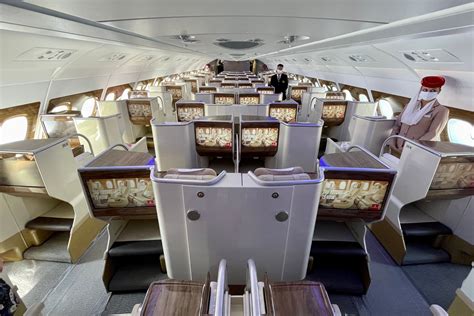
The difference between these fare categories can amount to several thousand dollars on the exact same flight. Two passengers seated beside one another may therefore have purchased entirely different ticket products despite sharing the same cabin.
Frequent flyer mileage earnings also vary between fare types, adding another layer to Emirates’ pricing structure.
What Passengers Actually Receive In Emirates A380 Business Class
Despite pricing differences, the onboard experience remains one of the airline industry’s most recognizable premium products.
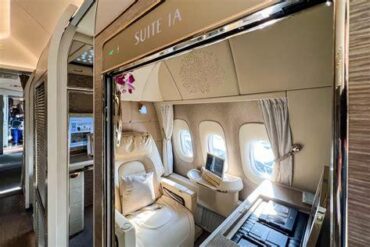
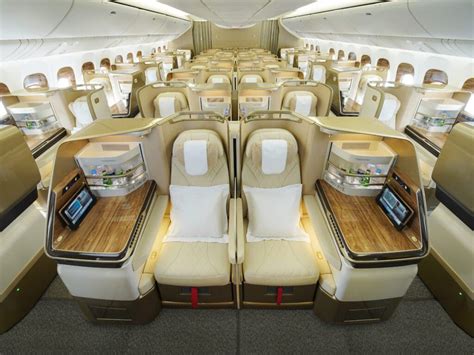
The Emirates A380 business class cabin occupies the upper deck and features direct aisle access for every passenger thanks to its 1-2-1 seating layout. The seats convert into fully flat beds designed for overnight comfort on ultra-long-haul flights.
Passengers receive amenities including:
- Large entertainment screens with Emirates’ ICE system
- Personal mini-bars at seats
- Premium bedding and amenity kits
- Multi-course dining service
- Extensive beverage selections
- Lounge access before departure
- Priority boarding and baggage handling
The onboard lounge remains one of the cabin’s defining features. Located at the rear of the upper deck, the lounge includes standing space, seating areas, cocktails, snacks, and social interaction rarely seen on commercial aircraft.
For many travelers, this lounge has become symbolic of the Emirates brand itself.
Ground services further reinforce the premium positioning. At Dubai International Airport, Emirates operates expansive business class lounges featuring dining stations, shower facilities, workspaces, and quiet seating zones.
Chauffeur-drive services in select markets add another layer of exclusivity by transporting passengers between airports and city destinations in premium vehicles.
All of these features contribute to Emirates’ ability to maintain strong pricing power even in highly competitive global markets.
Why Emirates Keeps Investing In The Airbus A380
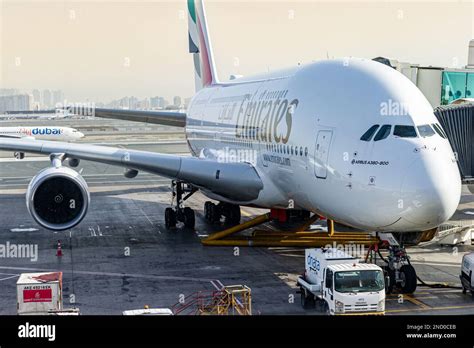
Many airlines retired or downsized their Airbus A380 fleets following the pandemic, but Emirates doubled down on the superjumbo instead.
The airline operates the world’s largest A380 fleet and continues investing heavily in cabin upgrades. Emirates recognizes that the aircraft itself has become a global marketing tool.
Passengers specifically seek out the Emirates A380 because of its premium reputation.
Recent retrofit programs have modernized cabins across both the Airbus A380 and Boeing 777 fleets. While many upgrades initially focused on introducing premium economy cabins, Emirates is now moving toward major business class improvements as well.
Starting in 2026, the airline plans to introduce newer-generation business class seats inspired by products already appearing on recently updated Boeing 777 aircraft and Airbus A350 deliveries.
The refreshed seats will reportedly include:
- 4K entertainment screens
- USB-C charging ports
- Wireless charging capability
- Enhanced privacy features
- Improved connectivity technology
These updates are part of Emirates’ broader strategy to maintain consistency across its long-haul fleet while defending its reputation as one of the world’s leading premium airlines.
Importantly, these upgrades also help Emirates justify increasingly premium pricing. Travelers paying several thousand dollars for business class expect cutting-edge technology alongside luxury service.
Why Two Passengers On The Same Flight Rarely Pay The Same Price
Modern airline pricing has evolved into a real-time economic balancing act. Emirates continuously analyzes traveler behavior, booking curves, competitor activity, and demand forecasts to determine exactly how much each remaining seat should cost.
As a result, the concept of a “standard” business class price barely exists anymore.
A leisure traveler booking during a promotional fare sale may secure an Emirates A380 business class ticket for roughly $2,500 one way. Another traveler booking during peak season shortly before departure could pay four times as much for the same seat.
Neither passenger necessarily made a mistake. They simply entered the market at different moments under different demand conditions.
That is the defining reality of dynamic pricing in modern aviation. Airlines are no longer merely selling transportation from one city to another. They are selling timing, flexibility, convenience, and urgency alongside the seat itself.
For Emirates, few products demonstrate this better than the Airbus A380 business class cabin. It remains one of the most recognizable luxury experiences in commercial aviation, but the price attached to that experience can change dramatically depending on when the booking engine is opened.
In the end, the same champagne may be poured, the same lie-flat bed may recline, and the same onboard lounge may welcome passengers upstairs. Yet the person seated next to you may have paid thousands more — or thousands less — for exactly the same journey.