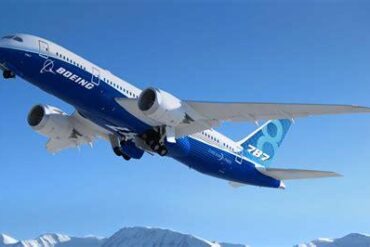
Lufthansa’s Boeing 787 Dreamliners should represent a clean break with the past—a new-generation aircraft wrapped in a next-generation cabin. Instead, the German flag carrier finds itself in the unusual position of operating long-haul jets while deliberately leaving revenue seats unsold. For an airline that built its reputation on engineering precision and operational discipline, the optics are awkward. Yet beneath the headlines lies a deeper story about certification complexity, supplier fragmentation, and the unintended consequences of customization at scale.
The Promise of Lufthansa Allegris on the Boeing 787
When Lufthansa unveiled Allegris in 2017, it was presented as a bold redefinition of premium travel. The concept aimed to overhaul every cabin class, from economy to first, and to standardize a modern identity across the fleet. The Boeing 777-9 was supposed to debut the product in 2020. That aircraft, of course, remains delayed. So Lufthansa pivoted.
In 2024, the first Airbus A350-900 aircraft entered service with Allegris. Feedback was strong. Passengers praised the privacy doors, the multiple business class seat types, and the sharp design language. Momentum seemed restored.
Then came the Boeing 787-9.
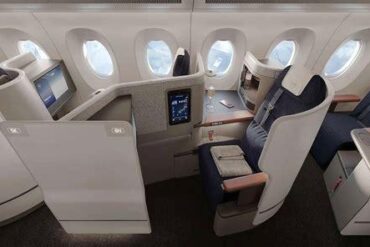
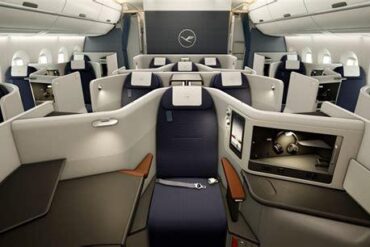
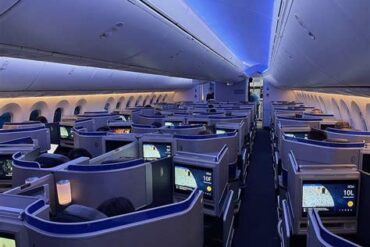
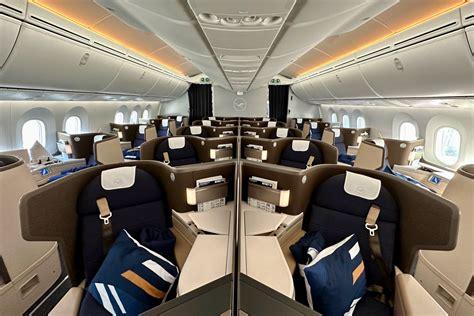
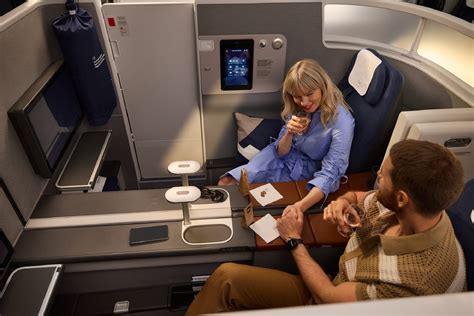
On paper, the Dreamliner configuration is compelling: 28 business class seats, 28 premium economy seats, and 231 economy seats, for a total of 287 passengers. A highly efficient, long-range platform paired with a premium-heavy cabin mix should be a revenue engine. Instead, Lufthansa initially sold only four business class seats per flight—the Business Suites at the front of the aircraft—leaving the remainder blocked.
That is not a yield strategy. It is a certification bottleneck in action.
Why Lufthansa Can’t Sell Every Business Class Seat
Aircraft seats are not decorative furniture. They are certified safety devices integrated into the aircraft’s structural and emergency systems. Each seat must pass rigorous crash testing, flammability standards, electronic interference checks, and regulatory scrutiny. Multiply that by five distinct business class seat variants, and complexity compounds quickly.
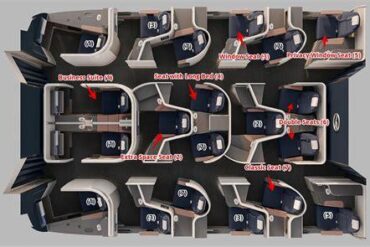
Lufthansa’s Allegris business class offers:
- Classic seats angled toward the aisle
- Extra Long Bed variants with deeper footwells
- Privacy seats positioned closer to the window
- Extra Space center seats
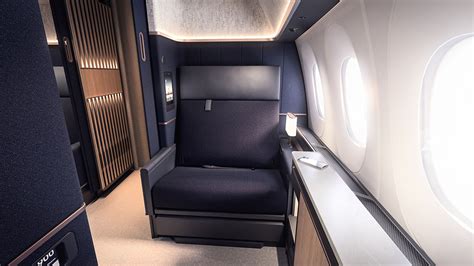
- Business Suites with doors, ottomans, and expanded screens
Every variant must be certified individually. Even if two seats appear visually identical, minor structural or supplier differences trigger separate approval processes.
The twist? The Allegris seats flying on the Airbus A350 are not the same as those installed on the Boeing 787.
Different Aircraft, Different Manufacturers, Different Headaches
On the Airbus A350 and Boeing 747-8, Lufthansa works with Stelia Aerospace for business class. On the Boeing 777, Thompson Aero Seating is responsible. For the Boeing 787—and SWISS’ Airbus A330 fleet—Collins Aerospace manufactures the business class seats.
That means the Dreamliner seats are a distinct product line requiring independent certification. Even though passengers see similar fabrics, finishes, and design cues, regulators see different engineering data packages.
Certification delays are not unique to Lufthansa. Across the industry, premium seats have become increasingly intricate. Integrated doors, larger IFE screens, adjustable lumbar systems, wireless charging, and privacy partitions create a labyrinth of compliance checkpoints. But Lufthansa’s decision to offer five business class variants amplified the regulatory load.
The result: completed Boeing 787 aircraft sat idle because the business class seats had not yet cleared certification. Eventually, Lufthansa accepted the aircraft and began operating them—but with most business seats blocked from sale.
From a revenue management perspective, that is like buying a hotel and renting only the penthouse suite.
The Slow Release of Seats on the 787
When Lufthansa’s Dreamliners entered passenger service in October, only four business class seats were bookable. Those were the Business Suites in the first row—already certified.
Months later, the airline announced it would open 25 of the 28 business class seats for sale beginning April 15, 2026. Three seats in row two remain unavailable.
This partial release suggests that certification approvals are arriving incrementally. It also reveals how granular the process is. Regulators are not approving “business class” as a blanket concept. They are approving specific seat models, in specific rows, on a specific aircraft type.
In aviation, details are destiny.
Allegris on the Airbus A350: A Smoother, Yet Imperfect Rollout
The Airbus A350-900 deployment was smoother, but far from flawless. Initial aircraft lacked first class suites due to supplier delays. Lufthansa temporarily flew those jets with blocked economy seats in the front cabin until the first class product arrived.
Even economy class faced certification quirks. The first row behind premium economy required specialized seatbelts with airbags because of the rigid hardshell divider ahead. Those belts were not certified at entry into service, so seats had to remain unsold.
This pattern reveals a broader truth: modern cabin innovation increases both passenger comfort and regulatory friction.
The Cost of Customization
Allegris is ambitious to the point of being audacious. Five business class seat types are nearly unheard of in commercial aviation. Most airlines standardize one or two variants to simplify logistics and certification. Lufthansa opted for a highly differentiated experience—effectively turning business class into a modular ecosystem.
From a branding perspective, this is compelling. Passengers can choose privacy, extra legroom, or suite-level exclusivity. From an engineering standpoint, it multiplies risk vectors.
Each variant affects:
- Weight distribution
- Power supply routing
- Emergency evacuation modeling
- Structural load calculations
- Cabin crew training procedures
Now layer that onto different fuselage widths across aircraft types. The Boeing 787’s cabin cross-section differs from the Airbus A350. Seat anchor points, aisle widths, and monument placements vary. Certification data cannot simply be transferred from one aircraft to another.
The airline’s commitment to product consistency across Airbus and Boeing fleets ironically created divergence beneath the surface.
Regulatory Scrutiny in a Post-Production Crisis Era
The regulatory environment has tightened in recent years. Aviation authorities worldwide have increased scrutiny following high-profile manufacturing and safety incidents. Documentation requirements are more exhaustive. Approval timelines are longer. Every design nuance is examined with forensic precision.
For Lufthansa, this meant that even a proven concept like Allegris could not bypass the queue.
Meanwhile, other airlines faced similar struggles. Delta Air Lines stored Airbus A321neo aircraft awaiting certification of Safran’s VUE business class seat. Across the industry, premium cabin ambition collided with bureaucratic reality.
In Lufthansa’s case, the Boeing 787 became the most visible casualty.
The Boeing 747-8 Complication
If the Dreamliner saga were not enough, Lufthansa’s Boeing 747-8 refurbishment plan introduces another layer of complexity. The airline intends to install Allegris business class seats on the lower deck first, leaving the upper deck untouched during the initial phase.
That means a single aircraft operating with two different business class seat models simultaneously.
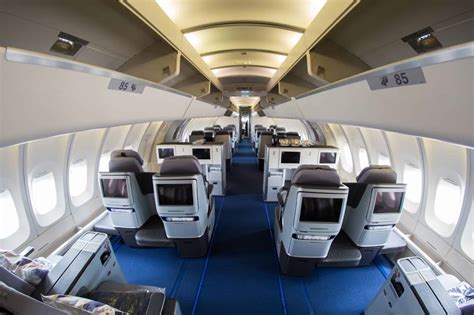
This two-stage retrofit is temporary, with a full nose-to-tail refurbishment planned later. Yet it underscores the logistical gymnastics required to modernize a legacy fleet while new aircraft deliveries lag.
Unlike the Boeing 787, which arrives factory-fresh, the 747-8 presents structural challenges. The upper deck’s narrower dimensions complicate seat installation. Adapting a consistent Allegris product across both decks requires intricate redesign work.
Why Lufthansa Accepted Incomplete 787 Deliveries
Some observers questioned why Lufthansa did not simply wait until certification concluded before taking delivery. The answer is operational economics.
Aircraft sitting at the manufacturer generate no revenue. Lease payments, financing costs, and depreciation continue regardless of certification status. Accepting the aircraft allows Lufthansa to deploy economy and premium economy seats while awaiting business class approval.
Even selling four Business Suites is better than selling none.
Additionally, fleet planning depends on aircraft availability. Long-haul networks require precise capacity management. Delaying deliveries risks schedule disruptions and market share erosion.
In other words, Lufthansa chose imperfect utilization over idle assets.
SWISS and the Weight of Luxury
The ripple effects extend beyond Lufthansa’s core brand. SWISS, part of the Lufthansa Group, is introducing a related product branded as SWISS Senses. Reports indicate that the first class suites are so heavy that engineers must install approximately 3,000 pounds of ballast in the aircraft tail to maintain proper weight and balance.
That detail reads like satire, yet it illustrates how premium cabins push physical limits. When luxury approaches structural thresholds, engineering solutions become increasingly elaborate.
Every kilogram matters in aviation. Fuel burn, range capability, and payload flexibility all respond to weight changes. Custom cabins are not merely aesthetic upgrades; they reshape aircraft performance envelopes.
The Broader Lesson: Modern Premium Travel Is Technologically Dense
A business class seat today resembles a compact studio apartment. It includes motorized actuators, high-resolution entertainment screens, advanced lighting systems, and intricate composite structures. Certification must account for crashworthiness, electrical interference, evacuation pathways, and flammability across every component.
Five seat variants across multiple aircraft types exponentially increase documentation requirements.
The irony is almost poetic. Passengers experience seamless luxury. Behind the curtain, engineers juggle certification matrices that resemble doctoral theses in structural mechanics.
Will Lufthansa Eventually Sell Every Seat?
Yes. Certification processes, though slow, are finite. Lufthansa has already begun releasing additional seats for sale, signaling progress. The remaining blocked seats are likely awaiting final regulatory sign-off rather than structural redesign.
The airline’s long-term fleet strategy depends on maximizing premium revenue. Operating partially blocked cabins is a transitional state, not a sustainable model.
The more interesting question is strategic: will Lufthansa maintain five business class variants across its fleet, or will complexity eventually give way to simplification?
The answer may shape the next decade of European premium travel.
A Brand Bet on Differentiation
Lufthansa’s Allegris project reflects a calculated gamble. Instead of chasing uniformity, the airline doubled down on choice. In theory, this elevates brand distinction in a crowded long-haul market. In practice, it entangles engineering, certification, and supply chains in a high-wire act.
The Boeing 787 Dreamliner situation is not a failure of concept. It is a friction point in execution. Customization scales elegantly in software. In aviation hardware, scaling multiplies constraints.
Yet when the system finally stabilizes, Lufthansa will operate one of the most differentiated business class products in the sky.
For now, the Dreamliner flies with untapped potential—an aircraft designed to carry 28 business class passengers while temporarily monetizing only a fraction of them. It is a rare sight in modern aviation: demand exceeding regulatory clearance.
Precision engineering is not fast theater. It is deliberate, documented, and often delayed. Lufthansa’s 787 saga demonstrates that innovation in the air is grounded first in paperwork, prototypes, and patient persistence.
When every seat is finally open for sale, the airline’s long journey through certification labyrinths will be invisible to passengers reclining behind sliding doors. But the story behind those seats—of suppliers, regulators, and relentless customization—reveals how complex modern luxury travel has become.
The Boeing 787 Dreamliner remains a marvel of composite engineering and fuel efficiency. Lufthansa’s challenge has never been the aircraft itself. It has been the intricate ecosystem built inside it. And until every certification box is ticked, a few seats will remain tantalizingly, frustratingly unsold.