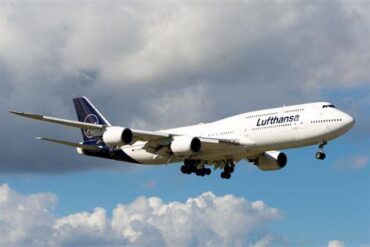
Lufthansa is moving forward with one of the most ambitious and unconventional cabin retrofits in modern aviation, giving its iconic Boeing 747-8 fleet full Allegris interior upgrades—just not all at once. Instead of a clean, single-stage refit, the airline is adopting a two-step rollout that will leave passengers flying on the same aircraft with two entirely different business class products for several years. This strategy stands out in an industry where cabin consistency is considered a core pillar of premium experience. Yet Lufthansa, confident in the longevity of its 747-8 fleet, is playing a longer, more complex game aimed at preserving capacity, improving premium revenue potential, and keeping its flagship recognizable in a rapidly evolving long-haul market.
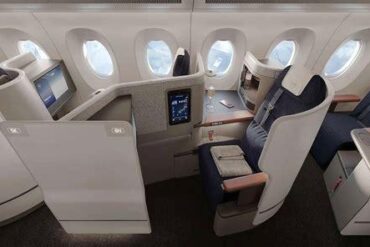
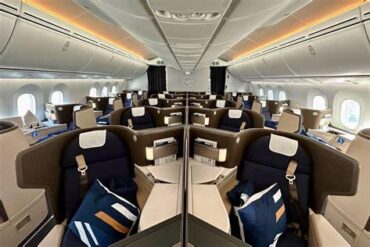
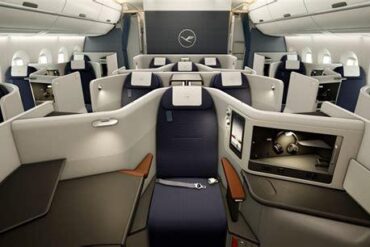
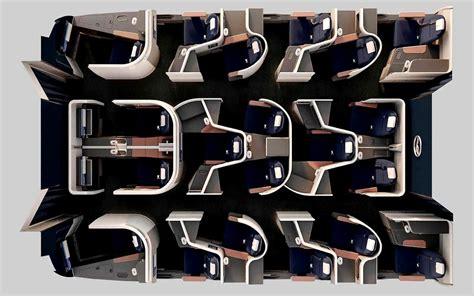
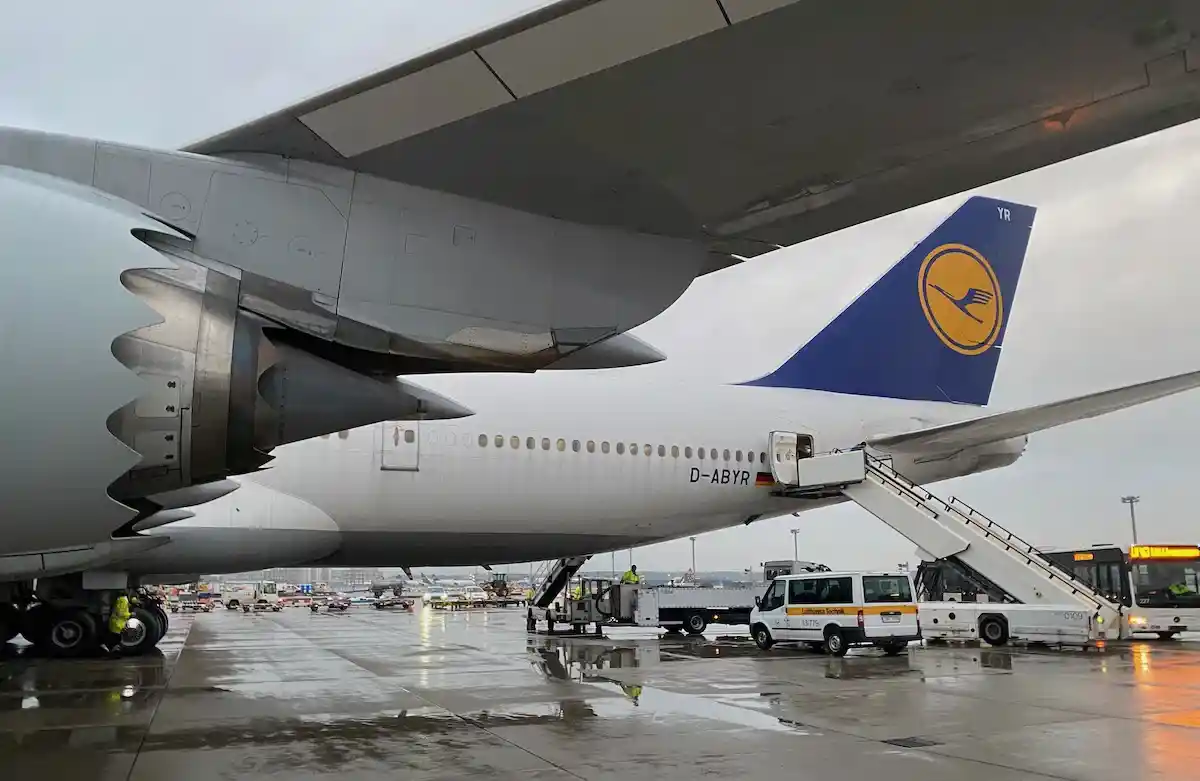
The first completed aircraft, D-ABYA, is currently undergoing modification in Xiamen, with cabin installation work stretching into 2026. The lower deck—wide, generously aligned, and roomy enough to accept the Allegris platform without structural compromise—will become home to 48 new Allegris Business Class seats, mirroring existing capacity but dramatically improving comfort, privacy, and marketability. The upper deck, meanwhile, will retain its classic 2-2 Business Class layout, effectively creating a split-personality premium product where the lower deck becomes a high-demand, surcharge-eligible mini-cabin while the upper deck remains a legacy offering. Pricing talk around the industry suggests passengers could pay an additional €300 per sector to experience Allegris downstairs, a fascinating revenue experiment built into an airframe older than many of the passengers who will fly on it.
Lufthansa’s decision preserves eight First Class seats in the nose of the aircraft during Phase One, but these too will eventually be replaced. The airline has signaled that instead of installing standard Allegris First suites, a modified version tailored to the 747-8’s unique geometry may emerge around 2027–2028, reducing the count from eight to six. The new nose-section product will have to work around the aircraft’s tight curvature and structural limitations—a challenge that has already forced designers to rethink the layout twice.
Lufthansa’s Unusual Two-Part Upgrade Strategy
Lufthansa’s plan is unlike anything seen in recent fleet modernization programs. Where most airlines rip out interiors and reinstall unified cabins in a single overhaul window, Lufthansa is opting for staggered certification, installation, and testing phases. The 747-8 lower deck, wide enough for a simplified staggered business configuration, installs cleanly. The upper deck, narrower and closer in feel to a large single-aisle aircraft, cannot support the same layout without massive capacity loss. By deferring that stage, Lufthansa keeps revenue footprint stable while gradually migrating toward the full Allegris vision.
The result: for at least two years, customers booking Business Class must choose between legacy seating upstairs or next-generation suites below. Frequent flyers watching the rollout describe it as part experiment, part compromise, part engineering necessity. Yet it may also give Lufthansa a competitive edge—premium seats sell, and Allegris is built to sell at scale.
What the Final 747-8 Allegris Layout Will Eventually Look Like
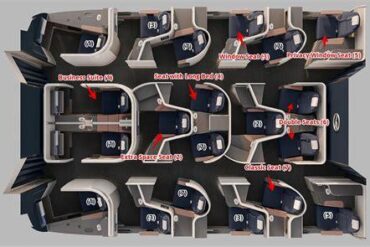
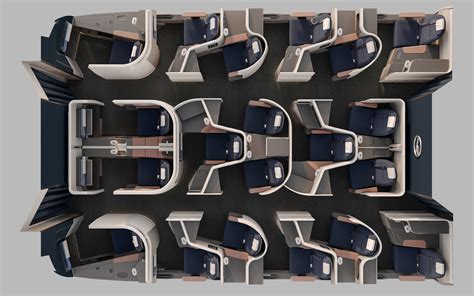
Lufthansa will introduce the full configuration in the second upgrade wave, likely between 2027 and 2028. Business Class on the upper deck is expected to transition to a 1-1 configuration, eliminating the center section entirely in favor of private suites. Total Business Class count remains at 80 seats, but space per passenger rises significantly, and the cabin footprint shifts toward premium-heavy yield strategy. Premium Economy grows from 32 to 40 seats, reflecting market demand for mid-tier comfort, while Economy shrinks from 244 to 220 seats—a quiet acknowledgment that long-haul leisure volume is no longer the chief metric of profitability.
Economically, the evolution is bold. Lufthansa is betting on a future where the Boeing 747-8 remains viable long enough to justify deep structural investment. While competitors phase out four-engine jets, Lufthansa doubles down, turning the Queen of the Skies into a flying showroom for its most advanced cabin concept. The airline emerges both traditionalist and futuristic—the only European carrier still operating passenger 747s, yet the first to retrofit one with a next-generation staggered business product at scale.
Why The 747-8 Makes Allegris Installation So Complex
The 747-8 interior is famously challenging. The nose curves aggressively, the upper deck tapers quickly, and floor reinforcement work becomes exponentially more costly. A380 retrofits look simple by comparison. Where most airframes offer predictable geometry, the 747 requires cabin modules to be redesigned, rescaled, and structurally adapted. That engineering expense is the root cause of this two-phase plan—Lufthansa can’t afford to ground the jets long enough to complete everything at once, not when the global premium market is surging and A340 retirements are stripping away alternative long-haulers.
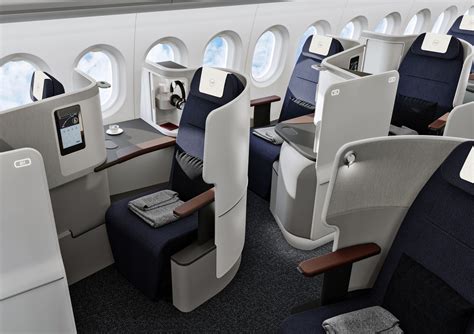
Yet this complexity has a silver lining. The Allegris lower deck will actually be more refined and spacious than on the A350 or 787, thanks to wider fuselage diameter and more favorable window spacing. In a twist no one expected, the 747-8 may become the best Allegris experience anywhere in Lufthansa’s fleet.
Final Outlook
Lufthansa’s Boeing 747-8 retrofit is equal parts daring, profitable, and architecturally eccentric. Phase One delivers 48 Allegris suites on the lower deck, while the upper deck retains legacy Business seating until full conversion in 2027/2028. First Class remains for now, but will shrink and modernize later. Cabin economy shifts toward premium revenue, and the airline positions itself not just as a legacy carrier, but as the caretaker of the world’s most advanced 747 service.
The result is a story of innovation inside constraint—a flagship reimagined in motion rather than in a hangar freeze. Aviation enthusiasts get to watch the transformation unfold in real time, and travelers will soon experience history from seat level: half modern luxury, half nostalgic throwback, a rare split-era aircraft in commercial service. As the 747-8 gears up for its next chapter, one thing is clear: the Queen of the Skies isn’t retiring. She’s evolving.