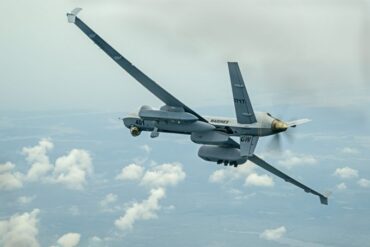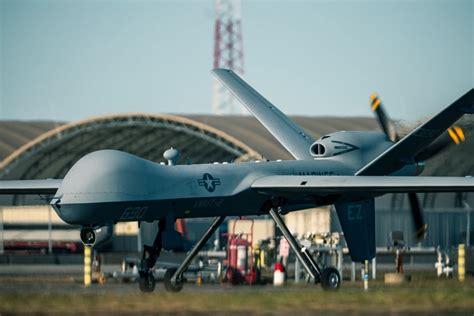
The U.S. Marine Corps is reshaping how it flies, fights, and connects forces across the Indo-Pacific, and Aviation Plan 2026 is the blueprint guiding that shift. Rather than relying on a small number of fixed, high-value air bases that invite long-range missile strikes and electronic attack, the service is moving toward a distributed, unmanned-enabled aviation force designed to operate from austere expeditionary sites scattered across contested littorals. At the heart of this transformation sits the MQ-9A Reaper, elevated from a niche surveillance platform into a persistent sensing, networking, and targeting node that knits together Marines, sailors, and joint forces into a resilient operational web.
This shift is not cosmetic. The Indo-Pacific presents a geometry of warfare where distance is vast, chokepoints are narrow, and peer competitors field dense layers of long-range precision fires, electronic warfare, cyber operations, and counter-space capabilities. In that environment, survivability flows from dispersion and connectivity rather than concentration. Aviation Plan 2026 reframes Marine aviation as a mesh of forward sensors, airborne relays, and distributed decision nodes that can continue to function even as satellites flicker, networks are jammed, and fixed bases come under threat.
The plan’s most visible change is the expansion of MQ-9A Reaper operations within Marine Unmanned Aerial Vehicle Squadrons. The Reaper’s endurance and payload flexibility give Marines a way to sustain presence over critical sea lanes and island chains without exposing large formations to early strikes. Persistent airborne coverage also changes the tempo of competition below the threshold of war, where gray-zone coercion, maritime maneuver, and information warfare unfold slowly but relentlessly. The aircraft’s constant gaze turns the fog of maritime maneuver into legible patterns of life, creating strategic friction for any force attempting to operate unseen.
By embedding unmanned aviation directly into Distributed Aviation Operations and Command and Control networks, the Marine Corps is engineering a force that can sense, decide, and act faster than an adversary can disrupt it. The goal is a living network rather than a brittle hierarchy: data flows horizontally to multiple shooters instead of climbing a tall ladder of vulnerable nodes. In practical terms, a contact detected at sea can be identified, shared, and engaged by whichever joint asset is best positioned to act, collapsing the time between detection and effect.
MQ-9A Reaper as the Backbone of Marine Corps Persistent Sensing
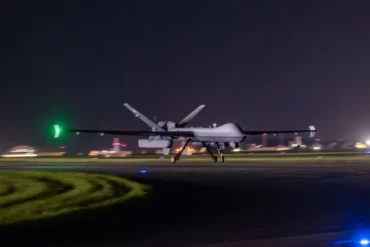
The MQ-9A Reaper brings a rare mix of reach, endurance, and payload capacity to expeditionary operations. As a medium-altitude, long-endurance remotely piloted aircraft, it can remain aloft for more than a day, cruising at roughly 200 knots and operating at altitudes approaching 40,000 feet. Its mission radius exceeds 1,000 nautical miles, allowing Marine units to project awareness deep into maritime approaches and along extended littoral corridors. A wingspan of roughly 66 feet supports an external payload capacity near 3,800 pounds, making the platform adaptable to layered sensor and networking packages rather than a single-purpose loadout.
For Marine operators, the Reaper’s value lies in how its sensors, endurance, and networking fuse into persistent intelligence, surveillance, and reconnaissance, maritime domain awareness, communications relay, and targeting support. The Multi-Spectral Targeting System blends electro-optical and infrared sensing with laser designation and full-motion video, enabling detailed tracking of surface contacts across cluttered littorals. Maritime radar payloads extend detection across congested sea lanes, building a continuous picture of vessel movement and behavior. When configured for strike, the Reaper can carry precision-guided munitions, pairing persistence with selective kinetic reach while retaining its surveillance role.
This combination changes the operational geometry of maritime competition. Continuous orbits over chokepoints and coastal approaches reveal patterns that short-duration sorties miss. Fishing fleets used for gray-zone signaling, paramilitary vessels shadowing allied patrols, and surface combatants maneuvering through island chains all become part of a visible tapestry. The presence of a Reaper overhead does more than collect data; it exerts strategic pressure by reducing the space for ambiguity and surprise.
Distributed Aviation Operations and the Indo-Pacific Kill Web
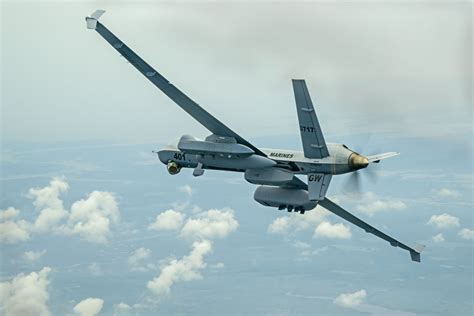
Aviation Plan 2026 pushes the MQ-9A beyond a surveillance role into the connective tissue of a distributed kill web. Instead of funneling sensor data through a narrow chain of command, the aircraft distributes real-time feeds to multiple shooters across the joint force. A surface contact detected near a chokepoint can be classified through maritime domain awareness sensors, relayed via airborne networking, and passed simultaneously to a U.S. Navy destroyer, a Marine coastal missile battery, or joint airpower poised beyond the horizon. The architecture compresses the sensor-to-shooter timeline while reducing the risk that a single disrupted node will paralyze the system.
This distributed design matters because the Indo-Pacific battlespace is hostile to centralized control. Electronic attack can sever links, cyber operations can poison data flows, and kinetic strikes can crater fixed infrastructure. By turning the MQ-9A into an airborne relay, Marines extend command and control across expeditionary sites without leaning on fragile ground networks. Airborne networking nodes carried by the Reaper create mobile data gateways that stitch together dispersed Marine littoral regiments, naval surface combatants, and joint headquarters into a continuously updating operational picture.
The operational payoff is speed with resilience. Decisions migrate closer to the edge, where Marines and sailors have immediate access to fused sensor data. Instead of waiting for information to climb and descend a tall command ladder, shooters receive validated cues in near real time. The kill web becomes less a sequence of steps and more a living network, constantly reconfiguring as nodes move, appear, or disappear under pressure.
Expeditionary MQ-9A Detachments and Network Extension in Contested Environments
Forward-based MQ-9A detachments are designed to operate from austere Pacific sites that would have been peripheral in earlier airpower models. These locations extend Marine Corps command and control across wide oceanic distances, functioning as airborne network extension points that bridge gaps between scattered units. In environments where satellite links are contested and terrestrial infrastructure is sparse or degraded, the Reaper’s role as a flying data hub becomes strategically decisive.
This airborne relay capability also supports coalition operations. Interoperable networking allows Marine MQ-9As to share sensor feeds with allied forces operating along the same maritime corridors. The effect is a shared operational picture that strengthens deterrence through transparency. When allies see the same patterns of movement and intent, coordination becomes faster and miscalculation less likely. Presence becomes informational as well as physical, signaling commitment through sustained, visible awareness.
Operating from expeditionary sites also forces the Marine Corps to harden sustainment. Organic maintenance and training pipelines are being expanded so MQ-9A operations do not hinge on contractor access in remote areas. The goal is a self-sustaining unmanned aviation ecosystem that can endure the friction of distance, weather, and adversary interference without collapsing into dependency on fixed bases.
MUX Program Modernization and Survivability Enhancements
The MQ-9A’s expanded role is reinforced by the Marine Air-Ground Task Force Unmanned Expeditionary (MUX) program, which structures modernization in capability spirals. Early increments formalize the Reaper as a permanent expeditionary asset by fielding updated airframes, modern ground control stations, and airborne networking integration that transforms each aircraft into a communications node rather than a mere sensor platform.
Subsequent capability increments deepen survivability and mission depth. A Secure Mission Control Element hardens command links against cyber intrusion and electronic attack, recognizing that control of unmanned systems is as much a digital battle as a physical one. Enhanced airborne networking pods expand bandwidth and resilience across dispersed forces, while the addition of electronic warfare payloads introduces electronic support and limited electronic attack functions. The aircraft evolves from observer to participant in the electromagnetic contest that increasingly defines modern warfare.
Redundancy against counter-space threats is built through proliferated low Earth orbit satellite communications, reducing reliance on a small number of vulnerable satellites. Dedicated maritime domain awareness pods sharpen surface detection in cluttered littoral environments, and detect-and-avoid systems open the door for routine operations in shared regional airspace. Each enhancement acknowledges a simple truth: persistence only matters if the platform can survive interference long enough to keep sensing and connecting.
Strategic Implications for Stand-In Forces and Maritime Deterrence
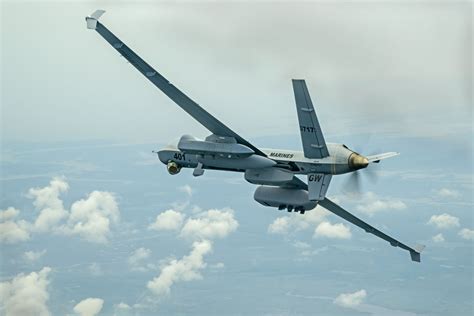
The deeper meaning of Aviation Plan 2026 lies in how it recasts the Marine Corps as a stand-in force operating inside contested zones rather than a force that waits to surge in from sanctuary. MQ-9A persistence enables Marines to maintain continuous awareness in places where large formations would be too visible and too vulnerable. The combination of distributed sensing, airborne networking, and expeditionary basing turns presence into a strategic lever that complicates adversary planning before open conflict begins.
Deterrence in the Indo-Pacific increasingly depends on denying the benefits of ambiguity. When maritime maneuver, gray-zone coercion, and electronic probing are continuously observed, the space for salami-slicing tactics narrows. The MQ-9A’s visible persistence reinforces allied confidence by demonstrating that contested spaces are not informationally dark. It also accelerates decision cycles within Marine Air-Ground Task Forces, allowing commanders to move from detection to response with fewer intermediaries and less delay.
This doctrinal shift also reshapes how joint forces integrate. The MQ-9A’s role as a connective node blurs traditional service boundaries, binding naval, air, and ground shooters into a shared operational fabric. In a region defined by water, islands, and distance, the value of such connective tissue cannot be overstated. The aircraft becomes less a platform and more a mobile piece of the battlespace’s nervous system, transmitting sensation and intent across a dispersed body of forces.
From Modernization Plan to Operational Doctrine
Aviation Plan 2026 codifies a transition from platform-centric airpower to network-centric aviation. The MQ-9A Reaper’s expanded mission set illustrates how unmanned systems can anchor resilience by distributing sensing, decision-making, and connectivity across space. Fixed bases and concentrated formations remain valuable, but they are no longer the sole pillars of presence. Instead, a web of expeditionary sites, airborne relays, and persistent sensors creates a force that bends under pressure rather than breaking.
The practical outcome is a Marine Corps aviation enterprise that can operate forward even as adversaries contest every layer of the battlespace. Endurance in the air translates into endurance in competition. Connectivity in motion replaces dependency on static infrastructure. The MQ-9A Reaper, once defined primarily by surveillance and strike, becomes the scaffolding for a distributed operational doctrine that aims to sense first, decide faster, and connect every shooter across the Indo-Pacific’s contested littorals.