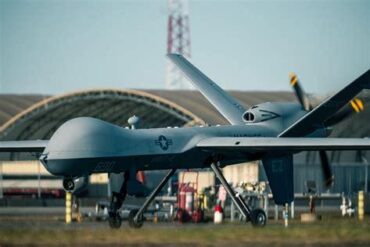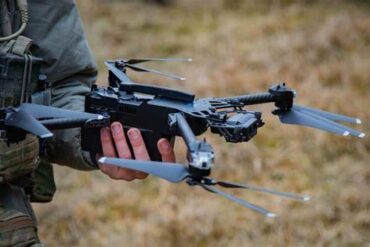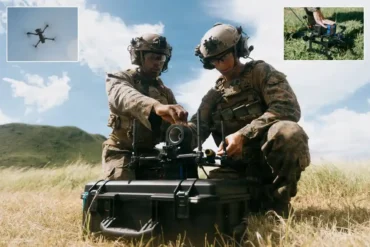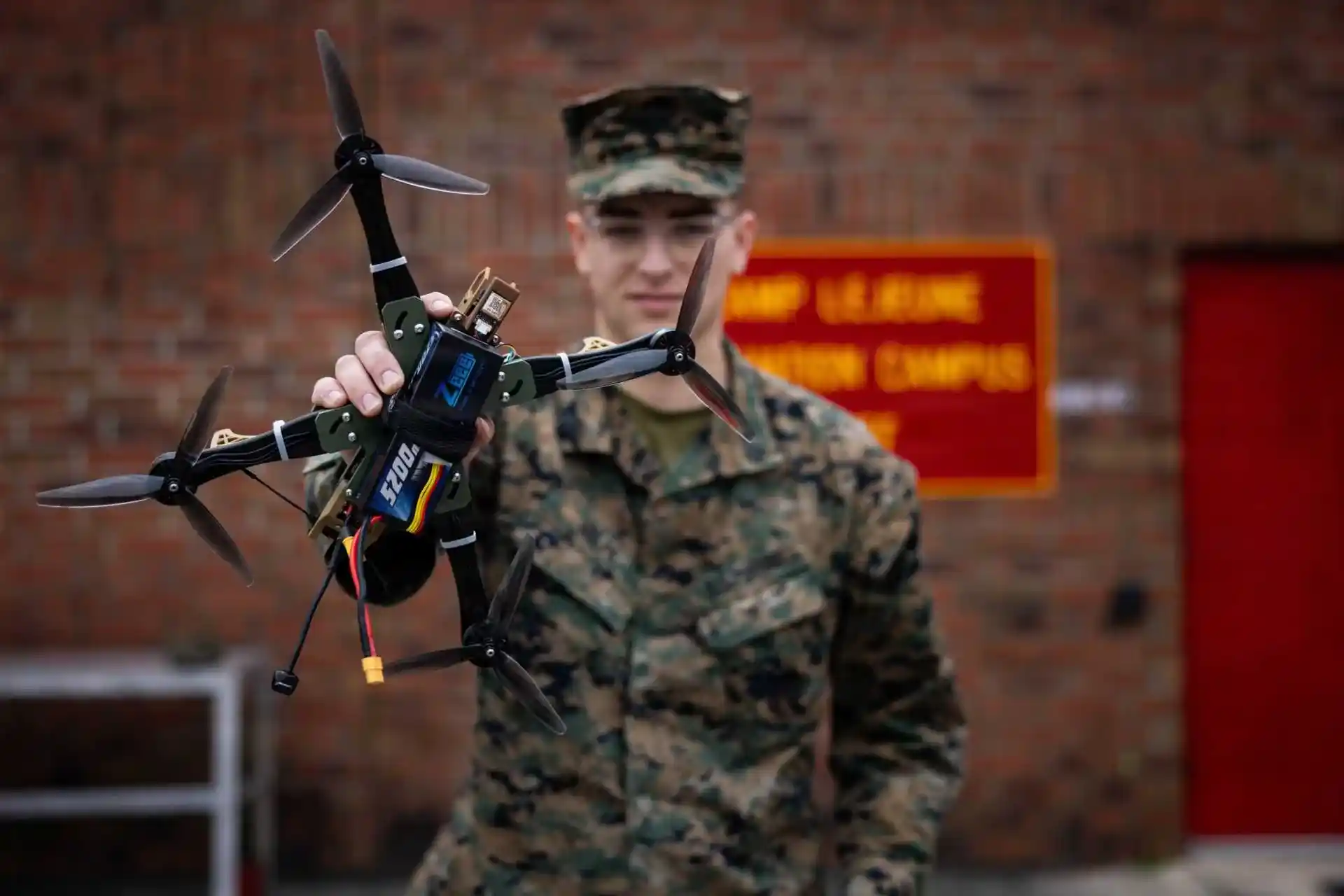
The U.S. Marine Corps has crossed a quiet but consequential threshold in modern warfare by approving Hanx, the service’s first 3D-printed unmanned aerial system designed, built, and cleared for unit-level production and combat use. The decision signals more than the acceptance of a new drone. It marks a structural shift in how the Marine Corps intends to generate mass, resilience, and adaptability in a future battlefield defined by attrition, speed, and constant technological churn.
On January 28, 2026, the 2nd Marine Logistics Group confirmed that Hanx had received formal flight approval while meeting all current National Defense Authorization Act (NDAA) compliance requirements. This dual approval matters. Many experimental drones can fly; far fewer can do so legally, securely, and at scale within U.S. military networks. Hanx is now cleared to operate where it actually counts, not just in test ranges but in real operational units preparing for contested environments.
At its core, Hanx reflects a doctrinal pivot. The Department of Defense has stated an ambition to field up to 300,000 one-way attack drones by 2028, emphasizing affordability, expendability, and rapid replacement over exquisite but scarce platforms. The Marine Corps has taken that guidance literally. Hanx is engineered to be printed, assembled, repaired, and modified inside Marine units, reducing dependency on distant contractors and vulnerable supply chains. The approval transforms additive manufacturing from an innovation experiment into a battlefield-relevant capability.
The drone itself is compact, modular, and intentionally unsentimental. With a payload capacity of up to one kilogram, Hanx can support reconnaissance, light logistics, training, and one-way attack missions using a common airframe. Its reported unit cost of roughly $700 undercuts most commercially sourced systems, many of which approach or exceed $4,000 while remaining closed to user modification. That price difference compounds quickly when drones are expected to be consumed in large numbers.
What makes Hanx strategically interesting is not any single specification, but the production philosophy behind it. Additive manufacturing allows Marines to print structural components locally, compressing repair and replacement timelines from weeks to days. When a design flaw emerges or a mission requirement changes, updated digital files can be distributed instantly, enabling rapid iteration without retooling factories. During development, Hanx went through five major design versions and dozens of incremental refinements, a tempo that traditional procurement pipelines cannot match.
This production model aligns directly with expectations of high-consumption combat environments, where drones are lost as routinely as ammunition. Instead of treating each loss as a logistical setback, the Marine Corps is positioning drones as regenerable assets, rebuildable close to the point of use. The effect is psychological as much as operational. Units can afford to use drones aggressively when replacement is assured and inexpensive.
Compliance with the NDAA was treated as foundational, not optional. Every critical component in Hanx was selected to avoid restricted-origin hardware and software, a constraint that eliminated many cheap but insecure commercial parts. The concern is not hypothetical. Embedded vulnerabilities can allow unauthorized data access, remote interference, or silent system monitoring. By enforcing compliance at the design stage, Hanx can operate on military networks and in sensitive environments without the restrictions imposed on non-compliant systems.
This distinction separates Hanx from earlier Marine experiments such as the 2017 “Nibbler” drone, which predated current compliance rules and therefore could not be broadly fielded. Hanx demonstrates institutional learning. Instead of retrofitting security later, the program embedded it from the first sketch, turning compliance into an enabler of scale rather than a bureaucratic obstacle.
The human story behind Hanx is equally instructive. Development was led by Sgt. Henry David Volpe, an automotive maintenance technician with the 2nd Maintenance Battalion, 2nd Combat Readiness Regiment, under the 2nd Marine Logistics Group. Volpe’s technical curiosity began early, with hands-on experience in 3D printing and robotics during middle school and college. Before enlisting, he worked as a car mechanic, gravitating toward electronic subsystems and problem-solving rather than routine maintenance.
After joining the Marine Corps and arriving at Camp Lejeune in 2022, Volpe was introduced to the II Marine Expeditionary Force Innovation Campus, a facility dedicated to robotics, additive manufacturing, and in-house production. The campus functions as a hybrid workshop and classroom, giving Marines access to printers, design software, and fabrication tools. Volpe’s entry point was pragmatic. He repaired two nonfunctional printers that had stalled activity at the site, restoring basic manufacturing capacity and earning trust.
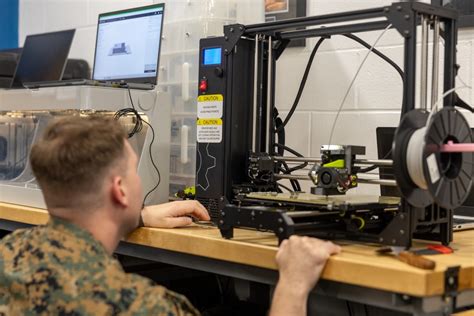
That environment allowed talent to surface organically. Under the supervision of Chief Warrant Officer 3 Matthew Pine, the officer in charge of the Innovation Campus, Volpe began exploring whether a drone could be designed and built entirely by Marines. Pine encouraged the effort after reviewing similar U.S. Army 3D-printed drone initiatives. Together, they traveled to Fort Campbell, Kentucky, where Volpe evaluated an Army-built system and concluded it was more expensive and dependent on external contractors than necessary.
The takeaway was simple but radical. Marines could do this themselves, faster and cheaper, if institutional barriers were navigated correctly. Pine’s role became less about design and more about policy, ensuring that development stayed within approval pathways that would allow real adoption rather than permanent experimentation.
Back at Camp Lejeune, Volpe was given 90 days to deliver a viable result. He moved beyond modifying existing drones and began designing an original airframe optimized for 3D printing and compliant electronics. The prototype was named Hanx, a nod to Volpe’s nickname, and quickly became a collaborative effort. Cpl Liam Smyth contributed landing gear designs, Staff Sgt Jonathan Borjesson focused on tuning and calibration, while Cpl Isauro Vazquezgarcia and Cpl Corven Lacy supported sustained printer operations and design feedback.
The most time-consuming phase came after the hardware worked. Volpe logged more than 1,000 hours researching suppliers, contacting manufacturers, and verifying that every component met NDAA standards. Compliance demanded proof not just of performance but of origin and software pedigree. Only after clearing that hurdle could the drone move toward flight approval.
Authorization arrived when the small unmanned aerial systems program office at Naval Air Systems Command implemented interim changes to its flight clearance process. Those changes enabled Hanx to receive approval, making it the first Marine-built 3D-printed drone to meet both current NDAA and naval aviation requirements. The significance is institutional. A path now exists for similar systems to follow.
With approval secured, the Innovation Campus shifted from invention to replication. Training plans and a draft course framework are being developed to allow other units to manufacture, sustain, and adapt drones using the Hanx model. Early adopters include Marine Corps Special Operations Command at Camp Lejeune, with explosive ordnance disposal units indicating plans to acquire approximately 20 drones and explore explosive payload integration.
Hanx is not a silver bullet. It is deliberately modest, optimized for quantity and adaptability rather than elegance. That is precisely why it matters. In a future defined by electronic warfare, attrition, and rapid adaptation, the ability to print capability on demand may prove as decisive as any single weapon system. Hanx suggests the Marine Corps understands that truth, and is acting on it with uncommon speed.