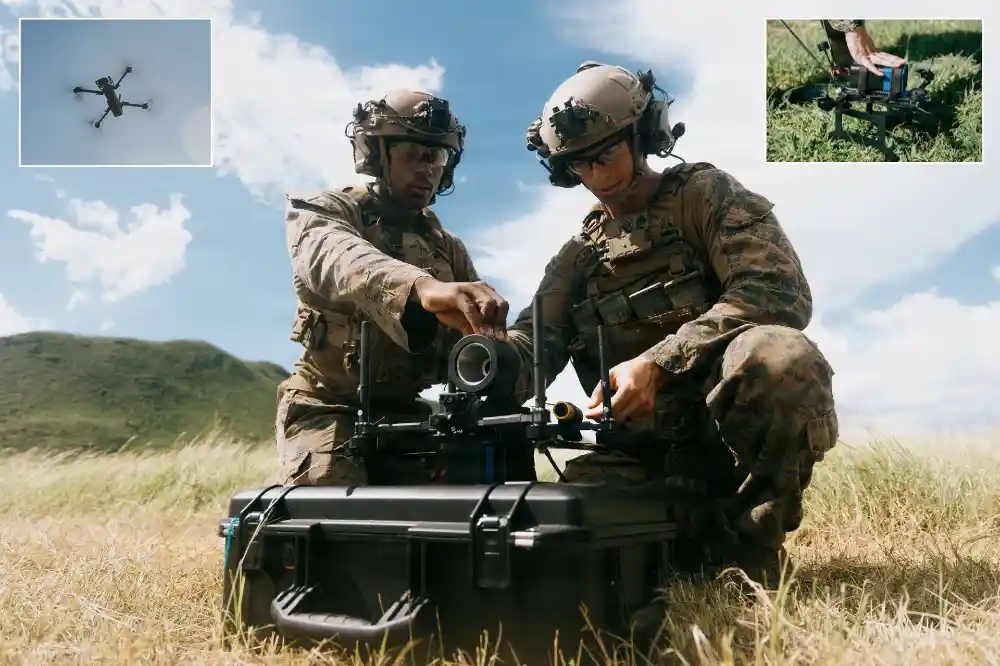
The U.S. Marine Corps is accelerating its push into next-generation combat integration with the deployment and practical certification of First-Person View (FPV) attack drones during an intensive training exercise at Camp Santiago, Puerto Rico, on November 18, 2025. This effort signals a decisive shift in how Marine Expeditionary Units (MEUs) are preparing for 21st-century warfare—adapting lessons from foreign conflict zones and leveraging commercial-off-the-shelf drone systems to enhance unit-level lethality.
Camp Santiago: Testing Ground for Tactical Drone Warfare
On the rugged terrain of Camp Santiago, Marines from Battalion Landing Team 3/6, part of the 22nd Marine Expeditionary Unit (Special Operations Capable), engaged in an immersive training module labeled Attack Drone Training: Practical Application. This wasn’t a mere demonstration—it was a milestone in the Corps’ effort to transform unmanned systems from experimental novelties into battlefield staples.
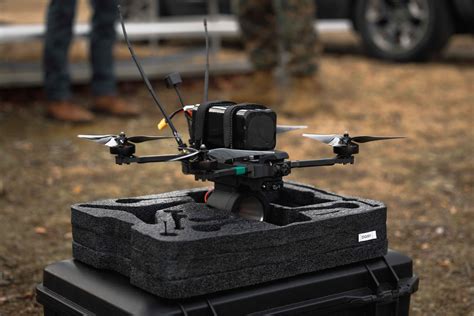
The exercise incorporated both the Neros Archer FPV attack drone and the Skydio X2D reconnaissance quadcopter, signaling a multi-layered approach to unmanned system integration. Certified by instructors from 2nd Marine Division and the Marine Corps Attack Drone Team, Marines underwent full-cycle training—from pre-flight checks and payload setup to simulated strikes and post-mission analysis. The training emphasized both technical mastery and tactical application, reinforcing safety protocols and mechanical reliability under stress.
Neros Archer: A Cost-Effective, Lethal Innovation
The Neros Archer, though commercially derived, has been sharply tailored for frontline operations. Designed for close-range, high-speed terminal attacks, the Archer carries small explosive payloads ideal for light armor, bunkers, or dismounted threats. Its compact structure, low acoustic footprint, and modular payload system make it highly adaptable to dense environments—urban enclaves, jungle canopies, and littoral zones like the Caribbean.
Marines relied on FPV goggles for real-time flight control, allowing immersive guidance during target approach. This form of control drastically reduces the decision-making window between target identification and execution, a crucial factor in dynamic, fast-paced operations. Importantly, the expendable cost profile of the Archer means that units can deploy it with minimal concern for recovery, offering a disposable but devastating tool for tactical units.
Skydio X2D: Eyes in the Sky for Tactical Superiority
Complementing the attack profile of the Archer was the Skydio X2D, a reconnaissance quadcopter equipped with AI-enabled autonomous flight, thermal imaging, and GPS-denied navigation. The X2D’s capabilities shine in degraded environments, where traditional ISR (Intelligence, Surveillance, Reconnaissance) platforms may falter.
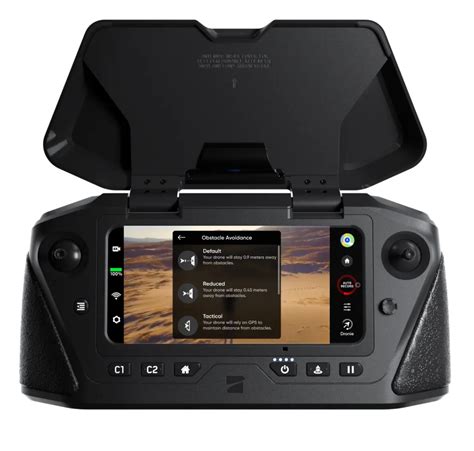
During the training, the X2D provided overwatch, battle damage assessment, and live intelligence feeds to FPV operators. This pairing illustrates the Marine Corps’ emerging doctrine: use ISR-focused drones to identify and track targets, then cue in expendable strike drones for surgical engagement. This sensor-to-shooter compression at the platoon or company level reflects a fundamental shift in small-unit tactics.
From Concept to Combat-Ready: Integrating FPV into Marine Infantry Doctrine
Unlike earlier drone tests that isolated unmanned systems as standalone platforms, this event in Puerto Rico was different. Here, drones were embedded directly into infantry maneuvers, supporting core tactical objectives. Marines were evaluated on their ability to conduct joint mission planning, handle airspace deconfliction, and execute coordinated maneuvers with explosive-carrying UAVs operating in close proximity to friendly forces.
The certification process not only evaluated operators but also included payload specialists and unit leaders, ensuring chain-of-command fluency in unmanned combat risk mitigation. The goal: treat drone systems not as niche support tools but as organic elements of every fireteam’s arsenal.
A photograph of a rifleman performing a propeller check on a Neros Archer drone underscores the attention to detail and mechanical discipline now expected of combat personnel. As these drones become standard kit, every Marine must be proficient in their deployment, safety checks, and tactical utility.
Strategic Implications in the Caribbean Theater
The selection of Puerto Rico as the training site is not coincidental. With the 22nd MEU(SOC) supporting U.S. Southern Command missions and other presidential directives, the region is critical for countering illicit trafficking networks and asserting presence in strategically sensitive maritime corridors.
In this context, FPV drones offer unparalleled versatility:
- Maritime interdiction support: Striking fast boats or covert landing teams.
- Expeditionary base defense: Augmenting perimeter security with aerial overwatch.
- Rapid response: Enabling forward-deployed Marines to deliver precision effects without waiting for conventional air support.
The terrain diversity—mountains, urban sprawl, coastal jungles—mirrors many global hotspots, making Camp Santiago an ideal crucible for testing how drones perform under varied and rugged conditions.
Influencing Doctrine and Procurement Across the Marine Corps
More than a unit-level success story, this training event is expected to have institutional repercussions. The data collected, lessons observed, and combat effectiveness metrics will feed directly into the Marine Corps’ broader drone strategy.
Doctrine developers will use the findings to:
- Refine tactical manuals to incorporate drone-assisted maneuver warfare.
- Adjust safety standards for explosive payload employment near troops.
- Inform procurement of future modular, scalable, and soldier-proof systems.
Moreover, it advances the Marine Corps’ goal to achieve a large-scale unmanned strike capability, where small drones function as force multipliers across every clime and place.
Conclusion: A Turning Point in Expeditionary Warfare
What transpired at Camp Santiago is a harbinger of what future conflicts may look like—autonomous systems tightly woven into the operational fabric of expeditionary units. The U.S. Marine Corps is no longer experimenting with FPV drones—it is operationalizing them. By blending commercial tech, specialized training, and integrated doctrine, the Corps is rapidly moving toward a battlefield where every Marine is not just a rifleman, but also a drone operator.
The November 2025 training in Puerto Rico was not just a tactical rehearsal—it was a strategic declaration that the era of low-cost, high-impact unmanned warfare is here. As adversaries adapt and evolve, so too must America’s tip of the spear—and with programs like these, it already is.