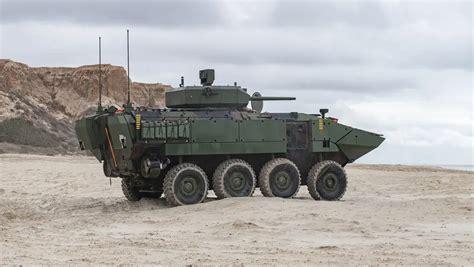
The U.S. Marine Corps has taken a decisive step in reshaping its future reconnaissance force with the selection of Norway-based Kongsberg Defence & Aerospace to supply Protector RT20 remote weapon turrets for the service’s Advanced Reconnaissance Vehicle (ARV) program. Backed by a $22.4 million firm-fixed-price contract modification, the award underscores a growing emphasis on survivability, sensor dominance, and digital integration as the Marines move to replace the aging LAV-25 fleet that has served since the Cold War era.
This procurement reflects more than a routine equipment upgrade. It represents a strategic alignment between U.S. expeditionary doctrine and a combat-proven turret system already trusted across multiple NATO forces. By integrating the RT20 onto the ARV, the Marine Corps is prioritizing under-armor lethality, advanced sensing, and seamless connectivity across domains, all of which are central to modern reconnaissance operations in contested environments.
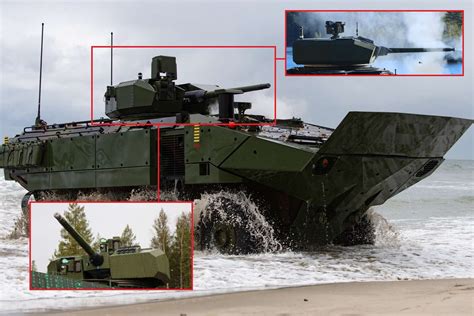
The contract, formally announced by the U.S. Department of War on January 27, 2026, covers the delivery of 16 RT20 remote weapon stations. These systems will be installed on early ARV vehicles as the program advances toward operational fielding. The award also reinforces continued U.S. confidence in Kongsberg’s remote weapon technologies, which are already deployed on platforms such as the Stryker, JLTV, and Amphibious Combat Vehicle (ACV).
As the Marine Corps accelerates its Force Design 2030 transformation, the ARV has emerged as a centerpiece capability. Designed to operate forward, dispersed, and often isolated, the vehicle must sense, decide, and communicate faster than adversaries. The RT20 turret is a critical enabler of that vision, bringing precision firepower and integrated sensors without compromising crew protection.
Strategic Context Behind the RT20 Selection
The decision to equip the ARV with the Kongsberg Protector RT20 is rooted in evolving operational realities. Marine Corps Light Armored Reconnaissance (LAR) Battalions are no longer envisioned as purely scouting elements operating on the edges of conventional battlefields. Instead, they are being reshaped into networked reconnaissance forces capable of supporting multi-domain operations, including maritime strike, long-range fires, and unmanned system coordination.
Within this framework, survivability is inseparable from information dominance. Remote weapon turrets like the RT20 allow crews to detect, track, and engage threats while remaining fully protected inside the vehicle. This is particularly vital for reconnaissance units expected to operate within range of precision fires, loitering munitions, and advanced surveillance systems fielded by peer adversaries.
The RT20’s selection also reflects the Marine Corps’ preference for mature, low-risk subsystems that can be rapidly integrated. Kongsberg’s turret family has accumulated millions of operational hours worldwide, providing a level of reliability that aligns with the Corps’ expeditionary demands.
Inside the Kongsberg Protector RT20
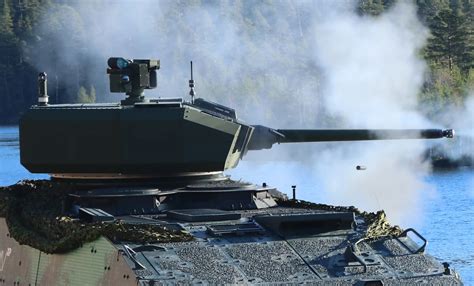
The Protector RT20 is a next-generation remote turret designed to support medium-caliber weapons ranging from 20mm to 30mm, depending on mission requirements. Its architecture emphasizes modularity, allowing rapid adaptation to different platforms and roles without extensive redesign. For the ARV, the RT20 configuration is optimized for reconnaissance, balancing firepower with reduced weight and a lower visual signature.
At its core, the turret integrates stabilized electro-optical and infrared sensors, high-resolution thermal imaging, laser rangefinding, and automated target tracking. These capabilities enable accurate engagement on the move, day or night, and in degraded visibility conditions. The system’s digital backbone allows it to plug directly into vehicle mission computers and broader command-and-control networks, transforming the turret into a sensor node as much as a weapon mount.
Unlike legacy manned turrets, the RT20 enables entirely under-armor operation, significantly improving crew survivability. This design choice is especially relevant for reconnaissance vehicles, which often operate ahead of main forces and face heightened exposure to ambushes and indirect fire.
The Advanced Reconnaissance Vehicle and Its Role
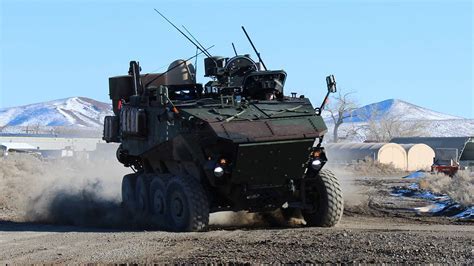
The Advanced Reconnaissance Vehicle is intended to replace the LAV-25, a platform that has served the Marine Corps faithfully but is increasingly constrained by protection, growth margin, and digital integration limitations. The ARV is conceived as a highly mobile, sensor-rich vehicle capable of operating as a forward reconnaissance and command platform in support of Marine divisions and joint forces.
LAR Battalions equipped with ARVs conduct mounted and dismounted reconnaissance, surveillance, and security missions. They provide early warning, identify enemy formations, support targeting, and conduct limited offensive or defensive actions. In future conflicts, these battalions are also expected to act as connectors between manned units, unmanned systems, and long-range fires.
The ARV program encompasses multiple variants, including a C4/UAS version focused on command, control, communications, and unmanned aircraft integration, an ARV-30 armed with a 30mm autocannon, and an ARV-LOG logistics variant. The newly contracted RT20 turrets are expected to support early production or test vehicles across these variants as system integration progresses.
Prototype Development and Industry Competition
The ARV program has been characterized by robust industry competition and extensive testing. In 2021, the Marine Corps selected Textron Systems and General Dynamics Land Systems (GDLS) to develop competing prototypes. Textron’s Cottonmouth vehicle and the GDLS prototype were delivered to the Nevada Automotive Test Center in December 2022, initiating a comprehensive evaluation phase.
These prototypes were designed with open-architecture mission systems, allowing the integration of subsystems such as the RT20 turret, advanced sensors, and autonomous technologies. Formal evaluations concluded in the third quarter of fiscal year 2023, providing the Marine Corps with detailed data on mobility, survivability, digital performance, and growth potential.
The selection of the RT20 turret signals that subsystem integration is moving forward in parallel with platform selection. This approach reduces program risk and accelerates the path toward an operational capability once a production vehicle is chosen, a decision anticipated in fiscal year 2027.
Kongsberg’s Expanding U.S. Footprint
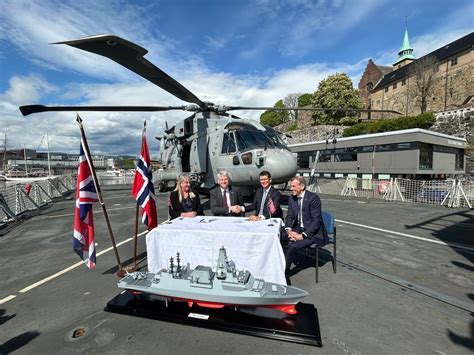
Kongsberg’s success in securing the ARV turret contract reflects its deepening integration into U.S. defense programs. Through its U.S. subsidiary based in Johnstown, Pennsylvania, the company has established a domestic industrial base capable of production, integration, and long-term sustainment. This presence has been a decisive factor in previous U.S. selections, ensuring compliance with domestic manufacturing and support requirements.
The RT20’s common lineage with turrets already fielded on the ACV-30 offers additional advantages. Shared components, training pipelines, and sustainment infrastructure can reduce lifecycle costs while improving readiness across multiple Marine Corps vehicle fleets. This scalability aligns with broader Pentagon efforts to streamline logistics and improve interoperability.
Implications for Future Marine Corps Operations
As the Marine Corps adapts to distributed maritime operations and stand-in force concepts, reconnaissance vehicles must operate as forward nodes in the kill chain. The integration of the RT20 turret ensures that ARVs are equipped not only to observe but also to contribute directly to targeting and engagement processes.
Advanced optics, automated tracking, and digital connectivity allow ARV crews to share targeting data in real time with artillery, aviation, and naval assets. This capability is essential in environments where speed of decision-making can determine mission success or failure. The RT20’s design anticipates future upgrades, including enhanced sensors and potential integration with autonomous or semi-autonomous engagement systems.
Deliveries of the 16 RT20 turrets are scheduled to begin in the third quarter of fiscal year 2026, continuing into early FY2027. This timeline aligns with the next development phase of the ARV program, ensuring that weapon and sensor integration keeps pace with vehicle maturation.
In selecting the Kongsberg RT20, the U.S. Marine Corps is signaling a clear intent: future reconnaissance platforms must be lethal, survivable, and digitally dominant from day one. The turret choice is not merely an equipment decision but a reflection of how the Corps intends to fight, sense, and prevail in the complex battlefields of the coming decades.