The AH-1 Cobra was a symbol of rotary-wing dominance and battlefield precision for decades. Born from the bloodline of the UH-1 Huey during the Vietnam War, it became the U.S. military’s first dedicated attack helicopter. Fast, sleek, and deadly, the Cobra served the United States Army and Marine Corps with distinction—but only one of those branches chose to keep it flying into the 21st century. The divergence reveals more than just a difference in equipment; it exposes the fundamentally unique missions, operational philosophies, and procurement strategies between the U.S. Army and the U.S. Marine Corps.
The AH-1 Cobra’s Origins and Rise in the U.S. Military
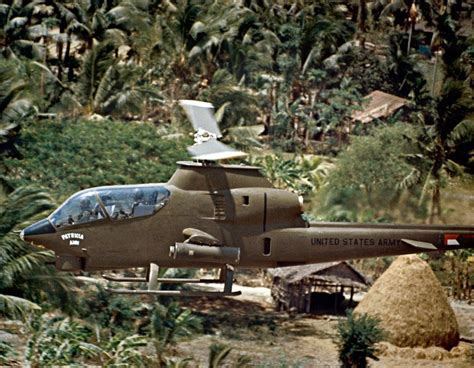
The AH-1 Cobra was designed as a direct response to battlefield realities of the 1960s. The Army needed a nimble gunship capable of protecting vulnerable troop transports like the UH-1 Huey. The Cobra inherited the Huey’s engine and drivetrain but featured a radically streamlined fuselage and tandem seating arrangement, prioritizing speed, agility, and lethality. Armed with a 20mm cannon and a variety of rockets and missiles, the AH-1 became a fixture in Vietnam and subsequent Cold War-era deployments.
Yet, as military technology surged forward in the post-Cold War era, the Cobra’s original design began to show its age. Its avionics were rudimentary by modern standards, and it struggled with low-light operations and lacked support for Hellfire missiles, making it less effective for high-intensity modern conflicts. These limitations would ultimately weigh heavily on the Army’s decision to move forward without it.
Why the U.S. Army Retired the AH-1 Cobra
By the late 1990s, the Army was operating a complex mix of rotary-wing platforms—scout helicopters, troop transports, utility helicopters, and attack gunships. The Army’s top leadership realized that managing multiple overlapping aircraft with different logistical needs was expensive, inefficient, and strategically outdated. Enter the decision to retire the Cobra in favor of a unified attack solution.
The Army already had the AH-64 Apache, a platform that outclassed the Cobra in virtually every category: sensors, survivability, armament, and network integration. Moreover, the Comanche stealth helicopter program (though eventually canceled) promised to bring next-generation reconnaissance capabilities. Maintaining a third attack platform like the Cobra no longer made sense.

Cost savings were a decisive factor. The Cobra’s high maintenance requirements—due to its aging airframe and legacy systems—strained budgets and personnel. Instead of investing in incremental upgrades, the Army opted for standardization. The Apache became the Army’s sole dedicated attack helicopter, simplifying training, logistics, and tactical doctrine.
Why the Marine Corps Held On to the Cobra
In contrast, the U.S. Marine Corps had very different operational requirements. Unlike the Army, which conducts large-scale land warfare over expansive territories, the Marines often operate in amphibious and expeditionary environments where space, weight, and logistics are at a premium. The Cobra, with its narrow profile and shipboard compatibility, fit these missions perfectly.
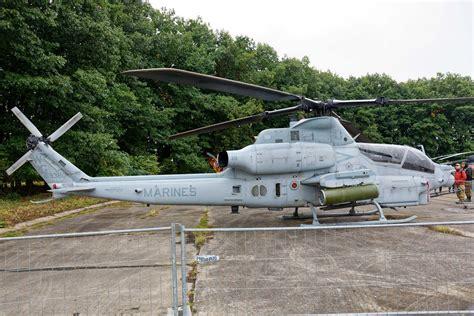
Marine aviators appreciated the Cobra’s compact size, which allowed it to operate seamlessly from the decks of amphibious assault ships. It didn’t just survive in the Marines’ arsenal—it evolved. The Corps developed its own variants, most notably the AH-1W Super Cobra, introduced in the 1980s. This version brought improvements in avionics, firepower, and survivability, making it suitable for anti-armor operations, convoy escort, and close air support.
Moreover, the Marines invested in continuous upgrades, transforming the platform to meet evolving threats. Night vision systems, better targeting capabilities, and enhanced survivability measures allowed the Super Cobra to remain a lethal force well into the 21st century. It was also integrated into Marine Corps doctrine in ways that made replacing it with another aircraft far more complex than the Army’s transition.
The Transition to the AH-1Z Viper
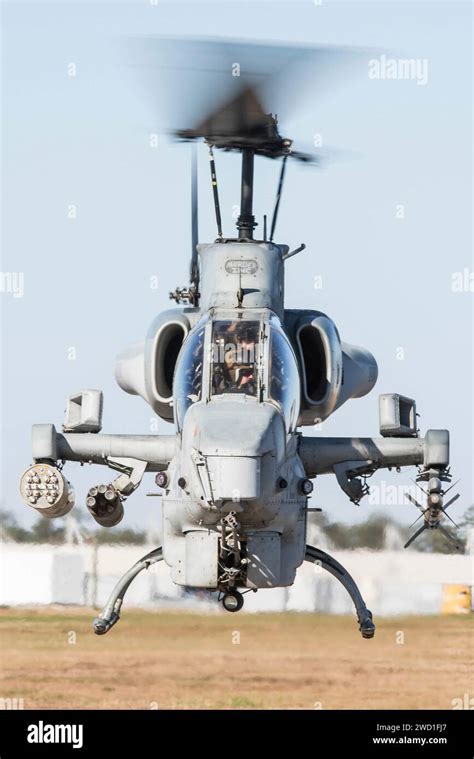
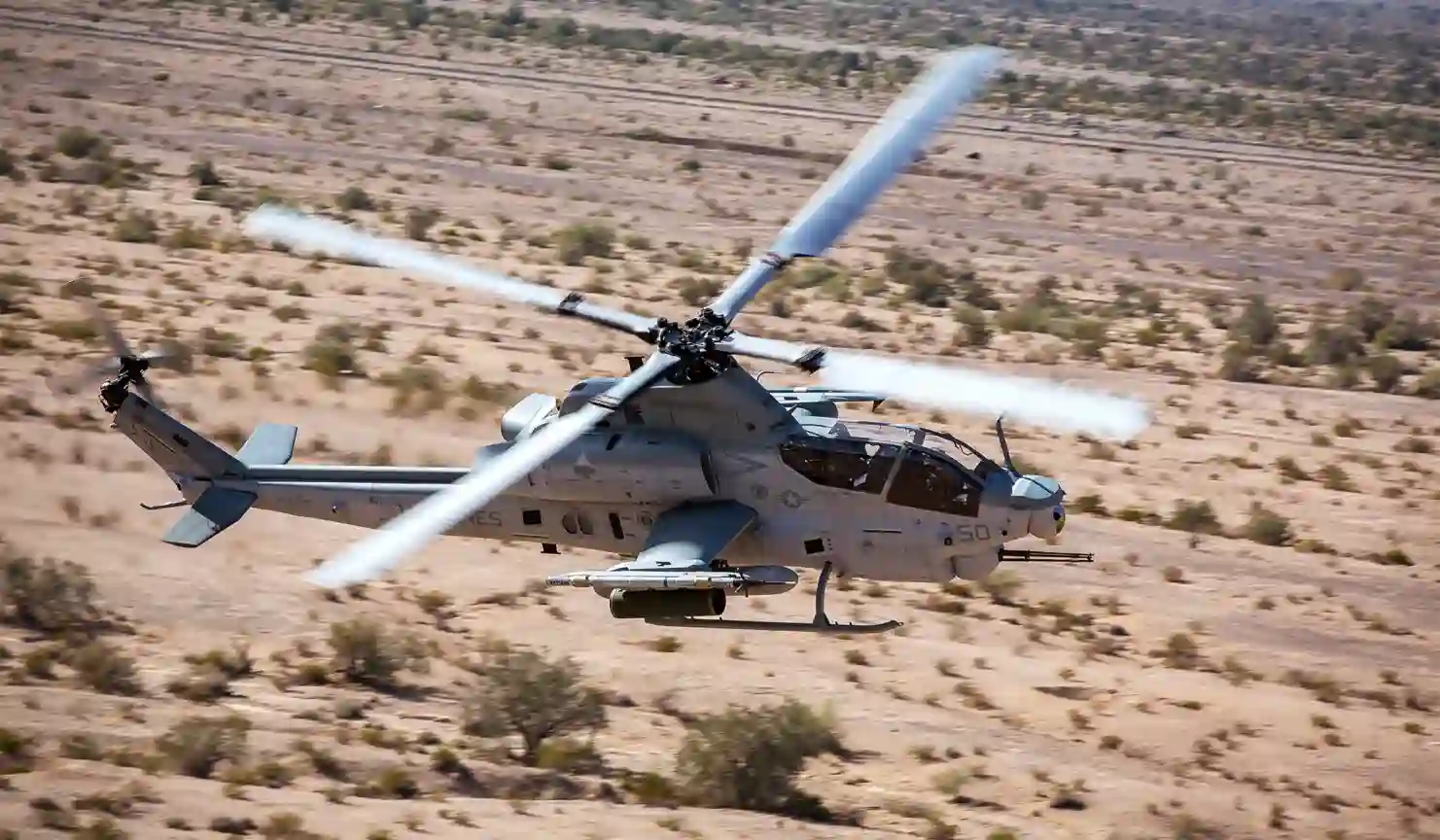
By 2020, even the Super Cobra had reached the limits of its service life. But instead of moving to the Apache or developing a new aircraft from scratch, the Marines opted to evolve the Cobra one final time. The result was the AH-1Z Viper, a next-generation attack helicopter that retains the Cobra’s legacy while bringing it into modern warfare.
The AH-1Z Viper features a four-bladed composite rotor system, an advanced glass cockpit, and a fully integrated avionics suite. It also includes upgrades like improved targeting sensors, a digital fire control system, and a wide array of modern munitions—including AGM-114 Hellfire missiles, Hydra 70 rockets, and AIM-9 Sidewinders.
Beyond performance, the Viper was designed for logistical efficiency. It shares over 85% of its parts with the UH-1Y Venom utility helicopter, the Marines’ modern successor to the Huey. This commonality simplifies maintenance, training, and supply chains, which are critical in expeditionary warfare where operational tempo is high, and resupply is complex.
Divergent Doctrines: Army vs. Marine Corps
The split in the Cobra’s fate highlights how doctrine shapes procurement. The Army’s doctrine emphasized networked ground warfare over wide battlefronts, supported by heavy airpower. The Apache’s sophisticated radar, sensors, and survivability features aligned with that vision. The Marines, however, focused on fast-response deployments, amphibious assaults, and tight air-ground integration, often in constrained environments like urban zones or rugged coastlines.
The Cobra and its derivatives offered the right balance of lethality, maneuverability, and logistical compatibility with shipborne operations. The Viper’s evolution ensured that this alignment continued into the future without requiring a wholesale shift in doctrine, infrastructure, or training pipelines.
Legacy and Combat Record
The AH-1 platform has served in virtually every major U.S. conflict since the Vietnam War. Cobras flew combat missions in Operation Desert Storm, provided close air support in Iraq and Afghanistan, and operated in Libya during NATO operations. Their small footprint, speed, and precision made them ideal for urban warfare and convoy protection.
The AH-1W Super Cobra logged over 933,000 flight hours during its service with the Marine Corps—a testament to its durability and tactical value. Its successor, the Viper, has already begun logging thousands more, taking part in joint exercises and real-world combat operations.
Even now, the Viper remains one of the most battle-ready and cost-effective attack helicopters in service, proving that thoughtful modernization can outpace the need for complete reinvention.
Conclusion: One Airframe, Two Philosophies
The U.S. Army and Marine Corps once flew the same attack helicopter. Today, their paths have diverged, reflecting deeper truths about how each branch fights. For the Army, retiring the AH-1 Cobra meant streamlining to focus on heavy, high-tech warfare with the Apache. For the Marine Corps, it meant investing in an aircraft that could grow with their needs, operate from the sea, and deliver decisive firepower in tight spaces.
This difference wasn’t just about aircraft. It was about mission clarity, logistical foresight, and adaptation to unique combat environments. The AH-1 Cobra may be gone from the Army’s arsenal, but in the form of the Viper, its rotor blades still thunder over Marine units across the globe—testament to a legacy of combat versatility, engineering adaptability, and doctrinal precision.