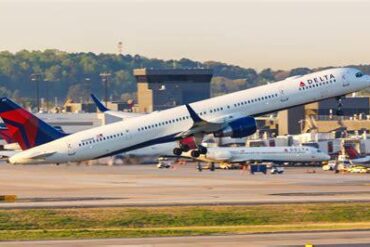
The Boeing 757, once hailed as the versatile narrowbody champion of transcontinental and transatlantic operations, holds a unique place in U.S. aviation history. Among the trio of major U.S. carriers—American Airlines, Delta Air Lines, and United Airlines—its journey took markedly different paths. While Delta and United continue to operate the 757 in significant numbers, American chose to part ways with this iconic aircraft during the COVID-19 pandemic, a move that has had long-lasting implications.
The Golden Era: American Airlines and the Boeing 757
When American Airlines took delivery of its first Boeing 757 in 1989, it was investing not only in a machine but in a strategic workhorse. The 757-200s, all 177 of them in American’s fleet at peak, were acquired to phase out older models like the Airbus A300, McDonnell Douglas MD-11, and the Boeing 727. With its powerful Rolls-Royce RB211 engines, short-field capabilities, and transatlantic range, the 757 became a cornerstone of American’s domestic and selective international routes.
In 2004, over 10% of American’s total flights were operated by the 757. The aircraft was frequently seen on high-density domestic routes, Hawaiian services, and seasonal transatlantic flights. Its flexibility, moderate fuel efficiency for the time, and operational range made it indispensable.
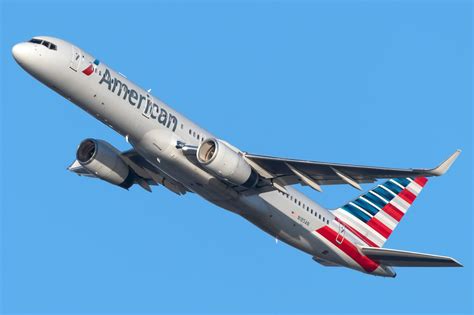
However, by the time the pandemic hit in 2020, only 34 of these planes remained. The writing was already on the wall, but the crisis accelerated what might have been a more gradual retirement strategy.
Strategic Exit: American’s Pandemic-Era Fleet Simplification
The onset of the COVID-19 pandemic gave airlines a grim but strategic opening to rationalize fleets. American took this as an opportunity to initiate a sweeping fleet simplification initiative, grounded in cost reduction and long-term planning. Alongside the 757, the airline retired its Boeing 767-300s, Airbus A330-300s, and Embraer E190s—essentially sunsetting four aircraft families.
This aggressive move was designed to streamline training, maintenance, and scheduling. It allowed American to focus on just two narrowbody aircraft families: the Airbus A320 series and the Boeing 737 family. At the same time, the carrier was banking on incoming deliveries of Boeing 787 Dreamliners, Airbus A321neos, and the much-anticipated A321XLR.
Yet, the strategy proved risky. Delivery delays due to manufacturing and supply chain disruptions left American with fewer long-haul and mid-range aircraft just as travel demand began to surge post-pandemic. In contrast, Delta and United, which retained their 757s, were better equipped to respond.
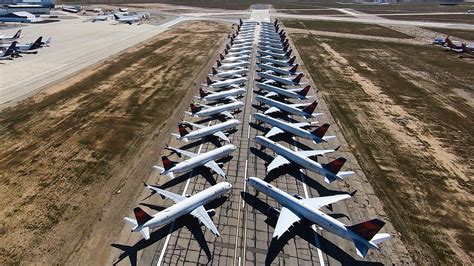
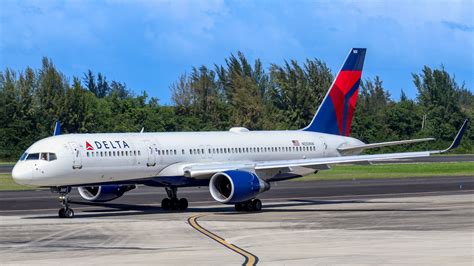
Meanwhile in Atlanta and Chicago: Why Delta and United Held On
Delta and United’s decision to hold onto their aging Boeing 757 fleets was not a refusal to modernize but a deliberate cost-benefit calculation.
For Delta, the 757 fits into a broader strategy of leveraging older, fully-depreciated aircraft to reduce capital costs. The 757s and 767s, while older and less fuel-efficient, are paid off, and their maintenance costs can be justified when juxtaposed against the financial strain of massive new aircraft orders.
Additionally, both Delta and United capitalize on pilot cross-qualification: the 757 and 767 share a common type rating, enabling crew to operate both. This dual qualification helps optimize crew scheduling and lowers training costs.
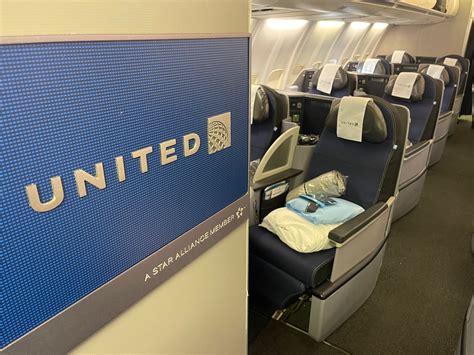
United’s approach mirrors Delta’s in many respects. With 61 active 757s—40 of the -200 variant and 21 of the longer -300 variant—the airline uses them on hub-to-hub routes, high-demand leisure destinations, and even transatlantic flights from East Coast hubs. Their flexibility and range keep them viable, particularly as United executes its “United Next” expansion program.
Post-Pandemic Recovery: Contrasting Fleet Strategies
As the industry rebounded in 2021 and 2022, the divergent fleet strategies of the Big Three came into sharp focus:
- American Airlines entered the recovery phase hobbled by fewer aircraft and slower capacity ramp-up. Its reliance on delayed aircraft deliveries further limited its ability to match rising demand.
- Delta, having retained the 757s and maintained a robust long-haul fleet, swiftly resumed international and transcontinental operations, especially across the Atlantic.
- United was perhaps the most aggressive, launching the largest transatlantic expansion in U.S. aviation history, capitalizing on its 757s and 767s while waiting for its large order of 787s, A350s, and next-generation narrowbodies to arrive.
This contrast showcased American’s overly conservative retreat during the crisis and underlined the value of fleet flexibility during recovery periods.
A New Hope: The Airbus A321XLR as 757 Successor
American’s answer to the 757’s retirement is the Airbus A321XLR. This long-range narrowbody is designed to handle the same types of routes once served by the 757—thin, long-haul routes that don’t warrant a widebody jet.
With a range of 4,700 nautical miles (8,700 km) and optimized fuel efficiency, the A321XLR represents the future of transatlantic narrowbody travel. American’s cabin layout includes 20 Flagship Suites, 12 Premium Economy seats, and 123 Main Cabin seats. The airline took delivery of its first A321XLR in October 2025, with the inaugural flight scheduled for December 18, 2025, between JFK and LAX.
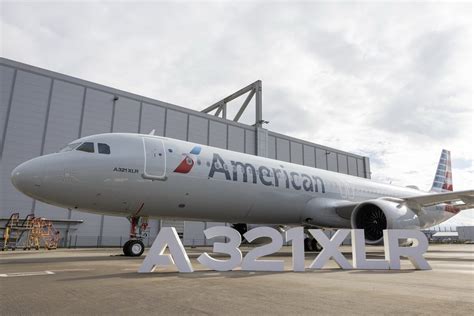
Starting March 2026, American will deploy these aircraft on European routes, beginning with JFK to Edinburgh. This evolution also spells the end of the A321T, American’s special transcontinental configuration, which will be converted to the standard A321 layout as the XLRs take over premium coast-to-coast routes.
The Long Shadow of a Strategic Gamble
In hindsight, American’s 757 retirement was a strategic play that came with unintended consequences. While the move aligned with a long-term vision of operational simplicity and modernized efficiency, it underestimated the unpredictable nature of aircraft manufacturing delays and the speed of post-pandemic demand recovery.
Delta and United, meanwhile, benefitted from their pragmatic fleet resilience. By holding onto versatile, fully amortized 757s, they retained the agility to scale up service rapidly, particularly on routes where newer aircraft were not yet available.
Even as Delta and United plan for gradual 757 retirements, they are doing so from a position of strength, not necessity. The prolonged life of the 757 in these fleets is less about nostalgia and more about strategic fleet optimization in uncertain times.
Conclusion: A Tale of Diverging Philosophies
The story of why American Airlines retired the Boeing 757 when Delta and United didn’t is ultimately a story of strategic divergence. American opted for aggressive modernization and uniformity, while Delta and United chose operational versatility and cost amortization.
Both paths have their merits. But in the crucible of the post-pandemic recovery, it was the airlines that held onto their older workhorses that proved more agile and better prepared. The Boeing 757, despite its age, remains a symbol of flexibility, performance, and endurance—qualities that continue to serve United and Delta well, even as American prepares for its next chapter with the A321XLR.