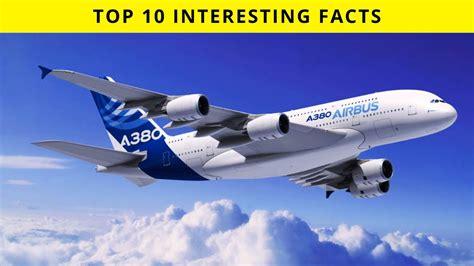
The Airbus A380, a double-deck titan of the skies, continues to fascinate aviation enthusiasts and travelers alike. Despite its production officially ending in 2021, its legacy as the largest commercial passenger aircraft ever built remains unrivaled. With an awe-inspiring design and fascinating engineering feats, the A380 was far more than just a big airplane—it was a flying marvel of modern aerospace ingenuity.
A Global Collaboration Built With Over Four Million Parts
The Airbus A380 is a logistical miracle. Comprising over four million individual components, it required parts from 1,500 companies in 30 different countries. Final assembly took place in Toulouse, France, but the journey there involved the global supply chain crisscrossing continents. For example, the nose and center fuselage were constructed in Saint-Nazaire, France; the aft fuselage and tail fin came from Hamburg, Germany; the horizontal tailplane originated in Cádiz, Spain; and the massive wings were built in Broughton, Wales.
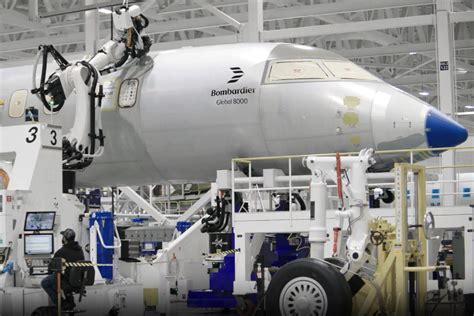
The aircraft’s extensive internal systems are just as impressive. It contains over 100,000 electrical wires—stretching more than 470 kilometers—alongside hydraulic piping totaling 40 km in length. Even painting the aircraft is a feat in itself: each A380 requires about 3,600 liters (950 gallons) of paint, adding roughly 650 kilograms to its weight.
Whisper-Quiet for a Giant: The A380’s Acoustic Mastery
Given its size and four powerful engines, many assume the A380 is a loud beast in the sky. In fact, it’s one of the quietest widebody aircraft flying today. Studies have shown that cabin noise on the A380 averages just 69.5 decibels, outperforming the Boeing 787 Dreamliner and the Airbus A350 in terms of in-cabin quietness.
This tranquility is achieved through carefully engineered noise reduction technologies and intelligent airframe design. As a result, the A380 meets ICAO Chapter 4 noise standards, coming in 16 EPNdB below the limit. This quietness led to an unexpected challenge: pilots often find it harder to sleep during their rest periods on long-haul A380 flights because ambient noises are more noticeable.
More Than Just Big: A Flying Building With Two Full Decks
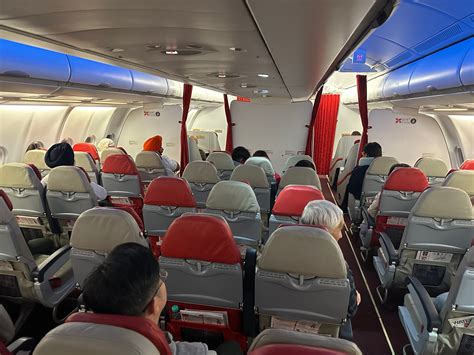
The A380 is the only commercial airliner with two full-length passenger decks. This configuration allows it to accommodate a floor area of 550 m², roughly equivalent to three tennis courts. In comparison, the Boeing 747’s iconic upper deck only spans part of the fuselage, giving the A380 40% more usable cabin space.
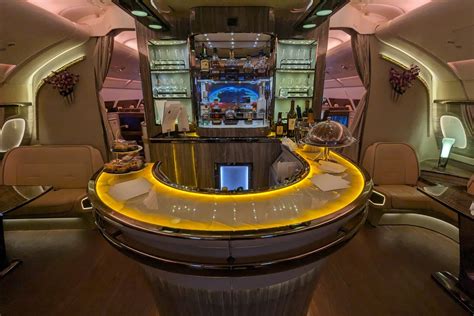
This enormous space enables airlines to offer features ranging from first-class suites and showers to onboard lounges and bars, especially in premium-heavy configurations. While the aircraft is certified to carry up to 853 passengers, most airlines configure it to seat about 525 in a three-class layout.
The Engines: A Promise Not Fully Delivered
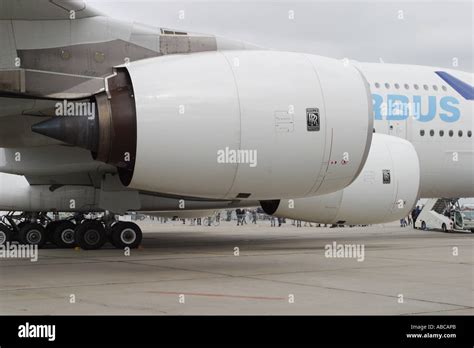
The A380 came with two engine options: the Rolls-Royce Trent 900 and the Engine Alliance GP7200. At the time, Airbus believed these engines would remain unmatched in efficiency for years. However, newer twin-engine jets like the Boeing 787 Dreamliner and the Airbus A350 soon outpaced the A380 in fuel efficiency.
According to former Airbus executive John Leahy, Airbus was “blindsided by the engine OEMs” when it turned out newer engines would offer up to 15% better specific fuel consumption. This efficiency gap significantly impacted operating costs and was a key reason the A380 was not favored by many airlines despite its capacity.
Only a Few Airports Can Handle the A380
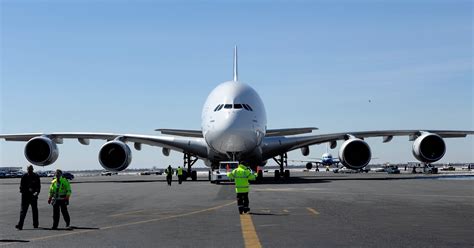
With a maximum takeoff weight (MTOW) of 575,000 kg and a wingspan just under 80 meters, the A380 is categorized under ICAO’s Code F, which is reserved for the largest aircraft. This classification meant that airports needed extensive modifications—reinforced runways, wider taxiways, and specialized gates—to accommodate it.
The aircraft features 22 wheels to distribute its immense weight evenly across runways and taxiways. Still, only about 140 airports worldwide were certified to receive the A380 at the height of its operations. Its sheer scale made it uneconomical for many airports to adjust infrastructure for a relatively small number of flights.
A Paint Job That Weighs Half a Ton
Painting an aircraft is typically a matter of branding and corrosion resistance. But for the A380, the paint job is a logistical challenge of its own. Requiring approximately 950 gallons (3,600 liters) of paint, a fully painted A380 adds 650 kilograms to its takeoff weight. The size and surface area involved mean that painting one aircraft can take up to two weeks to complete.
This adds not just to the aircraft’s weight, but to its fuel consumption, maintenance complexity, and downtime during repaints. Many airlines use specialized low-weight paint types to try and mitigate the added mass, but the numbers are still staggering.
Designed for Prestige, Not Profit
The A380 was a technical tour de force but a financial disappointment. Airbus invested an estimated $25–30 billion into its development, hoping to recoup the costs through at least 400 aircraft sales. In the end, only 251 units were delivered before the program ended in 2021.
Part of the issue stemmed from its limited customer base. Although over 15 airlines operated the type, Emirates accounted for nearly half of all A380 orders. Airbus eventually admitted that breaking even was never achieved, though it leveraged hard-earned lessons in the successful development of the A350 family.
Surprisingly Agile for Its Size
One of the less-discussed traits of the A380 is its impressive aerodynamic agility for an aircraft its size. Pilots often note its smooth handling characteristics during takeoff, cruise, and landing. Advanced fly-by-wire technology and intelligent control systems help manage the plane’s mass and balance effectively, providing a relatively comfortable ride even in turbulence.
Flight crews also report that automated systems in the A380 reduce pilot workload significantly. From automated fuel balancing to highly responsive autopilot modes, the aircraft feels as modern and nimble as smaller widebodies, despite weighing over 1.2 million pounds at takeoff.
A Giant With a Giant Carbon Footprint
While beloved by passengers for its comfort and quietness, the A380 struggled in an era increasingly dominated by environmental concerns. With four engines and high fuel burn rates, the A380 consumed around 11 to 13 tons of fuel per hour during cruise. This meant higher per-seat emissions than newer twinjets like the A350 or 787, which became a major factor in airlines phasing out the aircraft.
Airlines like Air France, Lufthansa, and Thai Airways retired their A380 fleets earlier than expected, citing carbon emissions and rising operational costs. Even Emirates has begun to scale back its A380 usage in favor of more efficient long-haul jets.
The End of an Era—But Not the End of the Aircraft
Although the A380 is no longer in production, it still plays a key role in long-haul aviation, especially for Emirates, which has invested heavily in maintaining and refurbishing its fleet. Recent trends show growing demand for ultra-premium travel and post-pandemic resurgence in long-haul routes, potentially giving the A380 a longer lease on life than once expected.
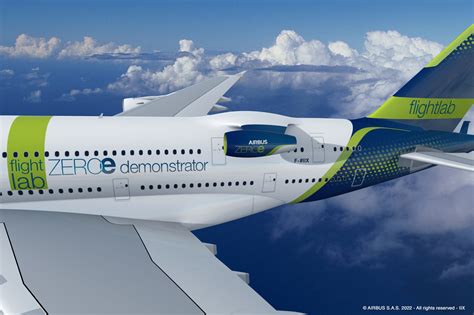
Airbus has also initiated sustainability trials using the A380 as a testbed for hydrogen-powered engines under its ZEROe program, hinting that the superjumbo’s legacy could help shape the next generation of green aviation.
Final Thoughts
The Airbus A380 is much more than the sum of its parts—though there are over four million of them. From its unprecedented size and whisper-quiet interior to its complex engineering story, it remains one of the most ambitious aviation projects ever undertaken. While it may not have succeeded financially, its contribution to aeronautical design, passenger comfort, and industry innovation will be remembered for decades to come.