As the number of satellites in Earth’s orbit surpasses 11,000 and rapidly climbs, the gap between what we learned in school and what satellites can now do has never been wider. Satellites are no longer static machines quietly circling above us. They are dynamic, intelligent systems pushing the boundaries of science, communication, and even manufacturing. In this article, we reveal five surprising truths about satellites that are shaping the future — facts that textbooks never covered.
Satellites Are Becoming Space Factories
Once limited to cameras and communication arrays, satellites are now morphing into factories in orbit. While manufacturing experiments aboard the International Space Station have been ongoing for decades, private companies have now entered the arena, launching dedicated satellites for in-space manufacturing.
In Spring and Summer of 2025, Varda Space launched three satellites aimed at testing orbital production systems. These satellites aren’t merely testbeds — they actively conducted trial runs of small molecule crystals with applications in the pharmaceutical industry. These crystals are notoriously difficult to produce under Earth’s gravitational conditions, but microgravity offers a pristine environment where structures form with unmatched purity and precision.
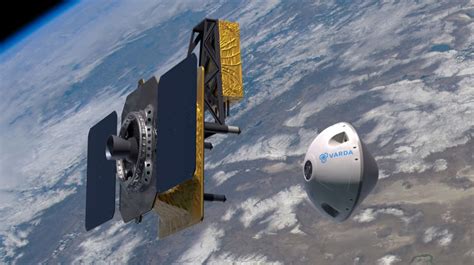
Similarly, Space Forge, a Welsh startup, made headlines in June 2025 with the launch of ForgeStar-1, its first in-orbit satellite factory. Its focus? Exploring semiconductor manufacturing, a process that benefits significantly from the microgravity environment. Additionally, Space Forge is innovating in reentry tech, testing a reusable heat shield named Pridwen, inspired by King Arthur’s legendary shield. This development could dramatically lower the cost and environmental impact of returning materials to Earth.
Seeing Through Clouds and Darkness: SAR is Revolutionizing Satellite Vision
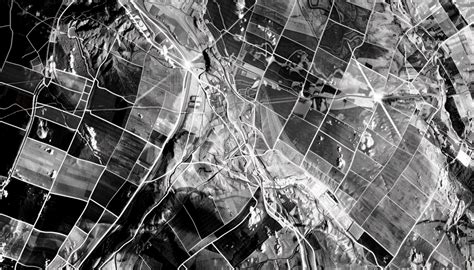
In the early days of space exploration, satellite imaging was constrained by weather, cloud cover, and nightfall. Those days are gone, thanks to the incredible capabilities of Synthetic Aperture Radar (SAR). Unlike traditional cameras, SAR systems generate images using radar signals that can penetrate clouds, darkness, and even some physical surfaces.
The real-world implications of SAR became globally recognized during the early phases of the Russia-Ukraine conflict. Satellites equipped with SAR, such as those operated by Capella Space and Maxar Technologies, unveiled troop deployments and battlefield changes even during snowstorms and cloud cover. This marked a shift in how governments, NGOs, and civilians witness conflict and disasters in near real-time, regardless of environmental barriers.
Today, SAR imaging is central to disaster response, infrastructure monitoring, and environmental conservation — enabling rapid assessment during floods, landslides, and wildfires.
From Trains to Swarms: Satellite Formations Are Evolving
Satellites were once solitary travelers in the void. The 20th-century model of a single satellite per orbit gave way to trains and constellations, as seen in GPS and Starlink networks. These constellations provided expanded coverage but operated within fixed, predictable formations.
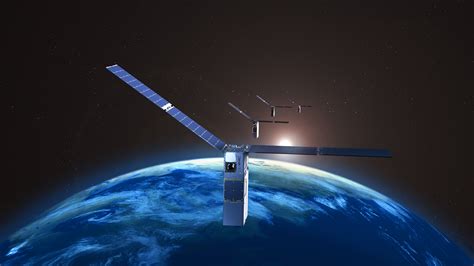
The next frontier is autonomous swarming. In contrast to static constellations, swarms are dynamic, decentralized clusters of satellites that can independently coordinate movements. The NASA STARLING project has been at the forefront of this transformation, testing how satellite swarms can communicate in real-time and adjust their orbits to maintain formation — or to dodge hazards.
This capability is vital because of the growing threat posed by space debris and the sheer density of active satellites. Swarming allows satellites to make on-the-fly decisions, optimizing mission efficiency while avoiding collisions.
Satellites Are Learning to Dodge Collisions on Their Own
With thousands of active objects in orbit, the risk of satellite collisions has become a critical concern. While current systems rely on Space Situational Awareness (SSA) — which sends data from space to Earth for analysis and back again — this process introduces dangerous delays.
Companies like SpaceX have implemented automated collision avoidance systems in their Starlink satellites. Yet, human operators are still involved in decision-making, leaving room for error and latency.
The paradigm is shifting. The NASA STARLING project (also mentioned above) isn’t just about swarm coordination; it’s also pioneering onboard decision-making systems. These new satellites use peer-to-peer data exchange to assess threats and change course — without human input. This enables split-second reactions, a crucial edge in today’s crowded orbital highways.
Eventually, we are heading toward a future where satellites act as autonomous agents, using real-time data to navigate a chaotic environment of moving targets, derelict satellites, and unpredictable debris.
X-Ray Vision in Space Is No Longer Sci-Fi
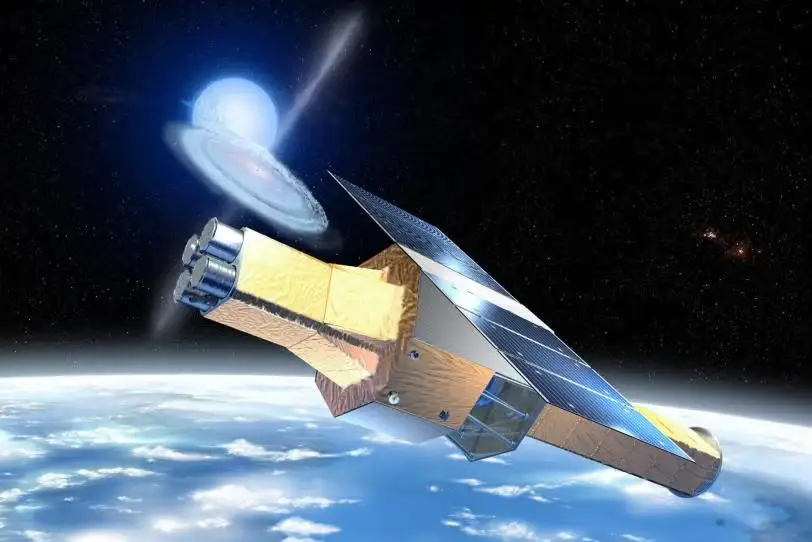
Satellites have long captured X-ray emissions from deep space, advancing astrophysics and uncovering cosmic phenomena. But a bold new chapter has begun: X-ray vision is now being used to look inside satellites themselves.
In 2025, startup ThinkOrbit announced the development of a satellite equipped with X-ray imaging technology designed to inspect other satellites in orbit. This isn’t just about diagnostics — it’s a strategic capability in the modern space race. Being able to remotely analyze a satellite’s internals can help identify whether it’s simply damaged or has been deliberately sabotaged or hit by debris.
Such a feature is especially vital as space becomes increasingly militarized and contested. Nations and private entities alike are investing in the capacity to monitor orbital assets, detect tampering, and assess malfunctions without the costly step of physical repair missions. This also opens doors for robotic repairs, enabling AI-driven servicing spacecraft to evaluate and mend their orbital cousins.
The Future is Already Orbiting
While school lessons often focus on the historical achievements of satellites — like Sputnik or the Hubble Telescope — the reality above us is evolving at warp speed. Satellites today are factories, sensors, guardians, and explorers, equipped with capabilities that stretch the imagination.
From producing next-generation pharmaceuticals and semiconductors, to seeing through storms, dodging debris, and even diagnosing other satellites from a distance, the satellite of today is no longer a passive tool. It is a highly intelligent, adaptive machine, integral to how we communicate, understand our planet, and safeguard our interests in space.
The sky is not the limit — it’s just the beginning.