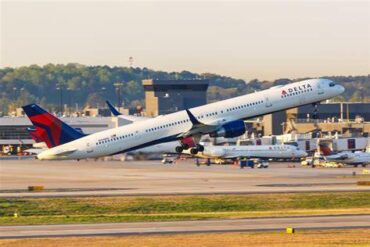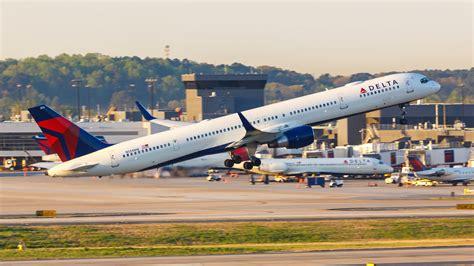
The Boeing 757-300, once a symbol of ambitious narrowbody expansion, is now rapidly vanishing from the schedules of its two last major U.S. operators: Delta Air Lines and United Airlines. As these airlines gradually phase out this long, slender twinjet, a chapter in American commercial aviation is quietly closing.
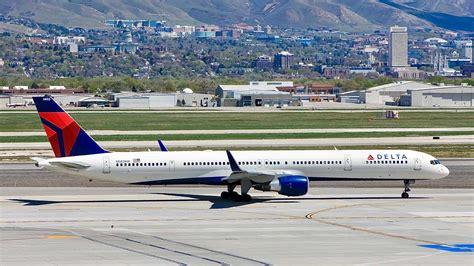
Despite its rarity, the 757-300 has carved a cult following among aviation enthusiasts. It is the longest single-aisle twinjet Boeing has ever built, stretching 178 feet and 7 inches, a full 23 feet longer than the 757-200, and offering 20% more seating capacity. Only 55 units were ever produced, which makes its survival into 2025 nothing short of remarkable. Yet, as the calendar flips toward the end of the year, the numbers paint a story of sharp decline.
Delta and United’s Shrinking 757-300 Footprint
According to Cirium data, Delta and United together are operating just 2,503 Boeing 757-300 flights in December 2025, down from 3,193 flights in the same month in 2024. That’s a 21.6% reduction in total flights. Correspondingly, available seat capacity has dropped from 747,162 to 585,702, underscoring the airlines’ decreasing reliance on this unique airframe.
Delta, based in Atlanta, is operating 1,404 flights with the type this December—14.8% fewer than last year. United, headquartered in Chicago, is flying 1,099 flights, a staggering 28.9% decrease. The diverging pace of decline between the two signals distinct strategic shifts within each carrier’s fleet planning model.
Delta Air Lines: Stretching the Legacy
Delta operates a fleet of 16 Boeing 757-300s, with an average aircraft age of 22.9 years. This sub-fleet, though aging, continues to support high-volume domestic leisure routes. The aircraft is configured with 234 seats, divided between 24 first-class recliners and 210 economy seats, including 54 Comfort+ extra-legroom seats.
The hub most associated with Delta’s 757-300 deployment is Orlando International Airport (MCO). In December, Delta plans to fly the aircraft 125 times from Detroit (DTW) and 109 times from Minneapolis (MSP) to Orlando. These high-demand routes are emblematic of the aircraft’s use: routes too thin for a widebody but too busy for smaller narrowbodies.
Other routes seeing significant 757-300 presence include:
- Minneapolis to Phoenix (PHX)
- Detroit and Minneapolis to Fort Myers (RSW)
- Detroit to Fort Lauderdale (FLL)
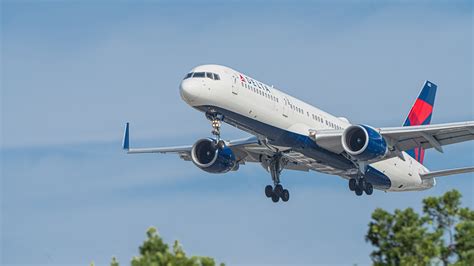
This focused deployment reflects Delta’s strategy of maximizing aircraft efficiency on popular leisure routes while methodically retiring older jets as newer, more fuel-efficient models like the Airbus A321neo enter service.
United Airlines: A Quicker Exit
In contrast, United Airlines is retiring its 757-300s at a faster clip. With 21 of the type still listed on its books—averaging 23.4 years old—the airline has significantly trimmed its 757-300 utilization. Like Delta, United configures these aircraft with 234 seats split between 24 domestic first and 210 economy, though their deployments differ.
United’s Chicago O’Hare (ORD) hub serves as the main base for these jets. High-frequency services include:
- 78 flights to San Francisco (SFO)
- 73 to Los Angeles (LAX)
- 43 to Denver (DEN)
- 45 round-trip flights to Honolulu (HNL) from both LAX and SFO

This spread shows United’s use of the aircraft to bridge transcontinental and Hawaii markets where demand spikes seasonally. However, with a nearly 29% drop in 757-300 usage, United is clearly accelerating its fleet modernization path, leaning heavily into Boeing 737 MAX 10 and Airbus A321XLR commitments.
Aging Airframes and the Inevitable Phase-Out
Both Delta and United have larger fleets of the shorter Boeing 757-200—Delta with 94 units, United with 40—but even those are aging. The lack of a true 757-300 successor means these stretched jets have endured longer than expected, especially in niche high-demand roles.
But maintenance costs are rising. Component fatigue, outdated avionics, and carbon footprint concerns are nudging airlines toward new-generation narrowbodies. The long single-aisle layout also poses operational inefficiencies, especially during boarding and deplaning. While the aircraft’s impressive range and payload make it ideal for specific missions, the economics no longer justify fleet-wide retention.
Final Opportunities to Fly a Legend
Passengers and aviation photographers keen on experiencing or capturing the 757-300 should act soon. The aircraft still serves several popular U.S. destinations this winter, but its presence is becoming increasingly sporadic. By 2026, it’s likely that the number of operating aircraft will dip below ten per airline, if not lower.
These long, narrow jets once symbolized Boeing’s ambition to push single-aisle capabilities to their limits. Now, they represent a closing chapter in aviation history—a reminder of a time when speed, capacity, and reach came together in a uniquely proportioned package.