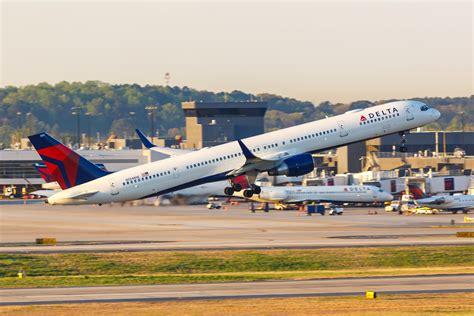
Delta Air Lines remains a dominant force in the skies with its Boeing 757-300, a rare yet highly strategic asset in its domestic fleet. As the second-largest global operator of this long, slender narrowbody aircraft—affectionately dubbed the “flying pencil”—Delta strategically deploys its 16 aircraft for high-capacity, high-demand U.S. routes, especially during peak travel seasons.
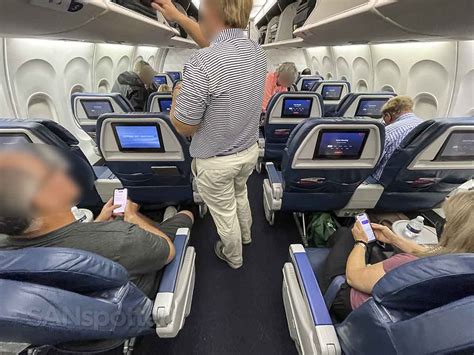
With an average age of 23 years, these aircraft, inherited from Northwest Airlines, are fully paid off and now set for refurbishment. Despite their age, they are among the most efficient in Delta’s narrowbody portfolio, offering 234 seats across three cabins: 24 in Domestic First, 38 in Comfort+, and 172 in the Main Cabin. Thanks to their higher seat density, these jets outpace even some of Delta’s widebodies, including the A330-200 and 767-300ER.
The 757-300 Advantage: High Capacity Meets Efficiency
The 757-300 holds a unique position in Delta’s lineup, occupying the “middle-of-the-market” sweet spot. It boasts 19% more payload capacity than its 757-200 sibling with only a 7% increase in takeoff weight, making it an economic workhorse. With lower seat-mile costs and robust performance, it’s an ideal solution for leisure-heavy, high-density markets.
What makes this aircraft particularly valuable is its adaptability. It’s just as capable flying from bustling northern hubs to Florida’s sun-drenched shores as it is bridging large city pairs in the Midwest and Southwest. During the first quarter of 2026, the 757-300 operates exclusively domestic routes, many of them key leisure corridors. Notably, Florida dominates the list of destinations, cementing its place as a seasonal powerhouse.
Delta’s Top 10 Must-Fly 757-300 Routes Revealed
Between January and March, Delta schedules 18 routes using the 757-300, though only ten routes see consistent and frequent service. A closer look reveals that Minneapolis and Detroit serve as the key origin points, while Orlando, Fort Lauderdale, Fort Myers, Tampa, Phoenix, and Las Vegas round out the most popular destinations.
Let’s break down Delta’s most important 757-300 routes by frequency:
- Detroit to Orlando: Delta’s top 757-300 route with a 66% usage rate. With three to five daily flights, this corridor is a winter escape pipeline for Michigan travelers.
- Minneapolis to Orlando: Holding second place, with 56% of flights on the 757-300. The demand from Minnesota to Florida’s family-friendly theme parks is relentless.
- Detroit to Fort Lauderdale: At 50% 757-300 share, this route caters to retirees and snowbirds heading south.
- Minneapolis to Fort Myers: A 51% share highlights the popularity of Florida’s Gulf Coast.
- Detroit to Fort Myers: With 38% of flights operated by the 757-300, this route serves a similar demographic.
- Detroit to Tampa: 33% of flights reflect strong demand to another of Florida’s major leisure hubs.
- Minneapolis to Phoenix: A non-Florida standout with a 30% share, this corridor serves both leisure and seasonal residents.
- Minneapolis to Las Vegas: Only 24% of flights are on the 757-300, but it underscores Delta’s push into entertainment-driven travel.
- Minneapolis to Fort Lauderdale: Operating daily from early January, this route sees a 31% share on the 757-300.
- Minneapolis to Tampa: Although at the bottom of the top ten with a 20% share, it reflects Florida’s dominance in the winter network.
Strategic Absences: Where the 757-300 Isn’t Flying
Interestingly, major Delta hubs such as Atlanta, Boston, Los Angeles, Salt Lake City, and New York-JFK do not appear prominently in Q1’s 757-300 deployment. While Atlanta remains Delta’s flagship hub, its 757-300 activity saw a staggering 73% year-over-year reduction, while Detroit declined by 17%.
Instead, Delta shifted more of the 757-300s to Minneapolis, which saw a 34% increase in movements. This realignment points to changing demand patterns and suggests Delta is optimizing aircraft based on evolving seasonal trends and load factors.

Year-over-Year Performance: Subtle Shifts, Clear Intent
Delta’s overall 757-300 usage declined by 8% in Q1 2026 compared to the same period in 2025. While the reduction is notable, it is far less drastic than the 25% drop across Delta’s entire 757 fleet, driven primarily by the retirement of many 199-seat 757-200s.
Importantly, the average stage length of 757-300 flights has increased to 1,034 nautical miles (1,915 km), suggesting that these jets are being deployed on longer missions, enhancing their cost-effectiveness and matching the aircraft’s strengths with appropriate routes.
Delta’s commitment to the 757-300 is evident in its plan to refurbish the cabin interiors, extending the operational life of these aircraft well into the next decade. The move ensures that Delta retains a high-capacity narrowbody solution as it continues to retire aging 757-200s and A320ceos without immediate replacements.
The Future of Delta’s Flying Pencil Fleet
Though the Boeing 757-300 was never a commercial blockbuster—with only 55 units built—Delta’s strategic use of the aircraft underscores its importance. By fine-tuning deployment to key seasonal markets and maximizing aircraft economics, Delta secures a competitive edge in domestic leisure travel.
As the airline prepares for further fleet modernization, the 757-300 will continue to fill the capacity void until new-generation replacements arrive. In the meantime, travelers seeking comfort, reliability, and frequency to top-tier vacation destinations would do well to book a flight aboard Delta’s flying pencil while they still can.