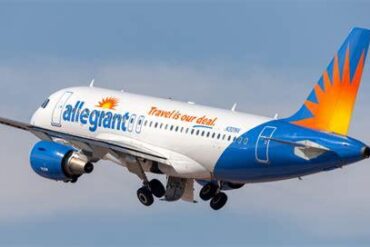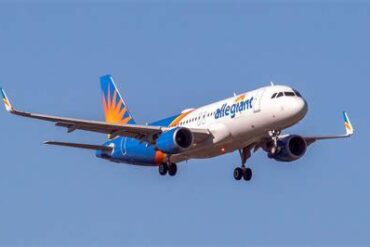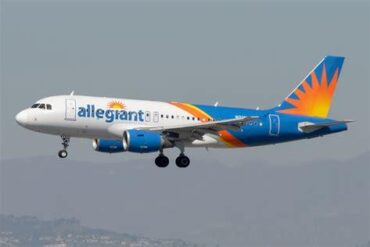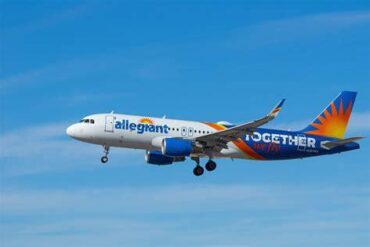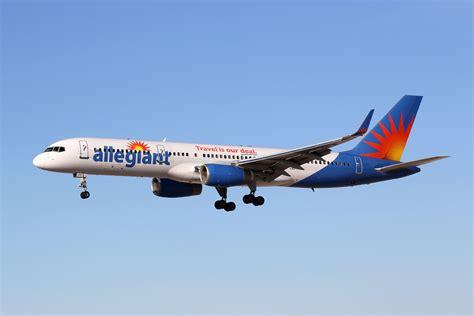
Allegiant Air is now widely recognized for its fleet of Airbus A320 family aircraft and its focus on connecting smaller US cities with popular leisure destinations. However, before the airline became an almost entirely Airbus-focused operator, it experimented with a much larger aircraft type that seemed unusual for its low-cost business model: the Boeing 757-200.
The appearance of the Boeing 757 in Allegiant’s fleet during the 2010s was not a random fleet decision. The airline introduced the aircraft for a very specific purpose: opening long-distance leisure routes that its existing McDonnell Douglas MD-80 fleet could not operate. The 757 provided the range, passenger capacity, and operational capability needed to expand into new markets, especially flights from the US mainland to Hawaii.
Why Allegiant Air Needed the Boeing 757
During the late 2000s and early 2010s, Allegiant Air built its business around a simple strategy: connecting underserved smaller cities with attractive vacation destinations. The airline’s MD-80 aircraft were affordable to operate and suited many domestic routes, but they had limitations. Long overwater missions, particularly flights to Hawaii, were beyond their practical capabilities.
The Boeing 757-200 solved this problem. The aircraft offered significantly greater range than Allegiant’s existing fleet and could carry more passengers on high-demand leisure routes. More importantly, the specific 757s acquired by Allegiant were equipped for Extended-range Twin-engine Operations (ETOPS), allowing them to perform long overwater flights required for Hawaii services.
In March 2010, Allegiant announced plans to acquire its first Boeing 757 aircraft from Thomson Airways, a UK-based leisure carrier. The aircraft were purchased second-hand but had remained with Thomson since their original delivery from Boeing. For Allegiant, the acquisition represented a major investment, with costs estimated between $75 million and $90 million for purchasing and preparing the aircraft.
Allegiant’s leadership viewed the 757 program as an extension of its existing low-cost leisure strategy. The aircraft allowed the airline to serve major vacation markets while continuing its focus on departures from smaller communities rather than traditional large airline hubs.
Allegiant Air’s Hawaii Expansion With the 757
The primary reason behind Allegiant’s Boeing 757 acquisition was Hawaii. The Hawaiian market represented a significant opportunity because millions of travelers from the mainland US seek vacation flights to destinations such as Honolulu and other islands.
The 757 gave Allegiant the ability to launch routes that were previously impossible with its MD-80 fleet. The aircraft’s combination of long range, narrowbody efficiency, and high passenger capacity made it a practical choice for leisure operations.
Unlike widebody aircraft commonly used on many Hawaii routes, the Boeing 757 offered Allegiant a lower-capacity alternative that matched its business model. The airline could operate nonstop flights without committing to the larger aircraft and higher costs associated with traditional long-haul operations.
Allegiant’s Boeing 757 Fleet and Route Network
Allegiant eventually operated six Boeing 757-200 aircraft. The first example, registered as N902NV, arrived in May 2010, while the final aircraft joined the fleet in November 2012. The 757 fleet reached its peak operational activity in 2013, when Allegiant operated thousands of flights with the type.
Historical fleet data shows that Boeing 757 operations increased rapidly after introduction. In 2011, the aircraft completed only a handful of flights, but by 2013, Allegiant’s 757 operations reached nearly 2,900 flights annually. The aircraft became an important part of the airline’s network strategy.
In 2013, some of the busiest 757 routes included flights from Las Vegas to destinations such as Bellingham and McAllen. The airline also operated flights between Las Vegas and Honolulu, demonstrating the aircraft’s original purpose as a gateway to Hawaii.
The Boeing 757 allowed Allegiant to diversify beyond its traditional short-haul network. It created opportunities to serve larger leisure markets while maintaining the airline’s unique approach of flying from smaller airports.
Why Allegiant Retired the Boeing 757
Although the Boeing 757 was successful operationally, the aircraft faced the same challenge affecting many aging jets: maintenance costs. By the middle of the 2010s, Allegiant’s 757 fleet was approaching major maintenance requirements, including expensive D-check inspections.
Rather than investing heavily in aging aircraft, Allegiant decided retirement was the more economical option. The airline gradually reduced Boeing 757 operations, and the final examples left the fleet in October 2017.
The retirement reflected Allegiant’s broader strategy of simplifying its fleet. Operating fewer aircraft types reduces training requirements, maintenance complexity, and operational costs. The airline ultimately returned its focus to Airbus A319 and A320 aircraft.
Allegiant’s Return to Boeing Aircraft
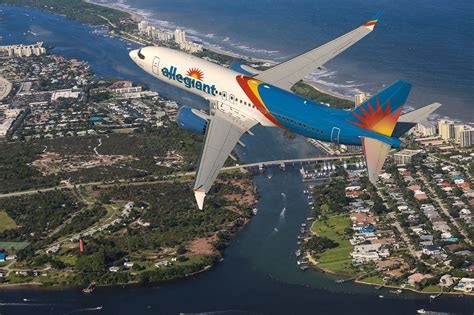
Although Allegiant moved away from the 757, Boeing aircraft eventually returned to the airline’s fleet. In recent years, the carrier introduced the Boeing 737 MAX 8, including the high-density MAX 8-200 variant.
The modern 737 MAX represents a completely different approach from the 757 era. Instead of using a larger aircraft to open specialized long-range leisure markets, Allegiant is using newer, fuel-efficient aircraft to support future growth and reduce operating expenses.
The Boeing 757 chapter remains an interesting part of Allegiant Air’s history. It showed that even an ultra-low-cost carrier known for simplicity was willing to experiment when a specific market opportunity justified the investment. Although the aircraft served for only several years, the 757 helped Allegiant reach Hawaii and expand its leisure network in ways that would have been impossible with its earlier fleet.