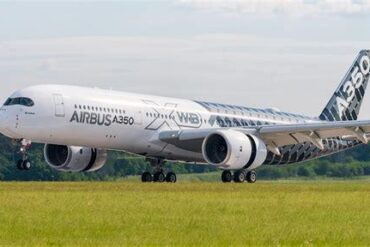
Airbus has moved its long-speculated aircraft stretches from the realm of rumor into a defined planning window. Speaking at the manufacturer’s Toulouse headquarters during the unveiling of the 2026–2045 Global Services Forecast, Airbus Commercial Aircraft CEO Lars Wagner told assembled media that a decision on stretching both the Airbus A220 and the Airbus A350 will be taken before 2030, closing a question that has trailed both programs throughout the year. Wagner was unambiguous about where the pressure is coming from, stating plainly that there is “clearly” a demand for longer A220s and A350s from the industry, and that airline chief executives raise the subject with him directly when he travels.
The Toulouse briefing covered far more ground than forecasts alone. Wagner fielded questions on stretched variants, future propulsion pathways, and the long-term outlook for the Airbus A380 fleet still in service, but it was the stretch question that carried the most commercial weight. The logic behind it is straightforward: with the A380 and the Boeing 747 both out of production, carriers needing very large capacity have nowhere left to turn except existing twin-aisle families. Emirates and other large widebody operators have been vocal on that point for years, and their frustration has not softened with time.
The Widebody Case: Why Airlines Keep Pushing For A Longer A350
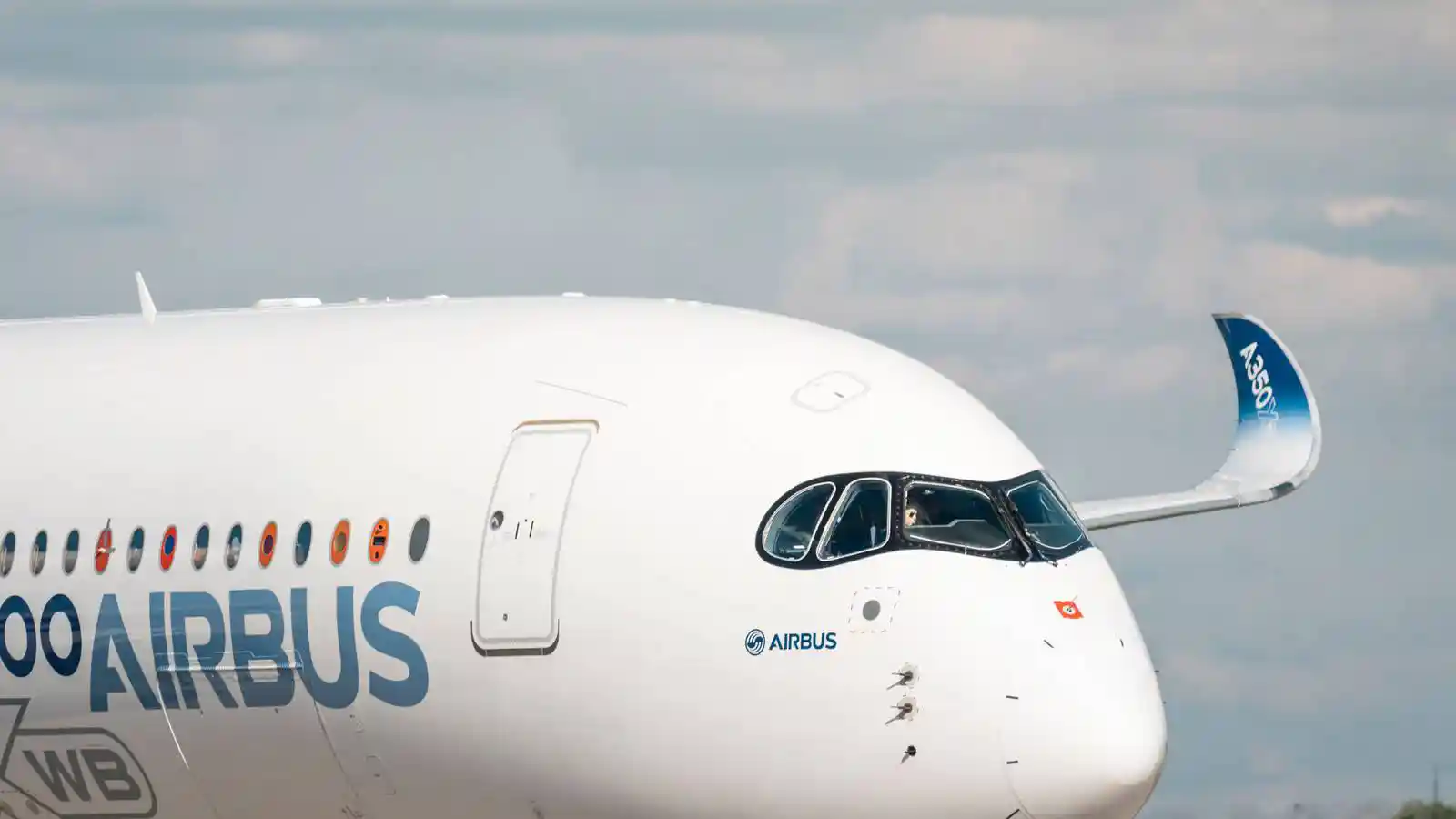
Wagner’s predecessor, Christian Scherer, confirmed at the previous Dubai Airshow that Airbus was already exploring options for a larger A350 variant, and those ambitions have survived the leadership transition intact. Addressing the media in Toulouse, Wagner returned to the theme and then sharpened his position during the Q&A that followed. “When I travel the world, when I see our customers, the airline CEOs are asking us,” he said, adding that “there’s clearly a demand with our high-tier customers for a longer and stretched A350.” The phrase high-tier customers matters, because it signals that the demand originates with the airlines that buy in volume and define a variant’s business case from the first order.
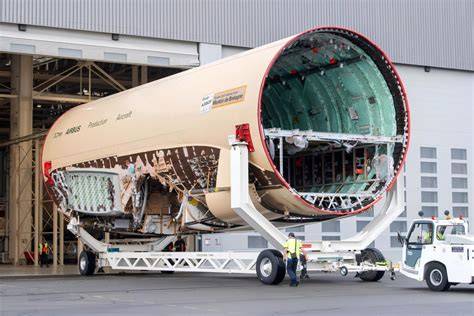
A stretched A350 is not a simple fuselage plug, however, and the engineering constraints are substantial. The A350F freighter, whose initial test aircraft flew for the first time only two weeks ago and now faces roughly 400 hours of flight testing, was announced five years ago in 2021 — a useful reminder of how slowly a derivative moves from announcement to certification. That freighter shares its engine type with the A350-1000, but a stretched A350 would require an entirely new propulsion solution. Rolls-Royce has previously indicated that a stretch would need as much as seven years of engine development time, which alone shapes any credible launch timeline.
A220-500 Demand Builds As Airbus Weighs Profitability Against Range
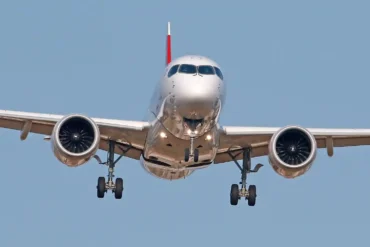
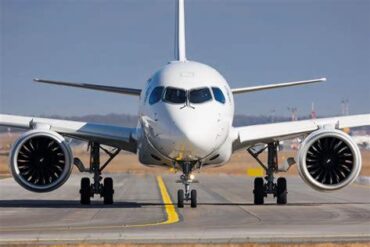
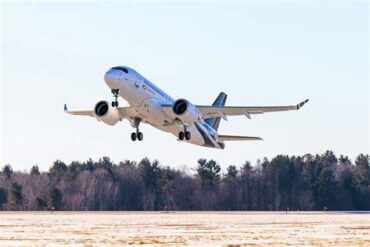
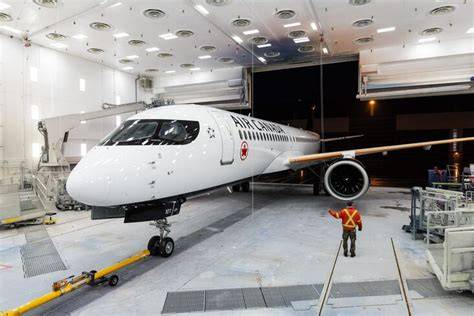
Demand for a larger A220 is not confined to widebody operators. Talk of an A220-500 has been persistent through the summer, and Airbus has consistently declined to rule the variant out without committing to it. Wagner maintained that posture in Toulouse, acknowledging that “there’s clearly a demand for a longer and a stretched 220.” His counterpart at Airbus Canada, CEO Guillaume Chevasson, reinforced the point during a June visit to the manufacturer’s Mirabel site, explaining that stretch studies had been accelerated and that the year had brought “a particular focus on it,” with internal engineering discussions well advanced and a stated intent to be ready to decide soon.
That eagerness is tempered by real trade-offs. A longer A220 must balance additional capacity against range, field performance, and the unit economics that made the aircraft attractive to operators in the first place, and Airbus is weighing demand against profitability before it commits. The narrowbody and widebody decisions will most likely be taken separately, since they involve different engineering teams, different suppliers, and different customer bases.
Production Capacity Is The Hidden Constraint On Any A350 Stretch
One complication sits outside the design office entirely. The A350 order book currently stretches into the 2030s, which means Airbus must expand production capacity before it can absorb the additional demand a stretch variant would generate. Launching a larger aircraft into a backlog that is already spoken for risks delaying existing customers rather than winning new ones, and that arithmetic weighs heavily on the pace of any board approval. Wagner framed the trigger condition in commercial terms rather than calendar terms: “The market is demanding these products, so we obviously don’t want [the launch] to be at the end of a five-year time frame. We decide when we have a business case. We decide when we go [for approval] to the board, but it won’t be 2030.”
Reading the sequencing, an A220 stretch appears the likelier first mover. It carries no engine redevelopment problem of comparable scale, its engineering studies are further along, and its customer base is pressing for a larger narrowbody that can sit beneath the A320neo family without cannibalizing it. The A350 stretch is the bigger prize and the harder problem, requiring new engines, added industrial capacity, and a board willing to commit capital to a segment where demand is loud but the timeline is long. What Wagner has now provided is something the market has lacked for months: not a launch date, but a deadline for deciding.