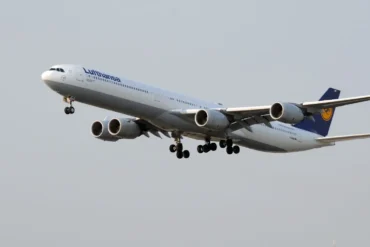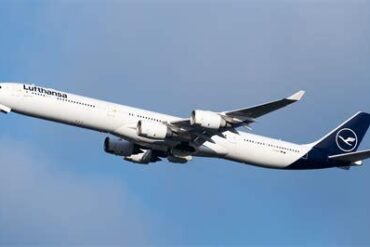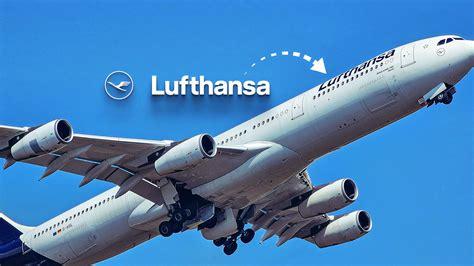
Lufthansa, Germany’s iconic flag carrier, continues to capture the aviation world’s attention with its enduring use of the Airbus A340, an aircraft that many believed would have vanished from the skies by now. In a time when most major airlines have shifted to more fuel-efficient twinjets, Lufthansa’s choice to retain this quadjet raises questions about strategy, necessity, and resilience. With 22 Airbus A340s still active—15 A340-300s and 7 A340-600s, boasting an average age of over 23 years—the airline’s fleet composition tells a story of adaptation amid global challenges.
The Airbus A340’s survival in Lufthansa’s fleet is far from a romantic attachment to a bygone era. Instead, it reflects practical realities shaped by fleet transition delays, booming demand for long-haul travel, and the unique operational advantages of this aircraft. After the COVID-19 pandemic, when airlines globally retired older widebodies, Lufthansa made a decisive move: reactivating part of its A340 fleet to bridge the gap created by delayed deliveries of next-generation aircraft such as the Airbus A350 and Boeing 787. This bold choice provided immediate capacity, particularly for premium-heavy routes, at a time when demand rebounded faster than supply chains and production schedules could adjust.
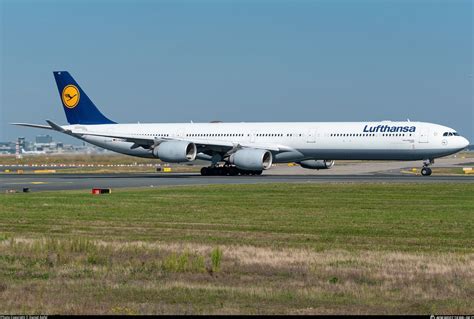
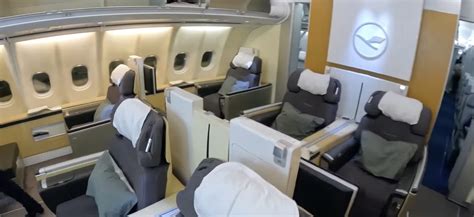
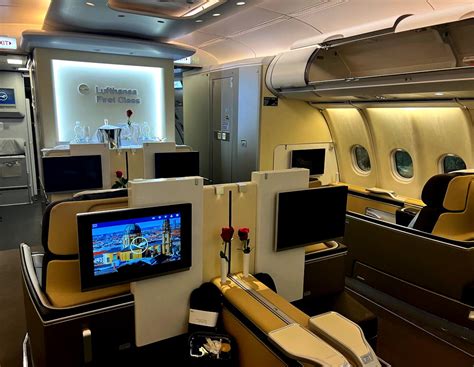
A major factor sustaining the A340’s role is its premium configuration. The A340-600, in particular, features a first-class cabin and spacious business class layout, making it ideal for routes where premium demand outpaces capacity. Destinations like Boston, Hong Kong, and Riyadh benefit from this aircraft’s generous seating design. Furthermore, deploying an existing aircraft that already meets Lufthansa’s service standards, rather than reconfiguring a newer jet, avoids costly downtime and complex logistical planning.
The four-engine design of the A340 offers operational flexibility that modern twinjets don’t fully replicate. Its ability to fly over remote regions and its high-altitude performance make it a reliable option on certain routes. This is particularly relevant as Lufthansa operates out of hubs like Frankfurt and Munich, connecting to destinations where diversion options are limited or where extra engine redundancy provides peace of mind.
Nonetheless, Lufthansa has made it clear: the A340’s days are numbered. The airline’s official timeline points to 2026 as the swan song for this storied aircraft, with the final flight scheduled from Riyadh to Frankfurt on January 12, 2026. This retirement aligns with the broader fleet modernization strategy, ushering in a future dominated by A350s, 787s, and eventually the Boeing 777X. The temporary reprieve granted to the A340 is purely tactical, buying time for new aircraft to arrive and integrate into operations smoothly.
While the A340 offers advantages in premium cabin density and operational familiarity, its shortcomings are pronounced. The aircraft consumes more fuel, emits more CO2, and incurs higher maintenance costs than its modern counterparts. In an age where sustainability targets are central to airline strategies, the A340 represents a necessary compromise rather than an ideal solution. Environmental critics argue that its continued use is at odds with Lufthansa’s public commitments to carbon neutrality.
Technically, the Airbus A340-600 measures 247 feet 3 inches in length and has a maximum takeoff weight (MTOW) of 811,000 pounds. It cruises at Mach 0.86 and offers a range of 7,700 miles, while typically seating 281 passengers in a configuration that includes First, Business, Premium Economy, and Economy classes. Compared to the twin-engine Airbus A330-300, the A340’s superior range and capacity are offset by its higher fuel burn and operational costs.
The aviation world watches as Lufthansa expertly balances short-term operational needs with long-term transformation. The airline’s use of the A340 is not a nostalgic holdover but a pragmatic response to industry challenges. Delayed aircraft deliveries, evolving passenger demand, and premium route requirements have extended the life of this four-engine giant beyond what many forecasted. For now, passengers on select long-haul routes may continue to experience the quiet cabin and smooth ride of the A340—until Lufthansa’s next-generation fleet fully takes flight.