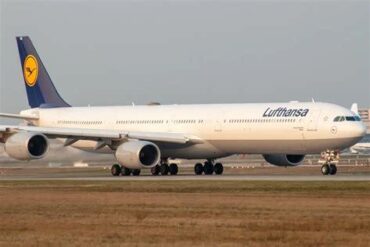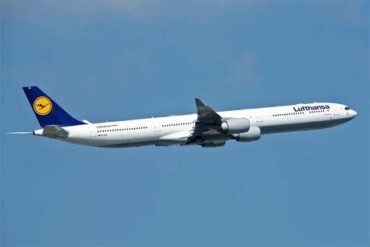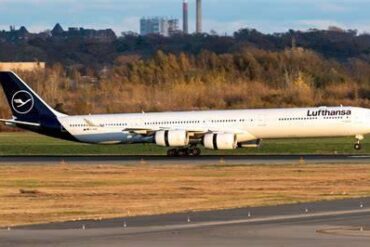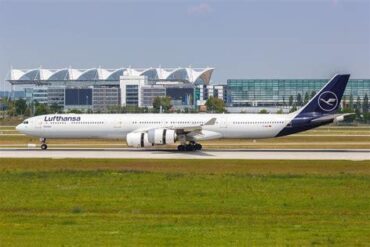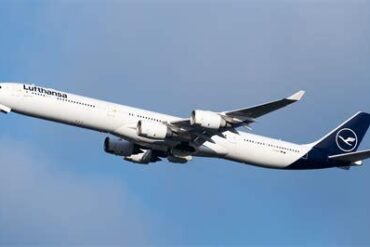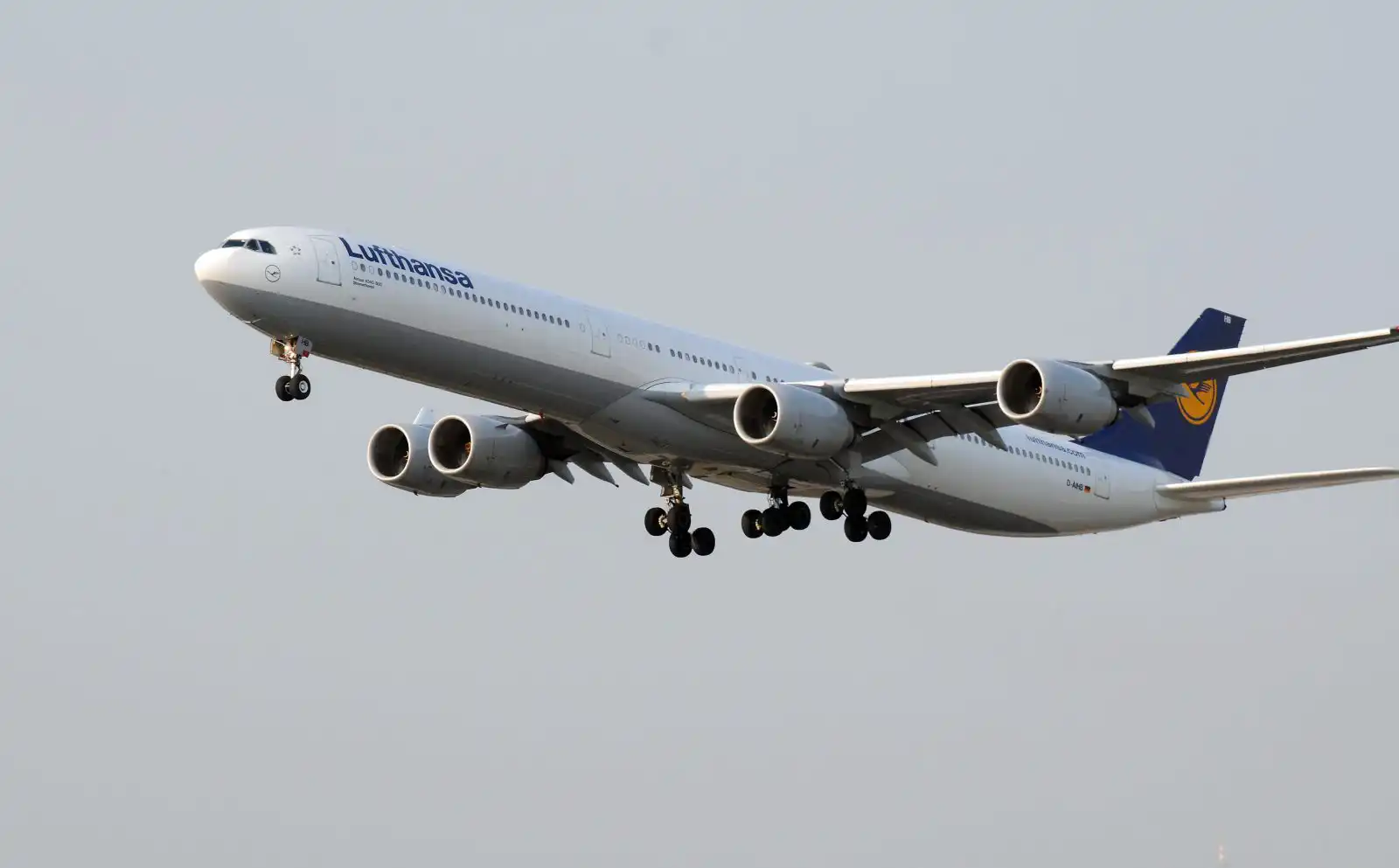
The Airbus A340-600 was never supposed to survive this long at Lufthansa. In the airline industry’s original modernization roadmap, the elegant four-engine giant would already be sitting in retirement deserts by 2026, replaced by a new generation of ultra-efficient Boeing 777X aircraft. Instead, the opposite happened. Lufthansa unexpectedly found itself depending on the very aircraft it had spent years trying to phase out.
That contradiction defines the strange final chapter of the A340-600. It is simultaneously one of Lufthansa’s most strategically important aircraft and one of its most financially punishing. In an industry obsessed with fuel efficiency, fleet simplification, and lower emissions, the A340-600 has become an expensive survivor from another era. Yet without it, Lufthansa’s premium long-haul network would be dangerously exposed.
The aircraft’s continued operation is not driven by nostalgia. It is driven by necessity. Delays surrounding the Boeing 777-9 certification program created a capacity crisis for Lufthansa at exactly the wrong moment. International travel demand rebounded faster than expected, premium cabins recovered aggressively across the Atlantic, and Lufthansa suddenly lacked enough large aircraft to protect its most profitable routes.
Instead of retiring the A340-600 quietly, Lufthansa was forced to give the aircraft one final extension of life. The result is one of the most fascinating fleet paradoxes in modern aviation.
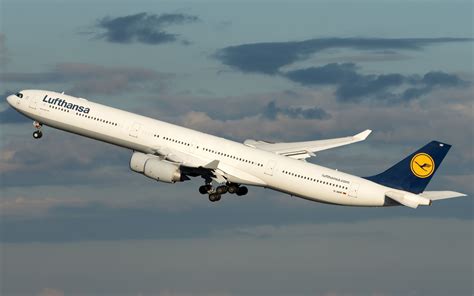
For aviation enthusiasts, the sight of an A340-600 lifting off from Frankfurt remains majestic. For Lufthansa’s finance department, every departure likely feels like watching a stack of euros ignite inside four Rolls-Royce Trent engines.
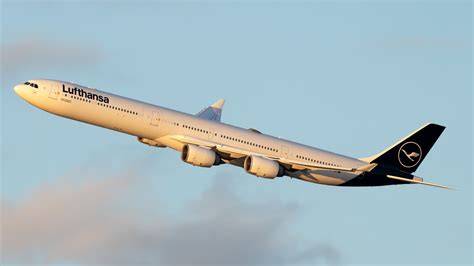
Lufthansa’s Boeing 777X Delays Changed Everything
The survival of the A340-600 can largely be traced to Boeing’s troubled 777X program. Lufthansa was intended to become one of the launch customers for the Boeing 777-9, an aircraft designed to combine enormous passenger capacity with dramatically lower operating costs than older quadjets.
The timing mattered enormously. Lufthansa structured its long-haul replacement strategy around the assumption that the 777X would arrive years earlier. The airline anticipated a smooth transition away from aging aircraft like the Airbus A340-600 and older Boeing 747 variants. Instead, repeated certification setbacks pushed deliveries further into the future, with Lufthansa now expecting initial deliveries only in 2027.
That delay created a dangerous operational gap.
Long-haul airlines cannot simply remove widebody aircraft from schedules without consequences. Premium international routes are built around slot allocations, corporate contracts, alliance commitments, and passenger expectations. Reducing frequency on routes like Frankfurt to New York or Washington risks handing lucrative market share directly to competitors including United Airlines, Delta Air Lines, British Airways, and Air France.
Lufthansa therefore faced an unpleasant choice. It could either shrink strategically important routes and sacrifice premium revenue, or continue operating aircraft that no longer made economic sense.
The airline chose survival over efficiency.
The A340-600 suddenly transformed from retirement candidate into operational lifeline.
Why The Airbus A340-600 Is Financially Toxic In 2026
The phrase “financially toxic” sounds dramatic until the numbers behind four-engine aviation are examined closely.
Modern twin-engine widebodies like the Airbus A350-900 and Boeing 787 consume dramatically less fuel than aircraft designed in the 1990s. Engine technology has evolved so aggressively that today’s twinjets can transport similar passenger loads while burning substantially less fuel per seat.
The A340-600 suffers because it represents the final years before this efficiency revolution fully took over.
Its four Rolls-Royce Trent 500 engines were impressive in their time, but in 2026 they are brutally expensive to operate. Fuel burn remains the aircraft’s greatest weakness. On long-haul sectors, the difference between operating an A340-600 and an A350 can translate into tens of thousands of dollars per flight.
That alone would hurt profitability. Combined with volatile global fuel prices, it becomes devastating.
Maintenance compounds the problem further. Lufthansa’s remaining A340-600 fleet averages nearly two decades of service. Aging aircraft require heavier inspections, more structural monitoring, and increasingly specialized replacement parts. Suppliers supporting the A340 ecosystem have gradually disappeared as global operators retire the type.
This creates a vicious cycle.
As fewer A340s remain active worldwide:
- Spare parts become harder to source
- Repair timelines become longer
- Maintenance costs increase further
- Engineering complexity rises
Lufthansa is effectively maintaining a shrinking orphan fleet.
Unlike airlines operating hundreds of A320s or 787s, Lufthansa cannot spread these maintenance costs efficiently across a large operational base. Every remaining A340-600 becomes progressively more expensive to sustain.
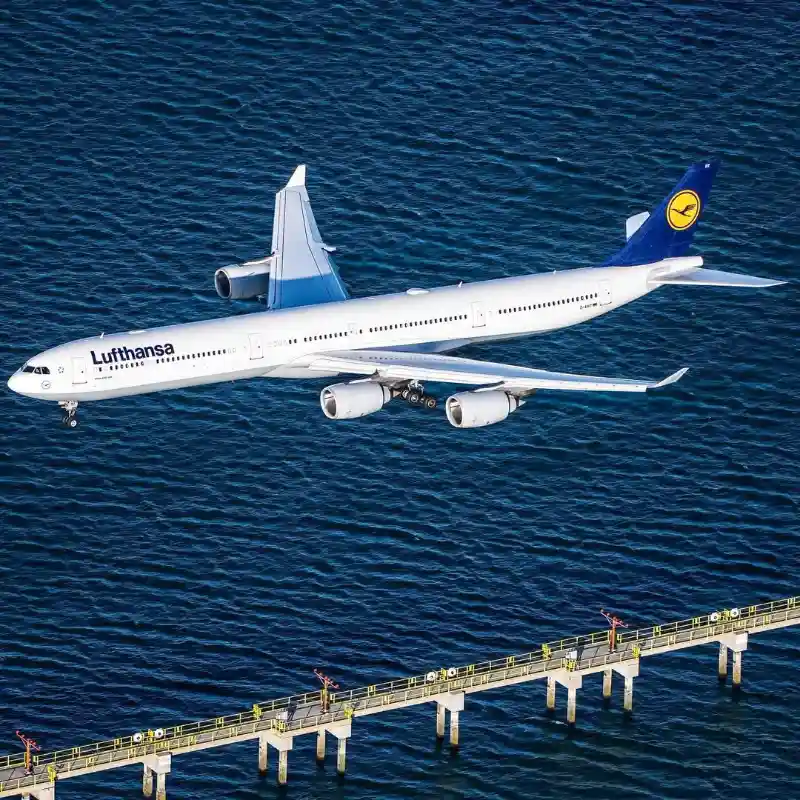
The Aircraft Still Fills A Critical Strategic Role
Despite its brutal economics, the A340-600 still offers one capability Lufthansa desperately needs: premium-heavy capacity.
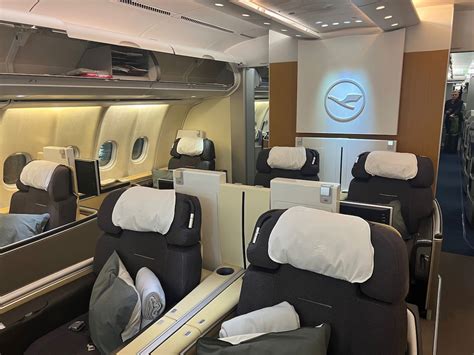
The aircraft’s cabin layout remains uniquely valuable. Lufthansa configured these jets around premium demand rather than maximum economy density. The A340-600 carries eight First Class suites, substantial Business Class seating, and a spacious overall cabin arrangement that still competes surprisingly well against newer aircraft.
That matters more than raw efficiency on certain routes.
Transatlantic business travel between Germany and the United States remains one of Lufthansa’s most profitable market segments. Routes connecting Frankfurt with New York JFK and Washington Dulles attract diplomats, financial executives, legal firms, multinational corporations, and government travelers willing to pay premium fares.
These passengers are not simply buying transportation. They are buying schedule reliability, premium comfort, and exclusivity.
The A340-600 delivers exactly that.
Its long fuselage allows Lufthansa to preserve a premium-heavy layout without sacrificing too much total capacity. Smaller aircraft like the A350-900 can be more fuel efficient, but they cannot always replicate the same mix of premium seating and operational flexibility.
The irony is striking. The aircraft survives precisely because it was designed for a different era of luxury-focused long-haul travel.
Lufthansa Uses The A340-600 Very Selectively
Lufthansa is not deploying the A340-600 randomly across its network. The airline has become extremely tactical about where the aircraft operates.
By concentrating the fleet primarily on routes like Frankfurt to New York JFK and Frankfurt to Washington Dulles, Lufthansa simplifies operational support while maximizing revenue potential. These airports already possess the infrastructure, engineering familiarity, and premium demand necessary to justify the aircraft’s continued presence.
This strategy reduces logistical chaos.
Supporting a tiny subfleet across dozens of destinations would be operationally reckless. Centralizing operations allows Lufthansa to streamline spare part distribution, maintenance planning, and crew scheduling around a small number of stations.
It also protects the brand experience.
Passengers flying between Frankfurt and New York often include Lufthansa’s highest-yield customers. Keeping the A340-600 concentrated on premium-heavy corridors allows Lufthansa to continue offering First Class capacity while awaiting the arrival of the 777X fleet.
For many travelers, the aircraft still feels premium despite its age.
Why Passengers Still Love Flying On The A340-600
Aircraft economics and passenger experience do not always align. The A340-600 proves this beautifully.
Many travelers genuinely prefer flying on the aircraft over newer twinjets. Part of that preference comes from cabin atmosphere. The A340 family developed a reputation for exceptionally smooth and quiet long-haul travel, partially because the distributed thrust of four engines creates different vibration and acoustic characteristics than large twin-engine aircraft.
The cabin also feels spacious.
Unlike some modern aircraft optimized aggressively for seat density, Lufthansa’s A340-600 interiors retain a sense of openness associated with earlier generations of premium aviation. Wider aisles, calmer acoustics, and less aggressive cabin compression contribute to a noticeably relaxed experience on ultra-long-haul flights.
First Class remains particularly important.
Lufthansa’s First Class product acts as a halo feature for the airline’s premium brand identity. Even travelers who never book First Class associate its existence with prestige and exclusivity. Removing those eight suites prematurely would weaken Lufthansa’s competitive positioning against airlines like Emirates, Singapore Airlines, and Air France.
There is also emotional value attached to the aircraft.
For aviation enthusiasts, the A340-600 represents one of the last surviving symbols of the great quadjet era. Its impossibly long fuselage, graceful proportions, and four-engine configuration evoke a period when airlines prioritized scale and engineering confidence over algorithmic efficiency.
Boarding one in 2026 feels increasingly rare.
The A340-600 Represents The End Of An Aviation Philosophy
The decline of the A340-600 reflects more than changing fuel prices. It represents a complete philosophical transformation within commercial aviation.
During the 1980s and 1990s, four engines symbolized safety, capability, and long-haul prestige. Regulatory restrictions on twin-engine operations over remote oceans still influenced aircraft design decisions. Airlines wanted redundancy, and manufacturers delivered it through massive quadjets.
Aircraft like the Boeing 747, Airbus A340, and Airbus A380 embodied this mentality.
Then engine technology changed everything.
Modern high-bypass turbofan engines became so reliable and fuel efficient that four engines stopped making economic sense for most airlines. Extended-range twin-engine operational certifications expanded dramatically, allowing aircraft like the Boeing 777 and Airbus A350 to dominate routes once reserved for quadjets.
The economics became impossible to ignore.
Twin-engine aircraft offer:
- Lower fuel burn
- Reduced maintenance complexity
- Fewer engine overhauls
- Lower emissions
- Greater scheduling flexibility
As environmental regulations tighten globally, quadjets became increasingly difficult to justify financially or politically.
The A340-600 therefore occupies an awkward historical position. It arrived just before the industry pivoted permanently toward twins. Technically advanced for its era, it nevertheless became obsolete faster than many anticipated.
Lufthansa’s Fleet Future Is Entirely Twin-Engine
Once the Boeing 777X finally enters Lufthansa service, the A340-600’s fate will be sealed almost immediately.
Lufthansa’s long-term strategy revolves around fleet simplification and next-generation efficiency. The airline wants fewer engine types, fewer specialized maintenance programs, and a more flexible widebody operation built around the Airbus A350 and Boeing 777 families.
The 777-9 is central to this transformation.
Compared with the A340-600, the Boeing 777-9 promises:
| Aircraft Type | Engines | Typical Fuel Efficiency | Passenger Capacity |
|---|---|---|---|
| Airbus A340-600 | 4 | High fuel consumption | 281 |
| Airbus A350-900 | 2 | Extremely efficient | 300+ |
| Boeing 777-9 | 2 | Far more efficient | 400+ |
The numbers explain everything.
The 777X offers larger capacity than the A340-600 while consuming significantly less fuel per passenger. For Lufthansa, that combination unlocks enormous long-term savings across maintenance, fuel, crew operations, and emissions management.
Once enough 777Xs arrive, keeping the A340-600 operational becomes indefensible.
The aircraft will likely move rapidly toward decommissioning rather than long-term storage. There is little secondary market demand for aging quadjets in 2026, especially aircraft carrying high operational costs and limited fleet commonality with newer types.
Many airframes will probably be dismantled for parts.
That outcome may sound harsh, but it reflects the brutal realities of modern airline economics.
The Emotional Farewell To Lufthansa’s Last Quadjet Giant
For Lufthansa employees, pilots, and aviation enthusiasts, the retirement of the A340-600 will feel deeply symbolic.
This aircraft carried the Lufthansa brand through two decades of enormous industry change. It connected Germany to major global capitals during periods of expansion, crisis, recovery, and transformation. It survived financial recessions, pandemic disruptions, geopolitical volatility, and now production delays affecting the very aircraft meant to replace it.
Its final years may be financially painful, but they also underline the aircraft’s resilience.
The A340-600 became Lufthansa’s emergency bridge across a difficult transitional period. Without it, the airline would likely have reduced premium capacity, weakened network strength, and surrendered competitive ground on critical North American routes.
Instead, the aircraft absorbed the burden one last time.
There is something fitting about that ending.
The A340-600 was never the industry’s most efficient aircraft. It was not the fastest seller, nor the dominant long-haul platform of its generation. But it delivered reliability, elegance, and capability exactly when Lufthansa needed it most.
That legacy matters.
When the final Lufthansa Airbus A340-600 eventually departs Frankfurt for the last time, it will close more than a fleet chapter. It will mark the definitive end of the mainstream four-engine long-haul era — a period when airlines believed bigger, longer, and more powerful aircraft represented the future of global travel.
In 2026, the A340-600 exists as both a warning and a monument. Financially, it belongs to the past. Operationally, Lufthansa still cannot quite live without it.